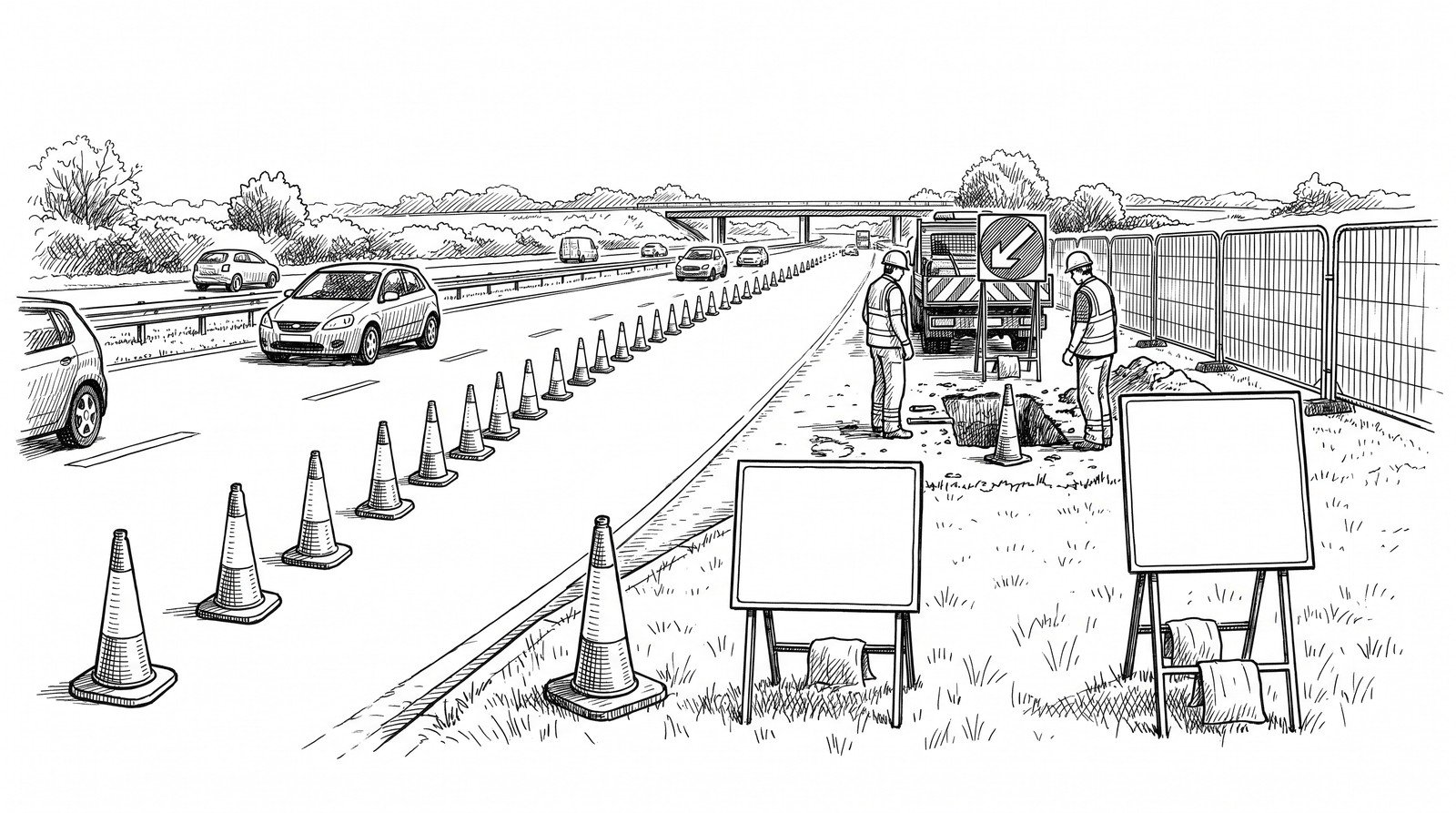
Every note on this page concerns working alongside live traffic: the layout that separates people from vehicles, the conspicuity that improves the odds at the margin, and the phases in which the layout does not yet exist. Excavation support, dust and structural work belong to Construction and Demolition, and the two link to each other where they meet. The four road standards behind this work — EN 1317, EN 12899, EN 13422 and EN 12352 — were added to the standards library alongside these notes.
Frequently asked questions
What is the difference between delineation and a restraint system?
Cones, cylinders and lightweight plastic barriers are delineation: they tell a driver where the closure is and are designed to be struck harmlessly, which necessarily means they do not resist a vehicle. A road restraint system to EN 1317 is engineered to contain and redirect an errant vehicle, and it needs clear space behind it to do so.
Is high-visibility clothing protection?
No. It is a supplement to physical separation. A worker who is safe only because a driver saw them is depending on that driver being alert, undistracted and correctly aimed. The layout, the barriers and the safety zone are what protect people.
Why do so many of these notes come back to the safety zone?
Because it is the only part of a layout that assumes a driver gets it wrong. Everything else assumes the signs were read and followed. The zone is what converts an incursion into a few seconds of warning rather than an immediate impact.
Which parts of a road job are the most dangerous?
Setting out and taking down. During both there is no complete layout protecting anyone: set-out happens before the closure exists, and take-down dismantles it while traffic is still flowing, with the crew working progressively closer to live lanes.
Which standards cover roadworks equipment?
Road restraint systems fall under EN 1317, fixed vertical signs under EN 12899, portable warning devices and delineators such as cones under EN 13422, and warning and safety light devices under EN 12352. Each has its own page in the standards library.
Where does this activity stop and Construction & Demolition begin?
This activity covers working alongside live traffic: the layout, conspicuity, incursion and the phases where the layout does not yet exist. Excavation support, dust, vibration and structural work belong to Construction & Demolition, and the two link to each other where they meet.