Safety / Tips and Tricks / Road and highway works
Activity 11 · Road
Keeping High-Visibility Clothing Effective: Class, Condition and Cleanliness
High-visibility clothing is the only item of protective equipment whose entire function depends on somebody else, and it is the one most often worn in a condition where it no longer performs.
Two materials doing two different jobs
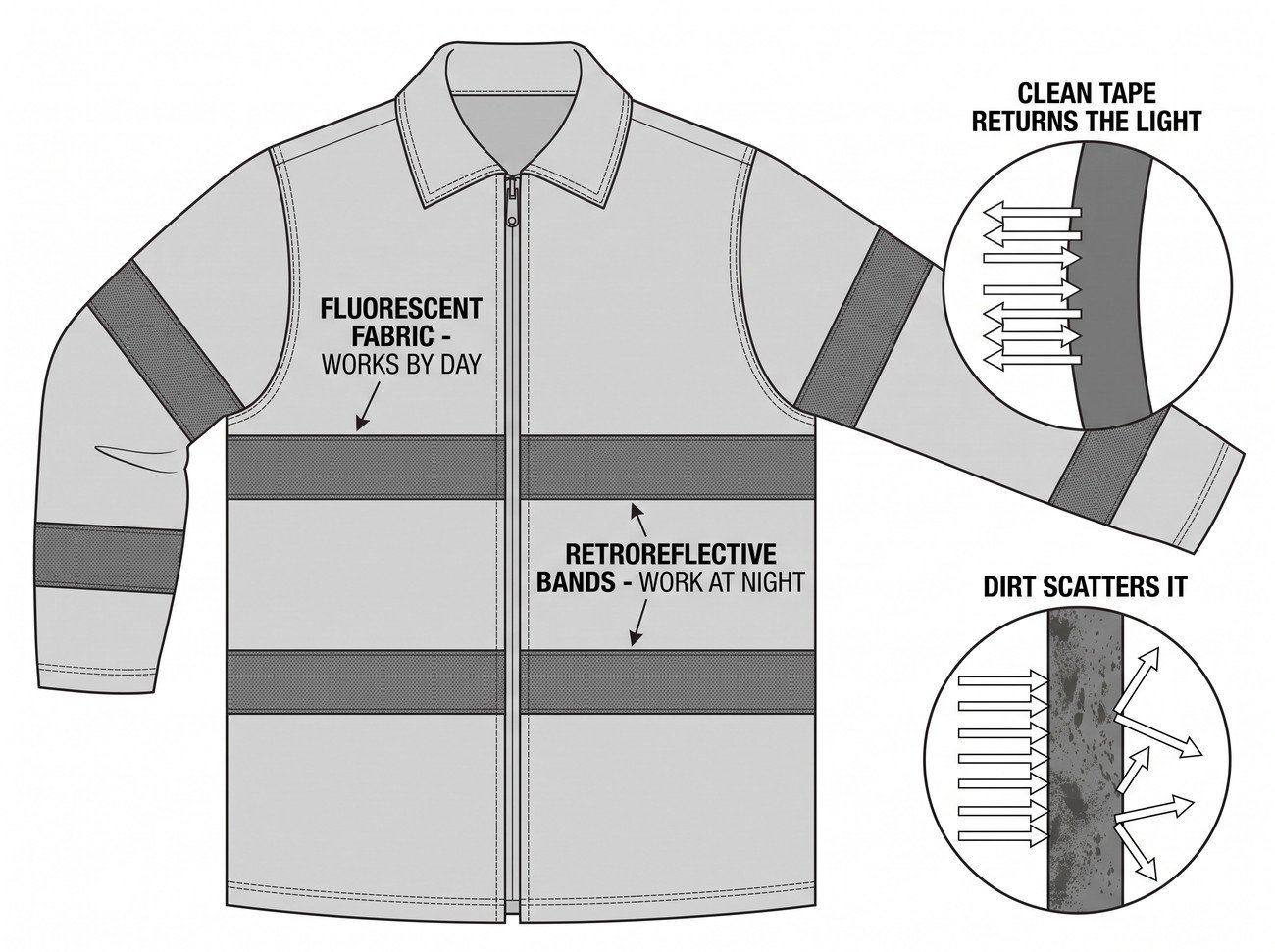
A hi-vis garment combines fluorescent background material and retroreflective tape, and they work at different times of day. The fluorescent fabric converts ultraviolet light into visible light, which makes it stand out in daylight and at dusk, and it does nothing at all in the dark. The retroreflective tape returns light to its source, which makes it work under headlights at night, and it contributes very little in daylight. A garment is only complete when both are present and both are intact.
Class is about area, not brightness
The classes are defined by how much of each material the garment carries, not by how bright it looks. A higher class means more square metres of fluorescent fabric and more metres of retroreflective tape, which is why a full-length coat outranks a waistcoat and why the class of an outfit falls the moment the coat comes off. On a live carriageway the class is chosen for the traffic speed and the exposure, and it applies to what the person is actually wearing at that moment rather than to what is in the van.
Dirt defeats the tape long before it defeats the fabric
This is the failure that matters most on a road job. Retroreflective tape works by returning light back along the path it arrived on, and a film of road grime, bitumen spray, cement dust or oil scatters that light instead. The garment can still look convincingly bright in daylight while its night-time performance has largely gone, because the fluorescent fabric is still doing its job and the tape is not. A driver at night sees the tape, not the colour.
Washing, wear and the end of service
Fluorescent dye fades with ultraviolet exposure and with washing, and a faded garment is measurably less conspicuous even though it still reads as orange or yellow to someone standing next to it. Tape cracks, lifts at its edges and delaminates with repeated flexing and laundering, and garments carry a maximum number of wash cycles for that reason. Comparing a worn garment against a new one of the same type is the quickest honest test available, and it is usually decisive.
What covers the garment covers the warning
A harness worn over a hi-vis coat, a tool belt, a rucksack, a folded-down collar or an unzipped front all reduce the visible area, and the reduction happens exactly where the design assumed the material would be. The same applies to sitting in a machine cab with a coat bunched, or to a jacket worn open in warm weather. Where equipment has to be worn over the garment, the answer is a higher class beneath it rather than an acceptance that some of it is hidden.
For how the tape actually performs under headlights, see being seen at night. For the class definitions themselves, see hi-vis clothing classes.
Related standards
The standards below set the classification, testing and performance requirements behind the equipment used for this work.
Common errors
1Judging a garment by how bright it looks in daylight when the tape is contaminated.
2Wearing a lower-class garment than the road requires because the coat was too warm.
3Keeping garments in service past their wash limit, when the tape has begun to delaminate.
4Covering the material with a harness, belt or rucksack without raising the class beneath.
5Assuming a faded garment is still performing because the colour is recognisable close up.
Frequently asked questions
What is the difference between the fluorescent and retroreflective parts?
Fluorescent fabric converts ultraviolet light into visible light and works in daylight and dusk but not in the dark. Retroreflective tape returns light to its source and works under headlights at night but contributes little by day.
What does a higher hi-vis class actually mean?
More area of fluorescent fabric and more length of retroreflective tape. It is a measure of quantity rather than brightness, which is why removing a coat drops the class of the whole outfit.
Why is road grime on the tape so serious?
The tape works by returning light along the path it arrived on, and a film of dirt, bitumen or dust scatters that light instead. The garment still looks bright by day while its night performance has largely gone.
When should a hi-vis garment be retired?
When the fluorescent colour has faded, when the tape is cracked, lifting or delaminating, or when the stated number of wash cycles has been reached. Comparing it against a new garment of the same type is the quickest honest test.
Does wearing a harness over hi-vis matter?
Yes. It covers material the design assumed would be visible, reducing the effective class. Where equipment must be worn over the garment, the answer is a higher class underneath rather than accepting the loss.
Need this as a document you can issue? The template library gives you the risk assessments, permits and inspection logs in editable form — and employer plans cover a whole team with completion records.