Safety / Tips and Tricks / Road and highway works
Activity 11 · Road
Being Seen at Night: Retroreflection and Headlight Geometry
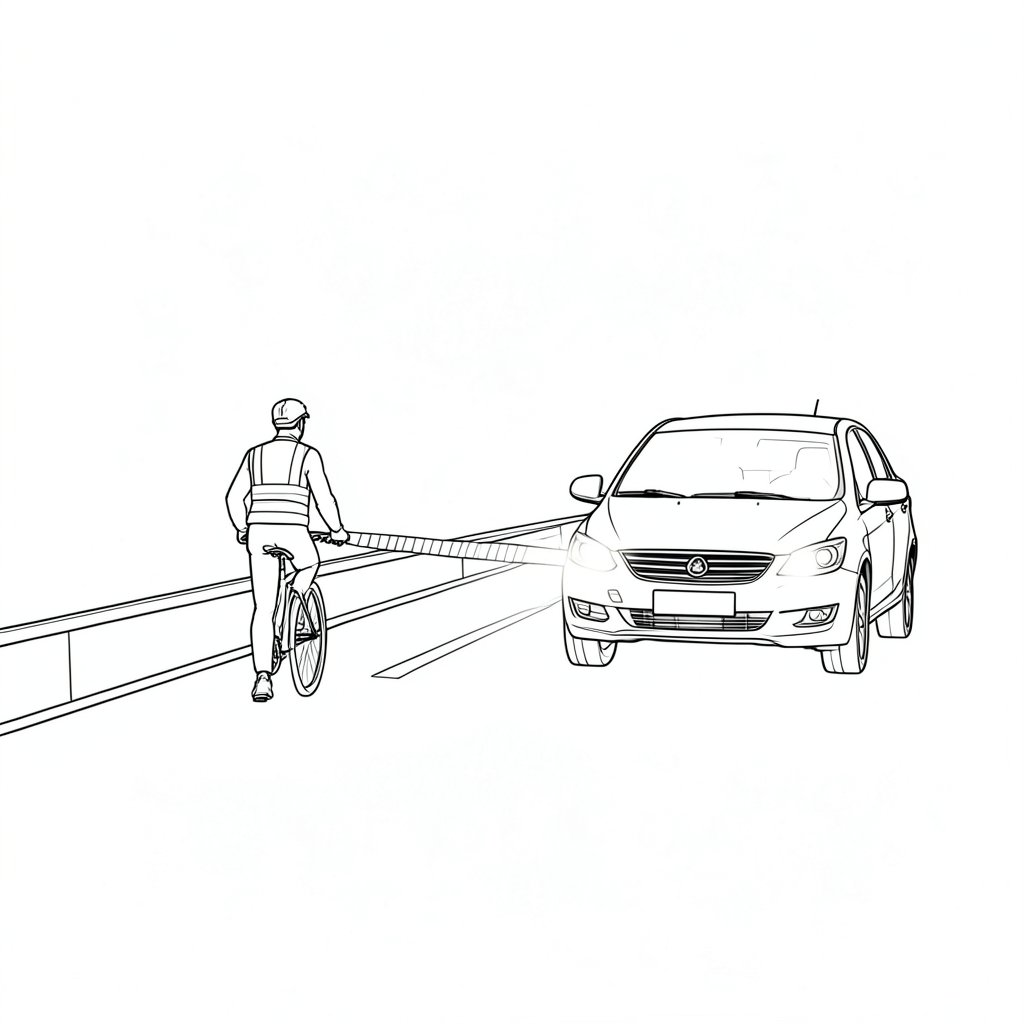
Retroreflective tape does not make you visible. It makes you visible to a driver whose headlights are pointing at you, and the difference between those two statements accounts for a great many roadside injuries.
How retroreflection works
Retroreflective material returns light back towards where it came from, rather than scattering it in all directions like ordinary paint. That is why a worker lights up brilliantly to the driver whose headlights are illuminating them, and why the same worker is nearly invisible to someone standing beside the road with no light source. The brightness the driver sees is not a property of the garment alone; it is a property of the garment, the headlights and the angle between them.
The angle decides the brightness
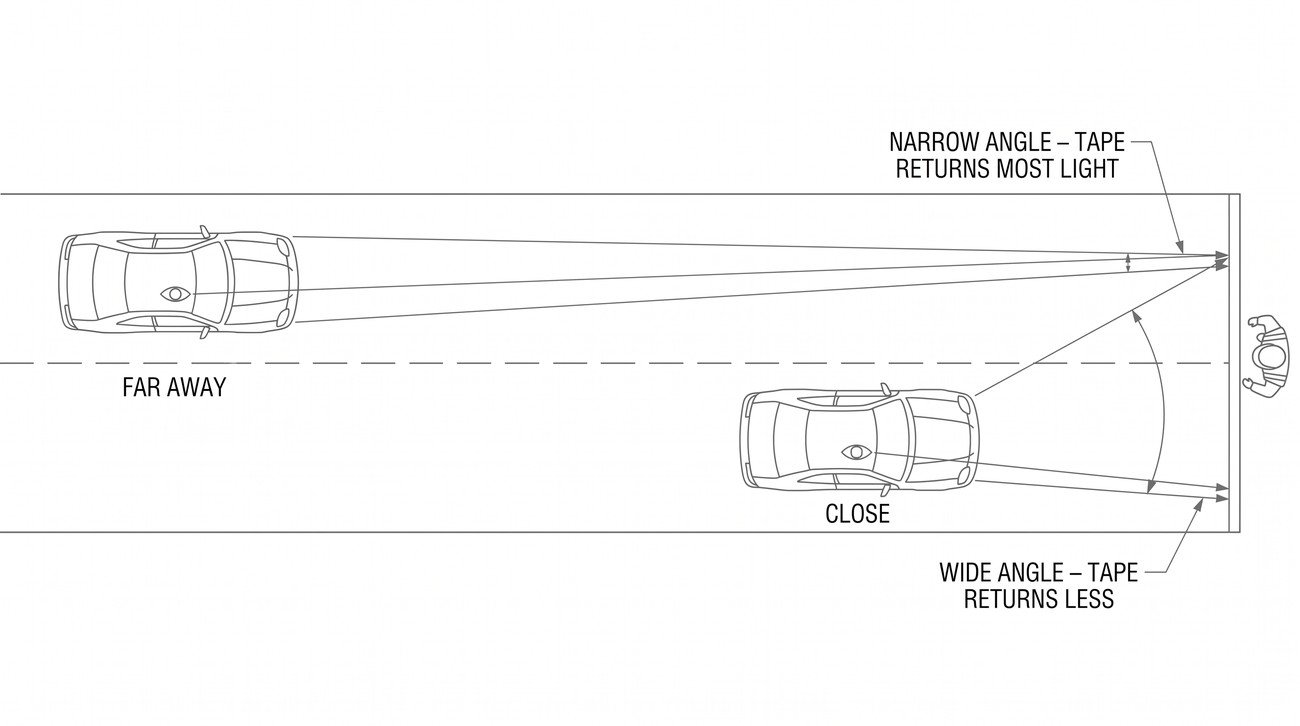
Performance falls away as the angle between the headlight beam and the driver’s line of sight increases, which happens as the vehicle gets close. It also falls as the light strikes the tape more obliquely. The practical consequence is that a worker is at their most conspicuous while the vehicle is still distant and approaching straight on, and becomes progressively less so as it closes and the geometry worsens — the opposite of what intuition suggests.
Dipped beams point at the road, not at you
A dipped headlight is aimed low and to one side to avoid dazzling oncoming drivers, so it illuminates the carriageway rather than the verge. A worker standing on the offside, on a raised verge, or above the road on a bank can be outside the useful part of the beam entirely. Tape at knee and ankle height is often better lit than tape at chest height for this reason, and it also moves as the person walks, which the eye detects far more readily than a static patch.
Competing light defeats you
Retroreflection works by contrast, and a background full of light removes it. Street lighting, illuminated signs, shop fronts, a lit works area behind the worker, and the headlights of other vehicles all reduce how much a driver’s eye picks out the returned light. A worker standing in front of the works floodlighting is silhouetted against it rather than picked out by it, which is one of the reasons the lighting arrangement matters as much as the clothing.
Do not rely on being seen
All of this leads to one operational conclusion: conspicuity is a supplement to physical separation, never a replacement for it. A worker who is only safe because a driver saw them is depending on that driver being alert, sober, undistracted and correctly aimed. The layout, the barriers and the safety zone are what protect the person; the clothing improves the odds at the margin.
For the condition the tape has to be in, see keeping hi-vis effective. For the lighting that competes with it, see lighting night works.
Related standards
The standards below set the classification, testing and performance requirements behind the equipment used for this work.
- EN ISO 20471 — High-Visibility Clothing
- EN 12352 — Warning and Safety Light Devices
- EN 13422 — Portable Warning Devices and Delineators
Common errors
1Assuming tape that looks bright in a torch beam performs the same under a passing dipped headlight.
2Standing where dipped beams do not reach, such as a raised verge or the offside.
3Working in front of the site floodlighting, so the driver sees a silhouette rather than the tape.
4Treating conspicuity as protection instead of as a supplement to physical separation.
5Relying on tape at chest height alone, when leg-height tape is better lit and moves visibly.
Frequently asked questions
How does retroreflective material differ from ordinary bright colour?
It returns light back towards its source rather than scattering it. That makes it brilliant to a driver whose headlights illuminate it and nearly invisible to an observer standing beside the road with no light source.
Why does conspicuity fall as a vehicle gets closer?
The angle between the headlight beam and the driver's line of sight widens as the vehicle approaches, and the tape returns less light at wider angles. The worker is most conspicuous while the vehicle is still distant.
Why does tape at leg height often work better than at chest height?
Dipped headlights are aimed low and to one side, so they light the carriageway rather than the verge. Leg-height tape sits in the useful part of the beam and moves as the person walks, which the eye detects readily.
How does other lighting affect visibility?
Retroreflection works by contrast, so street lighting, illuminated signs and site floodlighting all reduce it. A worker in front of the works lighting is silhouetted rather than picked out.
Can hi-vis clothing be relied on for protection?
No. It is a supplement to physical separation, not a replacement. A worker who is safe only because a driver saw them is depending on that driver being alert, undistracted and correctly aimed.
Need this as a document you can issue? The template library gives you the risk assessments, permits and inspection logs in editable form — and employer plans cover a whole team with completion records.