Standards / Road and Highway
EN 13422
Road and Highway
Current
Portable Warning Devices and Delineators
EN 13422 is the European standard for portable, deformable warning devices and delineators — the cones, cylinders and lightweight portable posts used to guide traffic around temporary works. It covers their visibility, their stability against wind and vehicle buffeting, and their behaviour when a vehicle strikes them.
Scope
EN 13422 applies to portable deformable devices used for temporary traffic guidance, including traffic cones, traffic cylinders and portable delineator posts. It covers geometry and colour, retroreflective performance, resistance to overturning, and the requirement that the device deform rather than damage a vehicle or injure its occupants on impact.
Exclusions & Related Standards
- Permanently installed vertical signs and their supports fall under EN 12899.
- Systems intended to contain and redirect a vehicle fall under EN 1317.
- Lamps and beacons attached to devices fall under EN 12352.
- These devices are not vehicle restraint and are not tested to contain anything.
Key Requirements & Marking
Devices carry retroreflective bands so they are visible under headlights, and are classified by their retroreflective performance and by their resistance to overturning. Crucially, they are required to deform on impact so that they do not damage a vehicle or injure its occupants, which is the property that makes them unsuitable for containing anything. A cone tells a driver where the closure is; it does not resist entry into it.
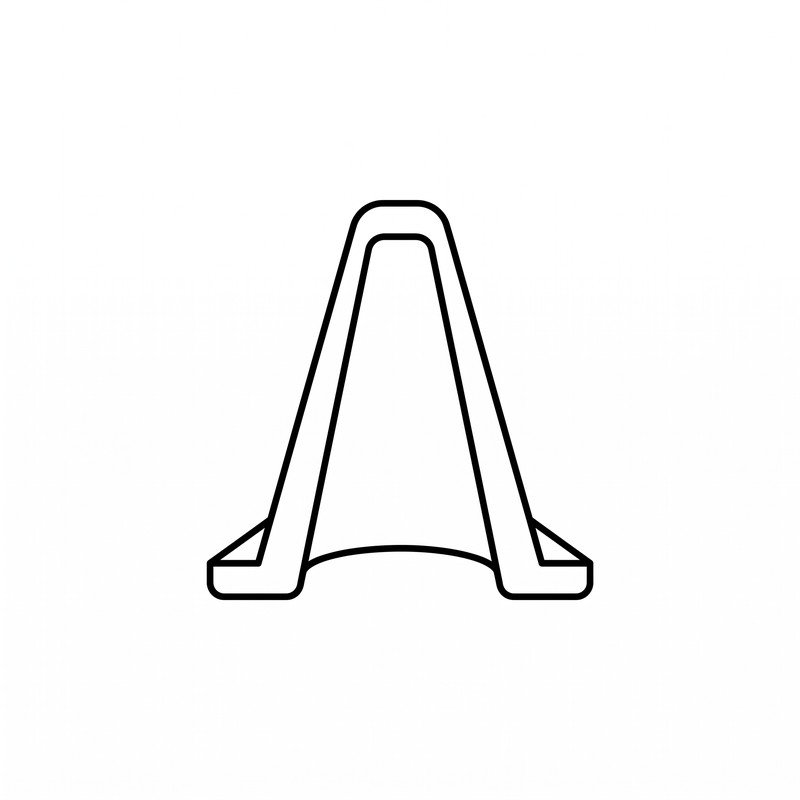
The bands make the device visible at night; the weighted base resists wind and vehicle buffeting, not impact.
Testing Overview
Assessment covers photometric measurement of the retroreflective bands, colour measurement, stability testing against defined wind speeds and against the air pressure pulse generated by passing vehicles, and impact behaviour confirming the device deforms without producing hazardous fragments.
Selection Guide
Select device height and retroreflective class for the approach speed and the sight distance available, since a device that is adequate on a slow urban road is not necessarily visible in time on a fast one. Use devices heavy or ballasted enough for the exposure, because the repeated pressure pulses from heavy vehicles walk light devices out of line long before steady wind would move them.
Inspection, Care and Maintenance
- Replace devices whose retroreflective bands are dirty, scuffed, faded or missing, as those bands are the entire night-time function
- Withdraw split, distorted or heavily deformed devices, which are less stable and less visible
- Check the run during the shift rather than only at set-out, since devices are displaced by traffic and by wind
- Never retrieve a displaced device from a live lane
- Store clean and out of direct sunlight, which fades both the body colour and the bands
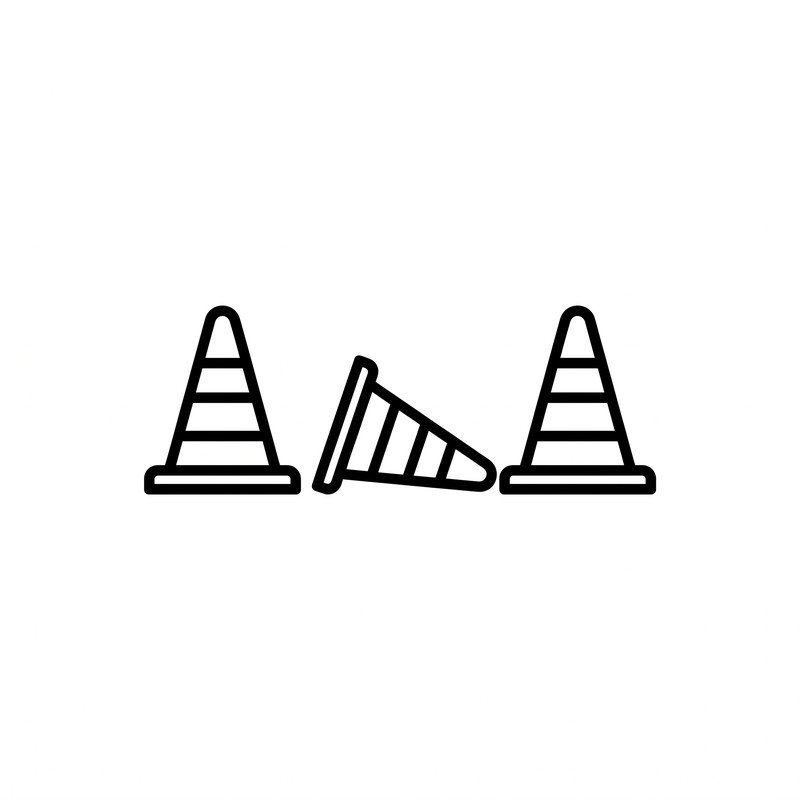
A displaced device leaves a gap that the next driver will use, so the run is checked during the shift.
Frequently asked questions
Are cones and delineators a form of vehicle restraint?
No. They are required to deform on impact so they do not damage a vehicle or injure its occupants, which is precisely why they cannot contain one. They inform drivers rather than stopping them.
What makes a cone visible at night?
The retroreflective bands, which return headlight light to the driver. A cone with dirty, scuffed or missing bands has lost its night-time function while still looking like a cone.
Why do cones move even when there is no wind?
Each heavy vehicle passing at speed delivers a pressure pulse followed by a suction. Repeated pulses walk light devices out of line long before steady wind would move them.
Does the height of the device matter?
Yes. Height and retroreflective class are selected for the approach speed and the sight distance available, because a device adequate on a slow urban road may not be seen in time on a fast one.
What should be done about a cone knocked into a live lane?
It is not retrieved from the live lane. The run is restored under the protection of the layout, or the lane is closed to do it.