Safety / Tips and Tricks / Road and highway works
Activity 11 · Road
Lone Working and Roadside Patrols
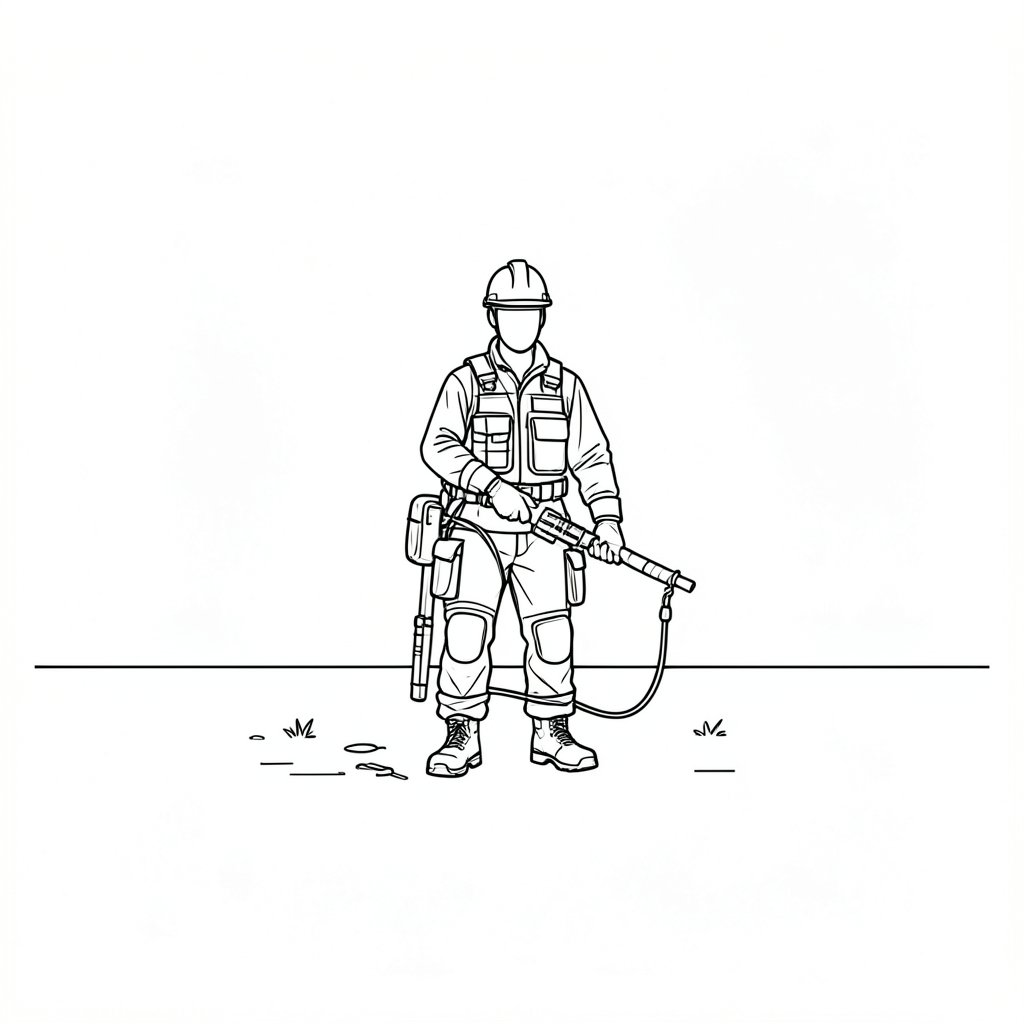
A lone worker at the roadside has no colleague to notice a hazard, no second pair of hands, and nobody to raise the alarm. Everything about the task has to account for that before it starts.
What lone working actually removes
It is not simply one fewer person. It removes the second opinion on whether a layout is adequate, the person who spots the vehicle that is not slowing, the ability to hold a signal while someone else works, and above all the guarantee that an incident will be discovered promptly. A worker who is struck or taken ill at a roadside with nobody present may not be found for a long time, and that possibility is the one the arrangements have to address.
Some tasks are not lone-workable
Anything requiring a signaller, anything on a high-speed road, anything needing a lane closure, and anything where the escape route is uncertain are all two-person tasks regardless of how quick they are. Deciding that in advance and writing it down is what prevents the on-the-spot judgement that a job is small enough to do alone, which is the judgement made immediately before most lone-working incidents.
The vehicle and the escape route
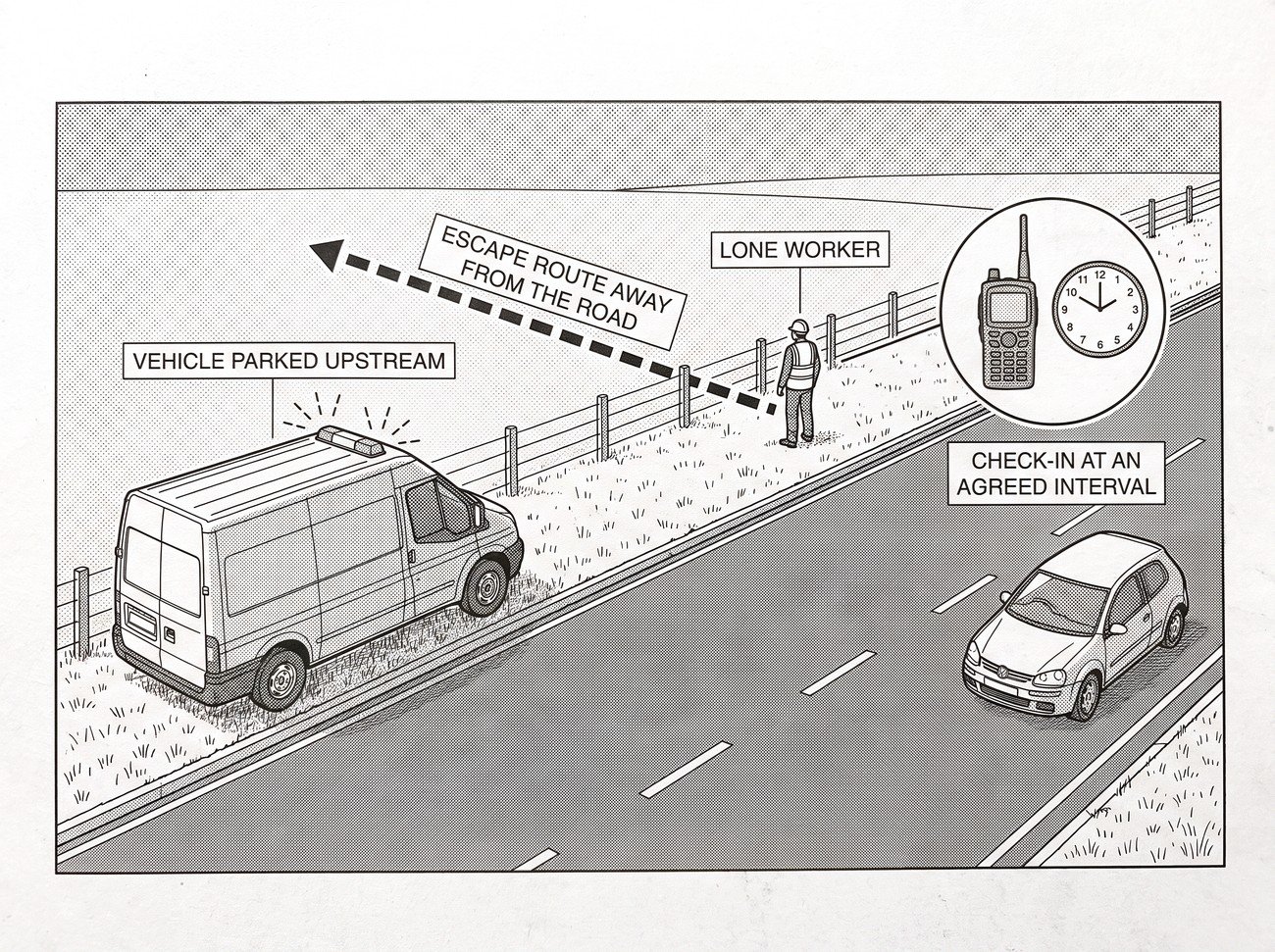
For roadside work the parked vehicle is the protection. It goes upstream of the worker, offset to shield them, with beacons displaying, and it stays there rather than being moved along for convenience. The worker needs an escape route that leads away from the carriageway — onto a verge, behind a barrier, up a bank — identified before starting, because the moment it is needed is not the moment to look for one. A position with no escape route is a position to move.
Check-in that fails safe
A check-in system only works if a missed call triggers something. Systems where the worker has to remember to call in put the burden on the person who may be unable to, and they fail silently. What is needed is an agreed interval, a named person who is expecting the call, and an escalation that happens automatically when it does not arrive — including someone who knows the location precisely enough to send help there.
The public are part of the risk
A lone roadside worker also deals with drivers who stop to complain, ask directions, or become aggressive about delays. That is a foreseeable part of the job rather than an unlucky event, and the arrangements should include what to do about it: not engaging, withdrawing to the vehicle, and a means of summoning help that does not depend on continuing the conversation.
For the same check-in problem at height, see lone working on a roof. For what the parked vehicle is doing, see mobile and short-duration works.
Related standards
The standards below set the classification, testing and performance requirements behind the equipment used for this work.
- EN ISO 20471 — High-Visibility Clothing
- EN 397 — Industrial Safety Helmets
- EN ISO 20345 — Safety Footwear
Common errors
1Deciding on the spot that a task is small enough to do alone.
2Parking the vehicle where it is convenient rather than upstream as a shield.
3Starting work without identifying an escape route away from the carriageway.
4Relying on the lone worker to initiate check-ins, so a missed one goes unnoticed.
5Treating aggression from the public as an unlucky event rather than a planned-for one.
Frequently asked questions
What does lone working actually remove?
The second opinion on the layout, the person who spots a vehicle that is not slowing, the ability to hold a signal, and the guarantee that an incident is discovered promptly.
Which roadside tasks should never be done alone?
Anything requiring a signaller, anything on a high-speed road, anything needing a lane closure, and anything where the escape route is uncertain, regardless of how quick the task is.
Where should the vehicle be parked?
Upstream of the worker, offset to shield them, with beacons displaying, and left there rather than moved along for convenience.
What makes a check-in system work?
An agreed interval, a named person expecting the call, and automatic escalation when it does not arrive. Systems relying on the worker to remember fail silently at exactly the wrong moment.
Is aggression from the public a planned-for risk?
Yes. Drivers stopping to complain or becoming aggressive about delays is foreseeable, so the arrangements should cover not engaging, withdrawing to the vehicle, and summoning help.
Need this as a document you can issue? The template library gives you the risk assessments, permits and inspection logs in editable form — and employer plans cover a whole team with completion records.