Safety / Tips and Tricks / Roofing and work at height
Activity 02 · Roofing
Lone Working on a Roof: What Changes
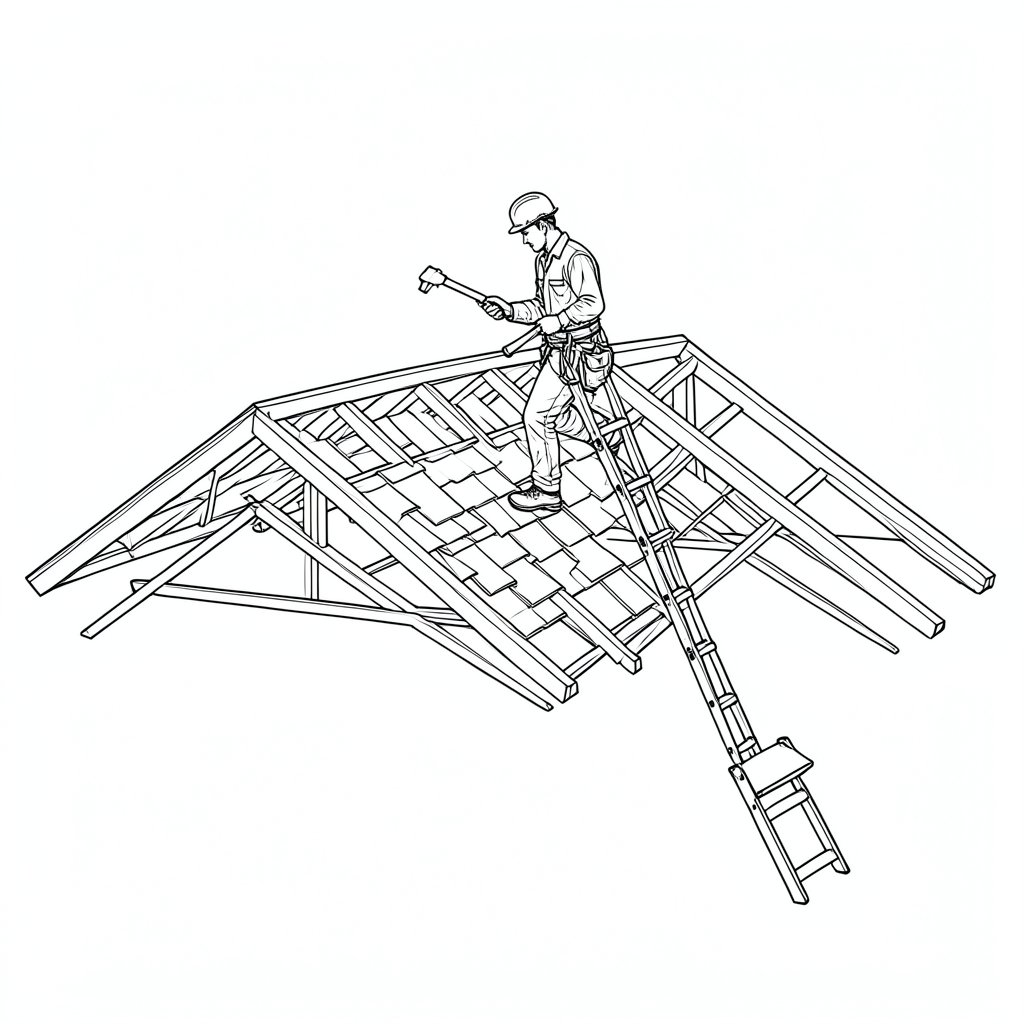
Roof work carries real fall and structural risk under any circumstances, but doing it alone removes a layer of protection that is easy to take for granted until it is missing: another person who notices immediately if something goes wrong. Lone roof work is not automatically unsafe, but it demands specific controls that a team task does not need in the same way.
Why the absence of a second person matters so much on a roof
On many tasks, a second person’s main value is efficiency. On a roof, a second person’s main value is often survival — someone who can raise the alarm immediately after an incident rather than after a missed check-in interval, someone who can begin non-entry rescue or first aid while help is summoned, and someone who can confirm rigging and anchor selection independently before weight is committed. Removing that person does not remove the underlying hazards of the roof; it removes the backup for when one of those hazards is not managed perfectly.
Communication and check-in arrangements
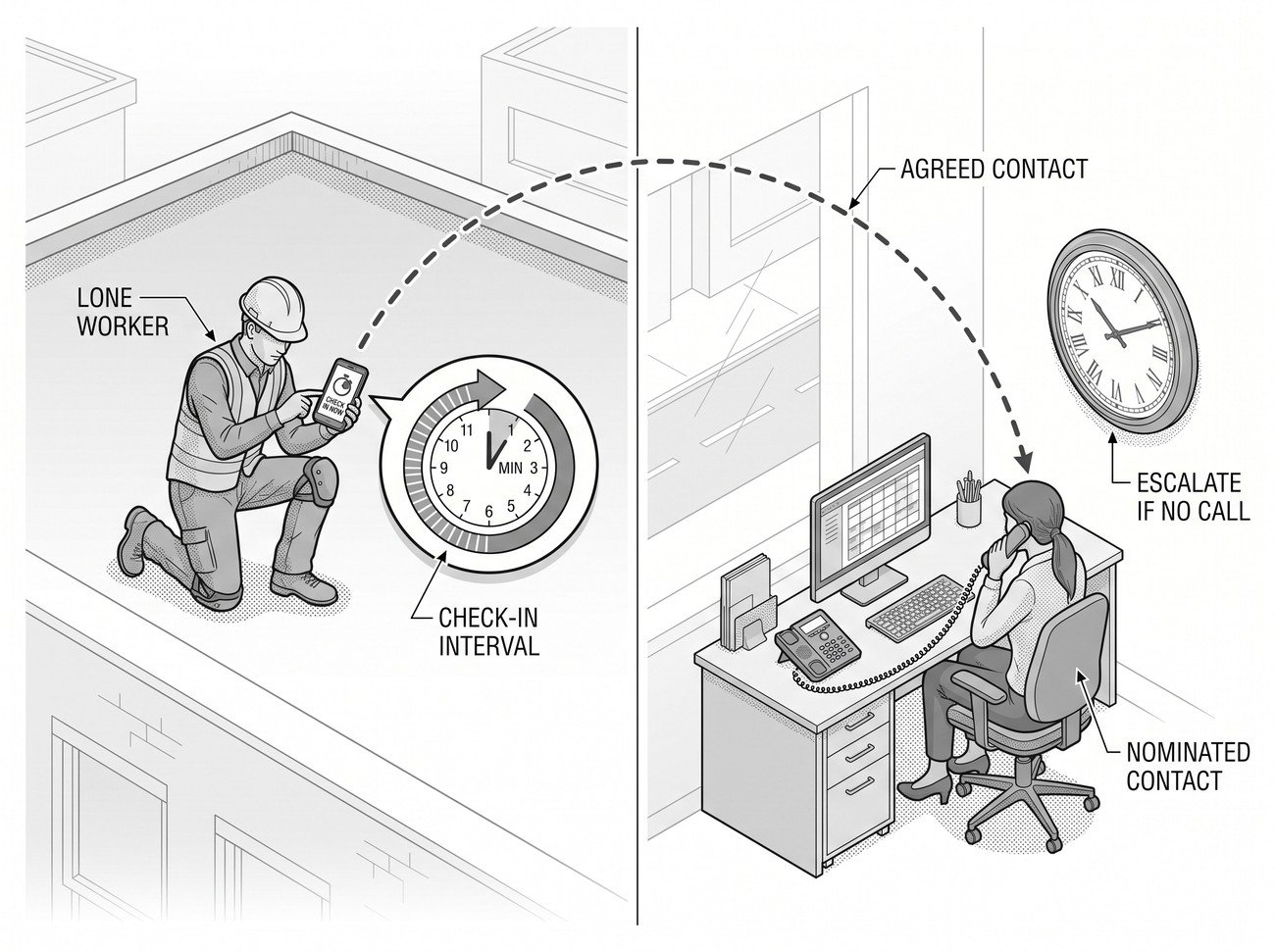
A lone worker on a roof needs a reliable way to raise an alarm and a defined check-in schedule with someone who will actually notice and act on a missed check-in promptly. The interval needs to be short enough that a real incident is caught in a timeframe that matters — particularly relevant if fall-arrest equipment to EN 361 is in use, since suspension trauma develops within minutes, not hours, making a long check-in interval effectively useless for that specific risk.
Tasks that should not be done alone regardless of controls
Some roof tasks carry risk that a communication device and check-in schedule cannot adequately offset. Any task using fall-arrest equipment where a fall could genuinely occur, work near unguarded edges without collective protection, and tasks requiring rescue capability that a single person on the ground cannot provide quickly enough all warrant a second person physically present, not just contactable. The decision should be based on the specific task’s risk profile, not a blanket rule that treats all roof access the same.
Reduced independent verification
A second person on site often catches errors the person doing the work cannot see themselves — a cross-loaded connector, a knot that looks fine from the tier’s own angle but is not, an anchor selection that misses a factor only visible from a different vantage point. Working alone removes this check entirely, which argues for extra deliberateness in self-verification: a documented pre-task checklist followed in full, rather than the informal awareness a second person’s presence usually provides as a natural byproduct of being there.
For the rescue planning a lone worker still needs in place, see rescue planning for a fall from a roof edge protection system.
Common errors
1Setting a check-in interval long enough that a suspension-trauma-relevant incident would not be caught in time.
2Treating a phone as sufficient without confirming reliable signal coverage on the actual roof.
3Sending a lone worker to a task that genuinely requires physical rescue capability a remote contact cannot provide.
4Skipping the extra self-verification discipline that compensates for the absence of a second person's independent check.
Frequently asked questions
Why does removing a second person from roof work matter more than on many other tasks?
A second person on a roof often provides survival-critical functions – raising the alarm immediately, beginning non-entry rescue, and independently verifying rigging – not just efficiency, which a lone worker loses entirely.
Why does check-in interval length matter specifically for fall-arrest work?
Suspension trauma can develop within minutes of a person being left hanging after an arrest, so a check-in interval that is too long is effectively useless for catching that specific, time-critical risk.
What kinds of roof tasks should not be done alone regardless of communication controls?
Tasks using fall-arrest equipment where a fall could genuinely occur, work near unguarded edges without collective protection, and any task requiring rescue capability a remote contact cannot provide quickly enough.
What does a lone worker lose in terms of error-checking?
The informal verification a second person naturally provides – catching a cross-loaded connector, a poorly dressed knot, or an anchor issue visible only from a different vantage point – which argues for a more deliberate, documented self-check routine.
What should be confirmed about communication equipment before lone roof work begins?
That there is reliable signal coverage on the actual roof being worked on, not just an assumption that a phone will work because it usually does elsewhere on the site.
Need this as a document you can issue? The template library gives you the risk assessments, permits and inspection logs in editable form — and employer plans cover a whole team with completion records.