Safety / Tips and Tricks / Road and highway works
Activity 11 · Road
Reversing and Manoeuvring Plant on a Live Road
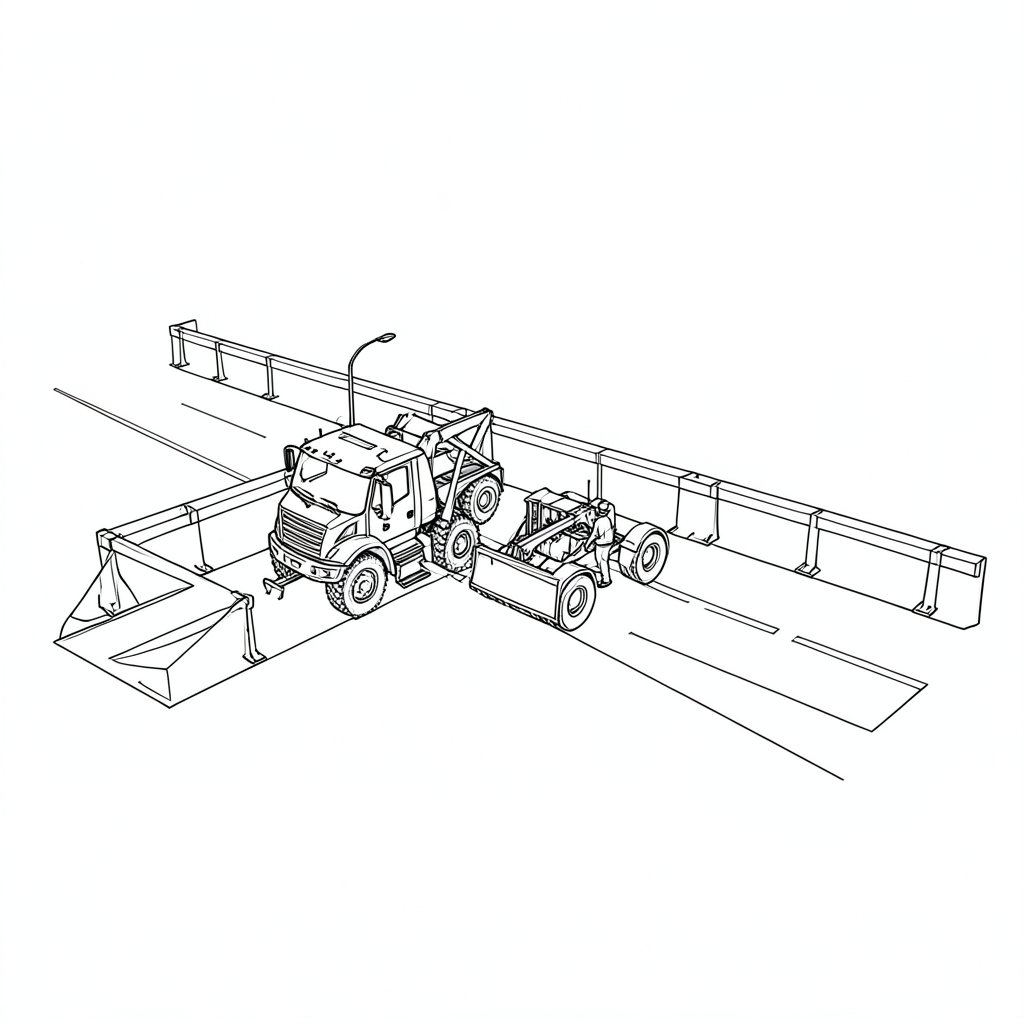
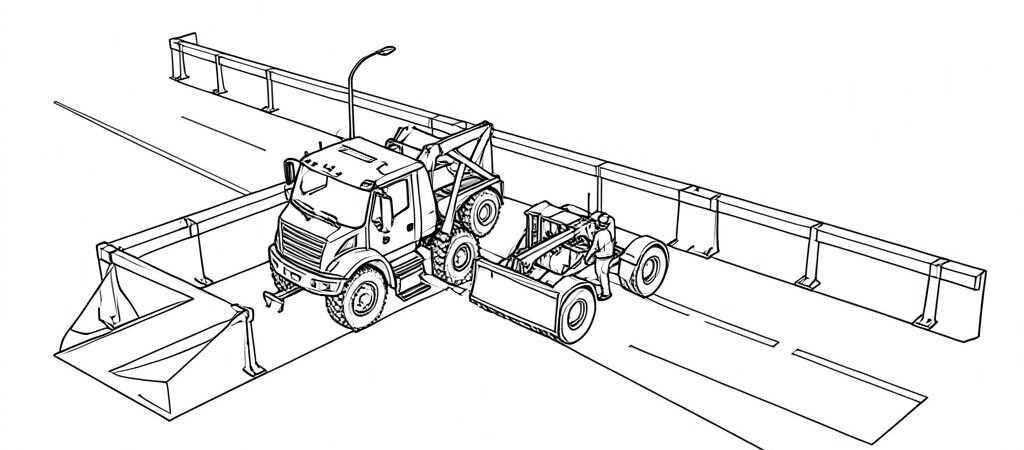
A reversing vehicle on a roadworks site has two audiences that cannot see each other: the crew inside the closure and the traffic outside it. Most manoeuvring incidents happen because a manoeuvre was planned for one and forgotten by the other.
Design the manoeuvre out first
The most effective control is not needing to reverse. A layout planned so vehicles enter at one end and leave at the other, a turning area inside the closure, or a delivery point positioned so a lorry can drive through all remove the manoeuvre entirely. Where reversing is unavoidable it should be short, in a defined place, and the same place every time so everyone on site knows where it happens.
The blind areas are where the crew walks
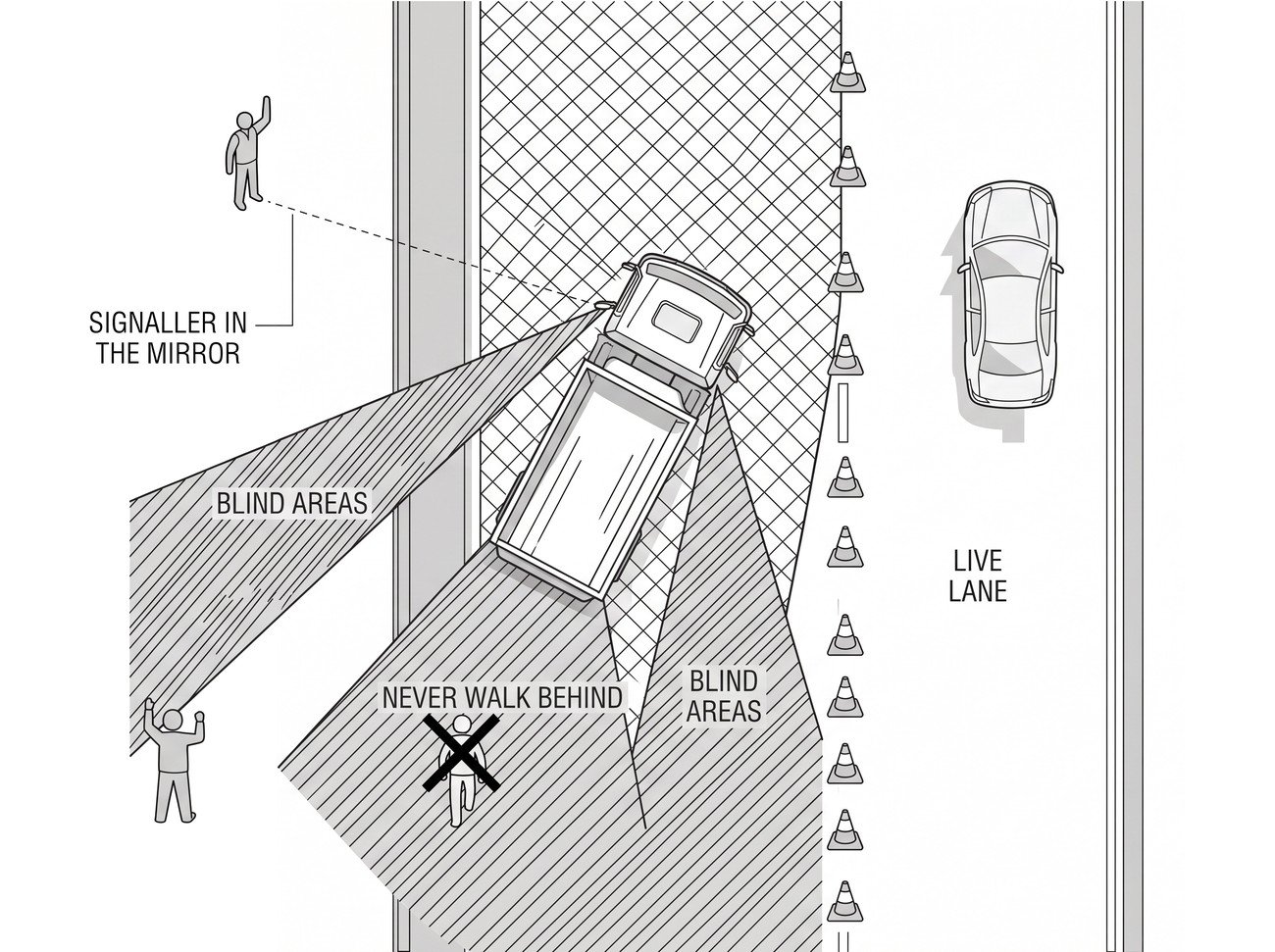
Directly behind a large vehicle, and along the offside, are areas where a standing adult cannot be seen from the cab. On a linear works those are precisely the routes people use, because the closure is long and narrow and there is nowhere else to walk. Cameras and mirrors reduce the blind areas without removing them, and both are commonly obscured by the spray and dirt a wet road produces.
One signaller, standing where the mirror can see them
A signaller controls the manoeuvre as much as the driver does, and that only works with one signaller, agreed signals, and a position that stays in the driver’s mirror throughout. The driver stops the moment the signaller is lost from view. On a live road there is an extra constraint: the signaller cannot take a position that puts them in the traffic lane to get a better view, which is exactly what the geometry tempts them to do.
Reversing towards the traffic side
A manoeuvre that swings any part of the vehicle over the cone line puts the vehicle into live traffic, and a long vehicle sweeps a great deal wider than the driver expects when turning. Planning the manoeuvre so the swing stays inside the closure, and stopping traffic properly rather than relying on drivers to slow down for a reversing lorry, are the two options. There is no third option in which the vehicle briefly crosses the line and it is fine.
Deliveries are the recurring problem
The vehicles that cause most difficulty are the ones that were not part of the plan: a delivery lorry whose driver does not know the site, arriving at a time nobody expected, needing to turn where there is no turning area. Briefing delivery drivers at the point of arrival, having a designated person meet them, and refusing manoeuvres that were not planned are what stop that vehicle improvising inside a live closure.
For the same problem away from public roads, see working near mobile plant. For the boundary being crossed, see the safety zone.
Related standards
The standards below set the classification, testing and performance requirements behind the equipment used for this work.
Common errors
1Accepting a reversing manoeuvre that could have been designed out of the layout.
2Signalling from a position outside the driver's mirror view, or with more than one signaller.
3Stepping into the live lane to get a better line of sight for the manoeuvre.
4Letting the swing of a long vehicle cross the cone line into traffic.
5Leaving unbriefed delivery drivers to work out their own manoeuvre on arrival.
Frequently asked questions
What is the best control for reversing on a live road?
Not needing to reverse. A layout with entry at one end and exit at the other, a turning area inside the closure, or a drive-through delivery point removes the manoeuvre entirely.
Why are blind areas particularly dangerous on roadworks?
Because the closure is long and narrow, so the routes people walk are exactly the areas behind and along the offside of a vehicle that the driver cannot see.
Where should the signaller stand?
Where they stay in the driver's mirror throughout, and never in the traffic lane. The driver stops the moment the signaller is lost from view.
What about a manoeuvre that briefly crosses the cone line?
That is the vehicle entering live traffic. Either the manoeuvre is planned so the swing stays inside the closure, or traffic is stopped properly. There is no acceptable brief crossing.
Why are deliveries the recurring problem?
Because the driver does not know the site, often arrives unexpectedly, and needs to turn where no turning area exists. Meeting and briefing delivery drivers on arrival is what prevents improvised manoeuvres.
Need this as a document you can issue? The template library gives you the risk assessments, permits and inspection logs in editable form — and employer plans cover a whole team with completion records.