Safety / Tips and Tricks / Construction and demolition
Activity 09 · Construction
Working Near Mobile Plant: Exclusion Zones, Sightlines and Signals
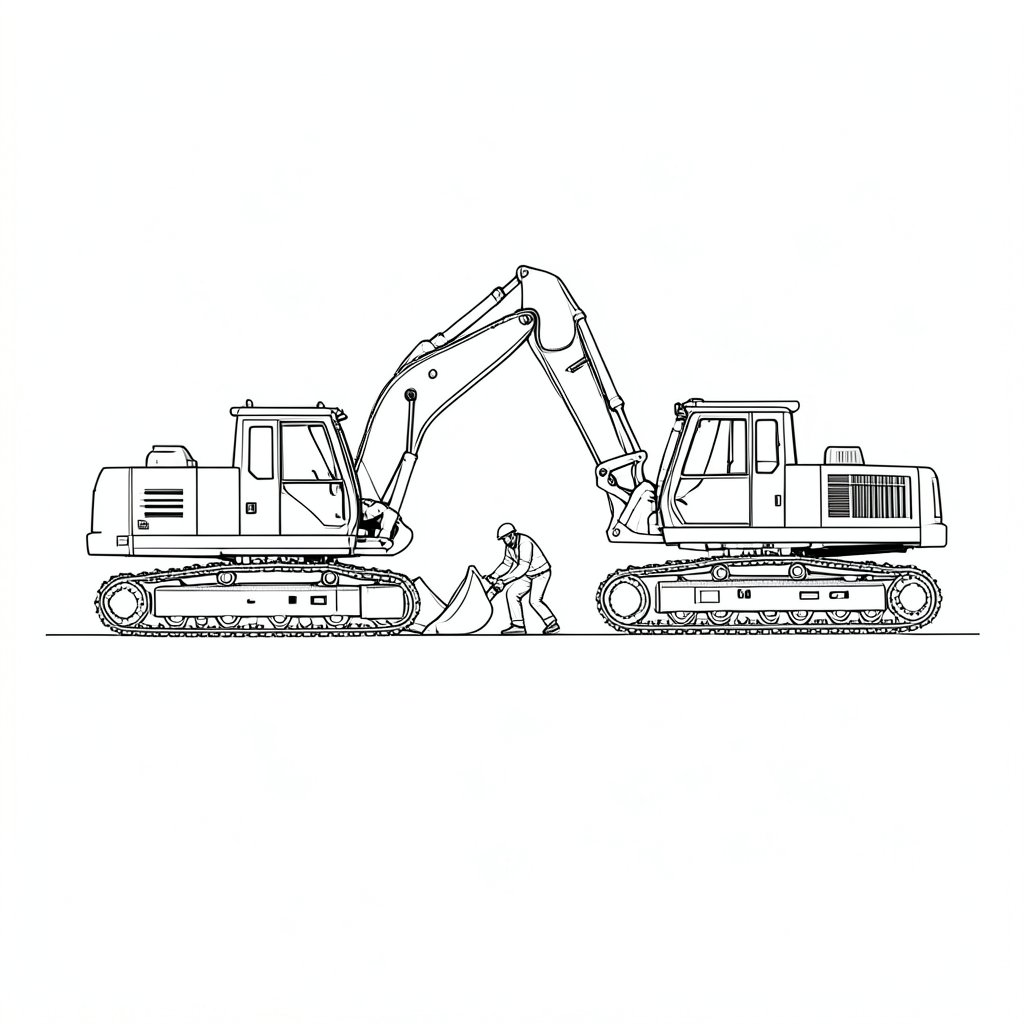
Being struck by moving plant is one of the most consistent causes of death on construction sites, and almost every case involves the same underlying condition: a person and a machine occupying the same ground with nothing physical keeping them apart.
Separation first, everything else second
The controls available form a clear order of effectiveness. Keeping people and plant apart entirely — separate routes, separate times, physical barriers — is the only control that works when someone is distracted, when visibility is poor, or when the operator makes a mistake. Everything below it depends on a human doing the right thing at the right moment. Hi-vis clothing, reversing alarms and banksman signals are all useful, and all of them are last lines rather than first ones.
The operator’s blind areas are larger than people assume
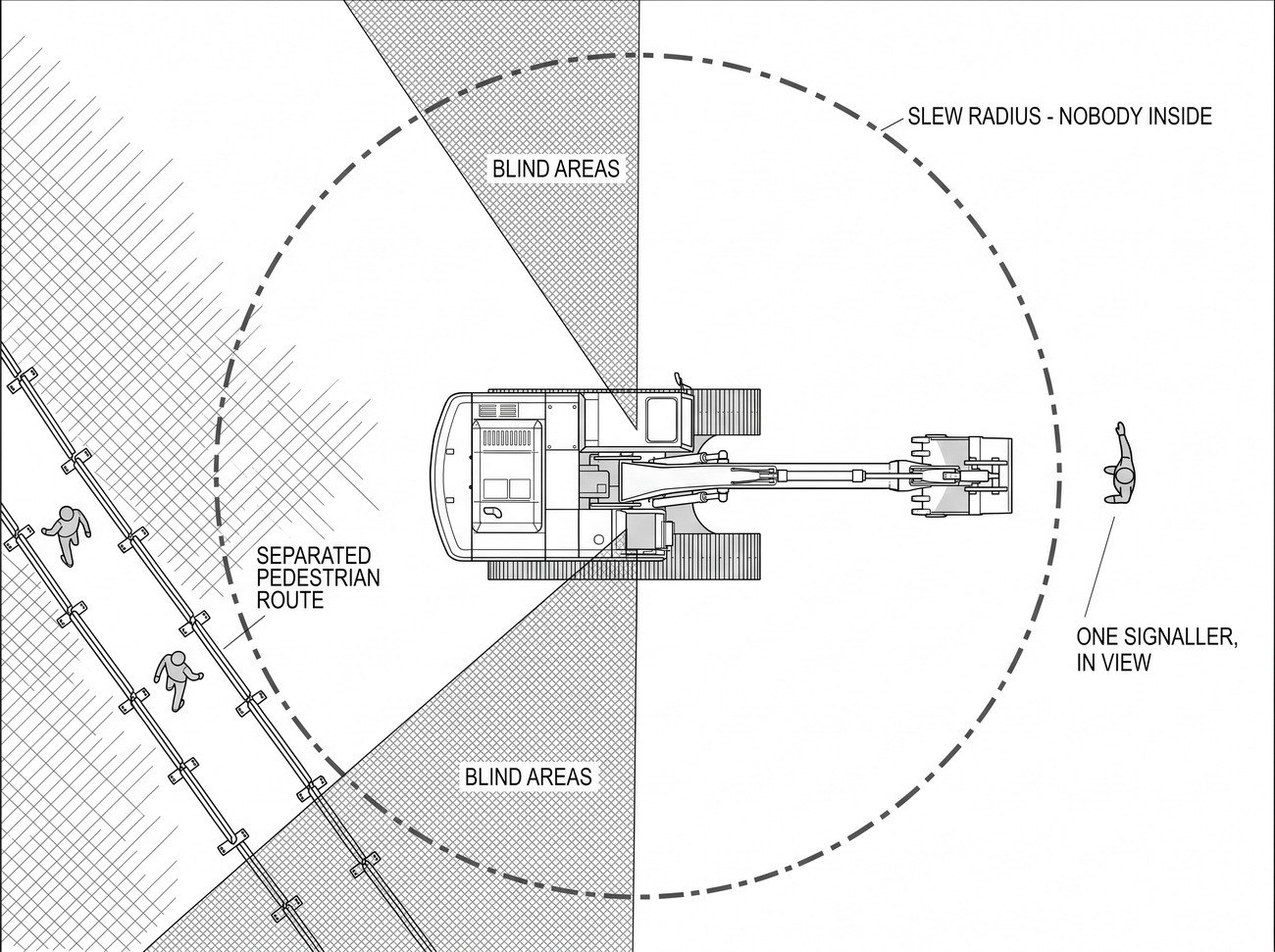
A large machine has extensive areas around it where a standing adult simply cannot be seen from the cab, and the worst of them is usually directly behind and along the offside. Cameras and mirrors reduce these areas without eliminating them, and both are frequently obscured by dust and rain in exactly the conditions where they are most needed. The practical consequence is that if you cannot see the operator’s face, you should assume the operator cannot see you, and that assumption should govern rather than a wave.
Slew radius, quick hitches and crush points
A slewing machine sweeps a circle whose size does not depend on which way the machine is currently facing, and the gap between the counterweight and any fixed object closes to nothing without warning. That crush point has no visual cue for the person standing in it, because the machine may be facing away at the moment they step in. The rule that follows is unambiguous: nobody stands within the slew radius while the machine is powered, and if the task requires someone to be there, the machine stops and the operator confirms it.
Banksman signals only work if they are agreed first
A signaller directing a manoeuvre is controlling the machine as surely as the operator is, and that only works when one person signals, both know the signals before the manoeuvre starts, and the operator stops the moment the signaller is lost from view. Signals invented on the spot, two people gesturing at once, or a signaller who moves out of the mirror mid-manoeuvre all convert the control into a hazard. The signaller also has to stand outside the machine’s path, which is easier to state than to hold when a manoeuvre gets tight.
Ground conditions and the excavator that ends up in the trench
Plant working near an excavation, a slope or made-up ground is loading material that may not hold, and the failure is sudden. Tracked machines are particularly exposed when tracking along a crest rather than approaching it square. Keeping plant back from edges, using stops where the ground drops away, and planning routes so machines do not have to travel parallel to an open excavation deals with the majority of these events before they can happen.
For the same separation problem indoors, see forklift and pedestrian segregation. Record the site layout on the traffic management plan, and see hi-vis clothing classes.
Related standards
The standards below set the test methods and performance levels behind the protective equipment used for this work.
- EN ISO 20471 — High-Visibility Clothing
- EN 397 — Industrial Safety Helmets
- EN ISO 20345 — Safety Footwear
Common errors
1Relying on hi-vis and alarms instead of physically separating people from plant.
2Assuming an operator has seen you because you waved, without seeing their face.
3Standing within the slew radius while the machine is powered.
4Signalling with more than one person, or with signals not agreed before the manoeuvre started.
5Tracking a machine along the crest of an excavation rather than approaching square and stopping short.
Frequently asked questions
What is the most effective control against being struck by plant?
Keeping people and plant apart entirely through separate routes, separate times and physical barriers. It is the only control that still works when someone is distracted or the operator makes a mistake.
How should you judge whether an operator can see you?
If you cannot see the operator's face, assume they cannot see you. Cameras and mirrors reduce blind areas without eliminating them and are often obscured by dust and rain.
Why is the slew radius treated as an absolute exclusion?
The machine sweeps the same circle regardless of which way it currently faces, and the gap between the counterweight and a fixed object closes without warning, with no visual cue for the person standing there.
What makes banksman signalling work?
One signaller only, signals agreed before the manoeuvre starts, the signaller standing outside the machine path, and the operator stopping the moment the signaller is lost from view.
Why is tracking along an excavation crest particularly risky?
The machine loads ground that may not hold, and the failure is sudden. Approaching square and stopping short, with stops where the ground drops away, removes most of these events.
Need this as a document you can issue? The template library gives you the risk assessments, permits and inspection logs in editable form — and employer plans cover a whole team with completion records.