Safety / Tips and Tricks / Warehouse and Logistics
Activity 07 · Warehouse
Forklift-Pedestrian Segregation and Warehouse Traffic Management
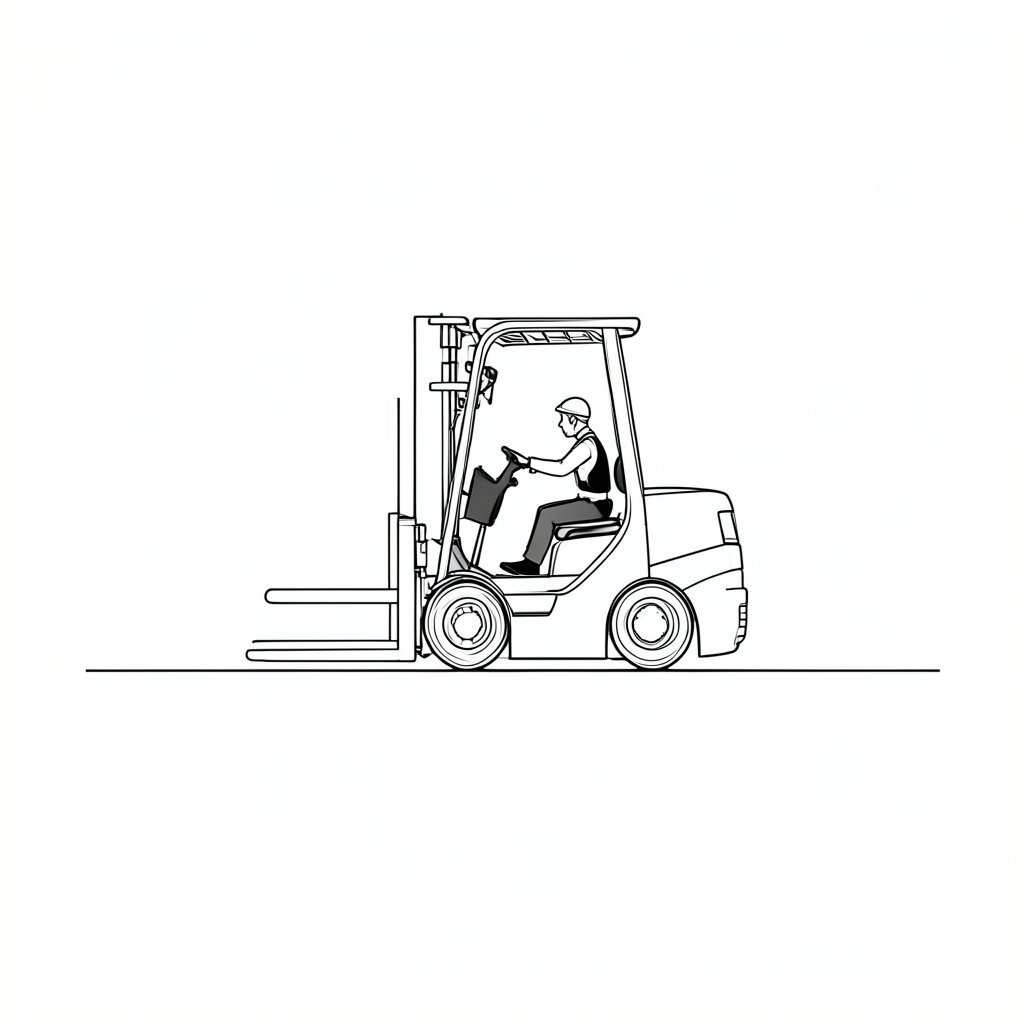
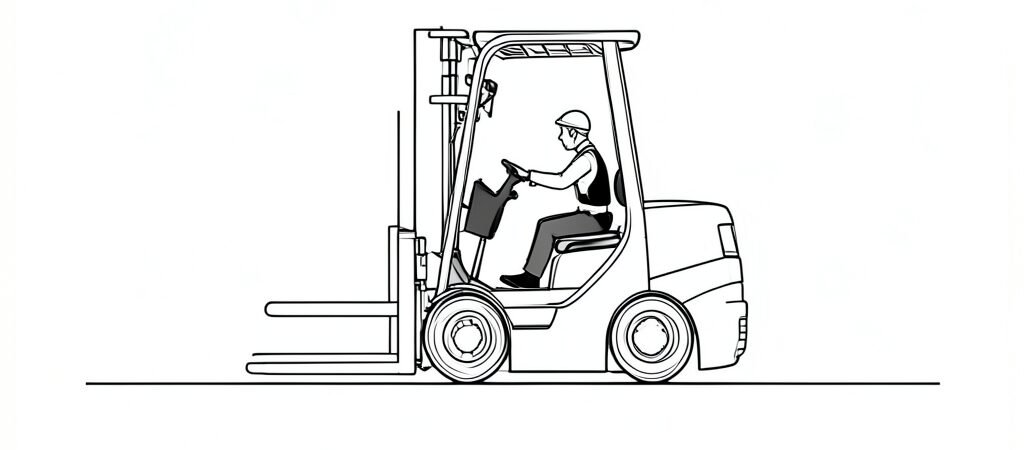
Forklifts and pedestrians sharing the same floor space is one of the most persistent sources of serious injury in warehouse operations, and the reason is structural rather than a matter of individual carelessness: a forklift operator's sightlines are genuinely limited, especially when reversing or carrying a raised load, in ways that no amount of individual attentiveness fully overcomes.
Why sightlines are a structural problem, not a training gap
A loaded forklift, particularly when the load itself blocks forward visibility, or when reversing around blind corners common in racking aisles, genuinely cannot always see a pedestrian in its path even with an attentive, well-trained operator behind the wheel. Physical segregation — separate marked pedestrian routes, barriers between pedestrian and vehicle zones, and controlled crossing points — addresses this structural limitation directly, rather than relying entirely on operator attentiveness and pedestrian awareness to compensate for sightlines that are physically restricted.
Marked routes and physical barriers
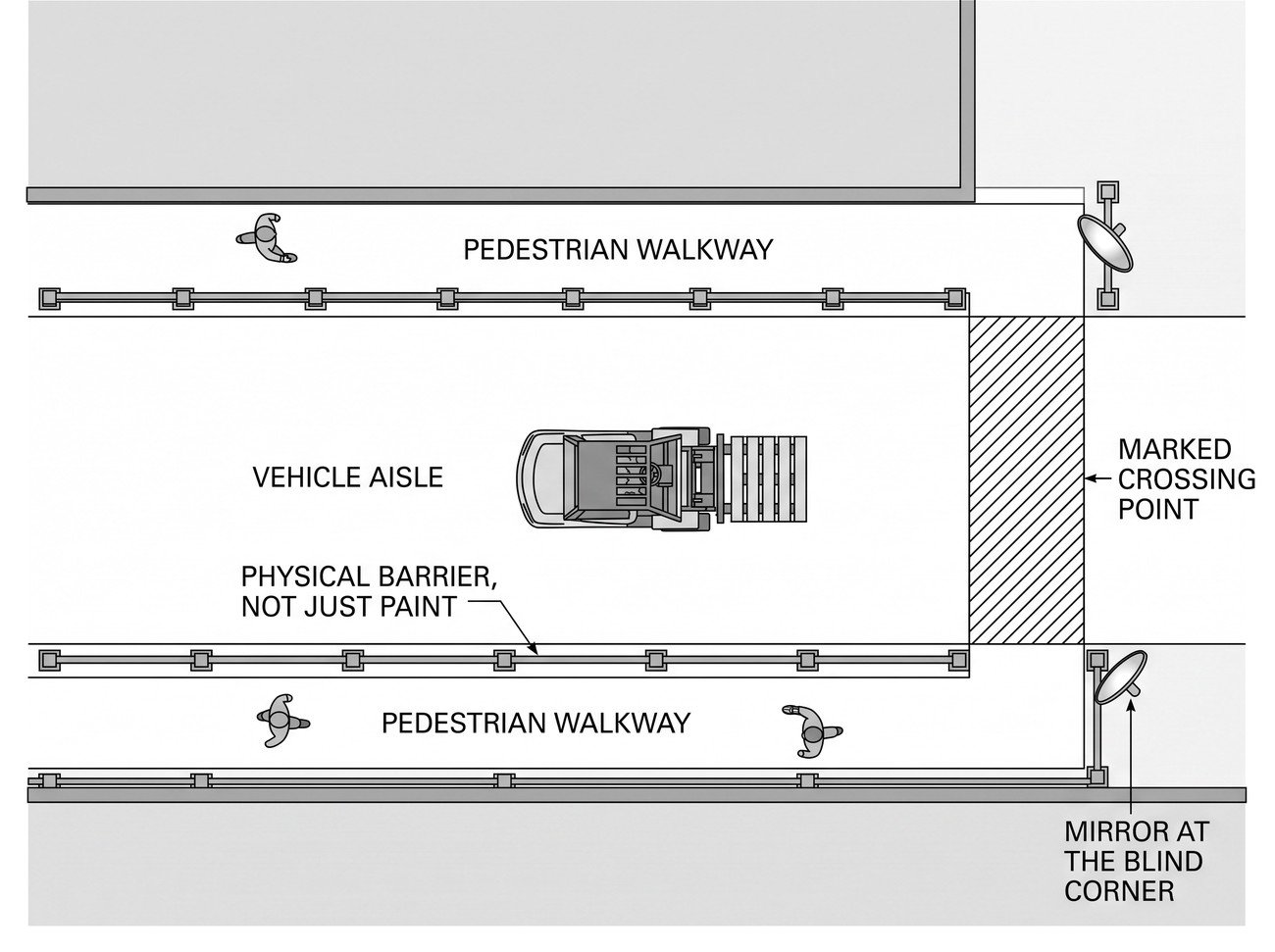
Clearly marked, physically distinct pedestrian walkways, ideally separated from vehicle routes by more than floor paint alone where traffic volume and speed justify it, give pedestrians a route where they do not need to rely on a forklift operator seeing them in time. Floor markings alone are a meaningfully weaker control than a physical barrier, since markings can be ignored, obscured by stock, or simply not noticed by either party in a busy, noisy environment.
Crossing points and blind corners
Where pedestrian and vehicle routes must cross, designated crossing points with clear sightlines, convex mirrors at blind corners, or, on higher-traffic crossings, light or signal systems that indicate when it is safe to cross, reduce the specific risk concentrated at these intersection points far more than an unmarked, ad hoc crossing anywhere along the route. Racking aisle intersections, where a forklift emerging from an aisle has essentially no sightline into the cross-aisle, are a particularly common location for this kind of incident and deserve deliberate attention rather than being treated the same as an open, visible area.
Speed limits and enforcement
Forklift speed limits, appropriate to the specific area — lower in pedestrian-dense zones, near blind corners, or in racking aisles — reduce both the likelihood of a collision and its severity if one occurs, since stopping distance and the ability to react to an unexpected pedestrian both improve significantly at lower speed. Speed limits that exist on paper but are not genuinely enforced or reinforced through the physical layout of the space provide little of their intended benefit.
Hi-vis and horn use as supplementary, not primary, controls
Hi-vis clothing for pedestrians and horn use at blind corners by forklift operators both help, but they are supplementary controls that depend on the other party noticing and reacting correctly, not primary controls that remove the hazard the way physical segregation does. Relying primarily on hi-vis and horn use, without the physical segregation and speed controls that address the underlying sightline problem, leaves the core structural risk largely unaddressed.
For the hi-vis clothing that supports, but does not replace, these traffic controls, see hi-vis clothing classes.
Related standards
The standards below set the test methods and performance levels behind the equipment referenced in this note.
- EN ISO 20471 — High-visibility clothing
- EN 812 — Industrial bump caps
- EN ISO 20345 — Safety footwear
Common errors
1Relying on floor paint alone as pedestrian segregation in areas with genuine forklift traffic volume.
2Treating racking aisle intersections the same as open, visible areas despite their essentially zero forklift sightline.
3Setting forklift speed limits that are not reinforced through physical layout or genuine enforcement.
4Treating hi-vis clothing and horn use as sufficient controls on their own, without physical segregation addressing the underlying sightline problem.
Frequently asked questions
Why is forklift-pedestrian segregation described as a structural issue rather than a training gap?
A loaded forklift's sightlines are genuinely limited, especially when reversing or carrying a raised load, in ways that no amount of individual operator attentiveness fully overcomes.
Why are physical barriers considered stronger controls than floor markings alone?
Floor markings can be ignored, obscured by stock, or simply not noticed in a busy environment, while a physical barrier gives pedestrians a route that does not depend on being seen by a forklift operator.
Why are racking aisle intersections a particular concern for forklift-pedestrian collisions?
A forklift emerging from an aisle has essentially no sightline into the cross-aisle, making these intersections deserve deliberate crossing controls rather than being treated like an open, visible area.
Why do forklift speed limits need to be reinforced through physical layout?
Speed limits that exist only on paper without genuine enforcement or supporting layout changes provide little of their intended benefit, since stopping distance and reaction ability depend on actual speed, not stated policy.
Are hi-vis clothing and horn use sufficient controls for forklift-pedestrian safety on their own?
No, they are supplementary controls that depend on the other party noticing and reacting, not primary controls that remove the underlying sightline hazard the way physical segregation does.
Need this as a document you can issue? The template library gives you the risk assessments, permits and inspection logs in editable form — and employer plans cover a whole team with completion records.