Safety / Tips and Tricks / Warehouse and Logistics
Activity 07 · Warehouse
Racking Inspection and Load Limits
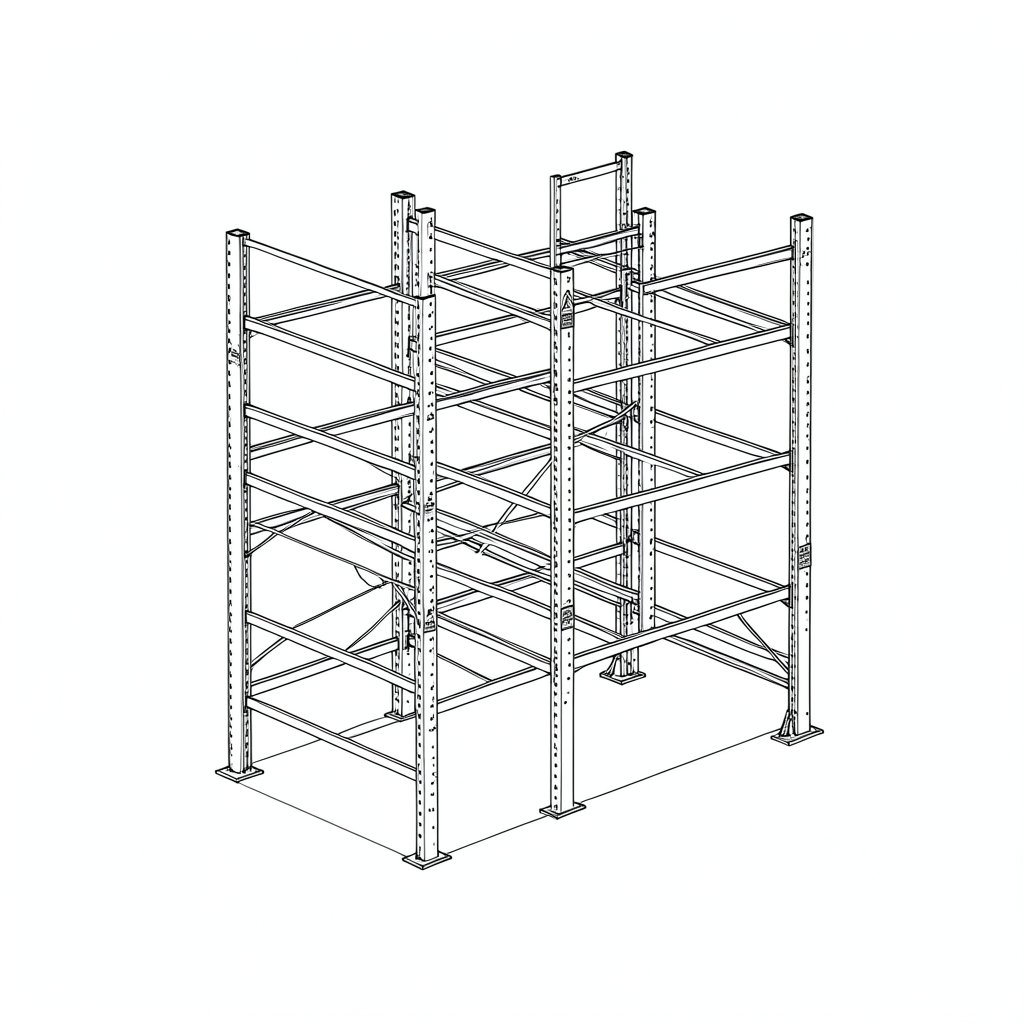
Warehouse racking failure is rarely sudden and unpredictable — it is far more often the end point of accumulated, visible damage that went unreported or unaddressed, which makes routine inspection one of the more effective and underused controls available for preventing a genuinely dangerous structural failure.
Why racking damage accumulates unnoticed
A forklift impact against an upright or beam often looks minor at the time — a scrape, a slight bend — and without a deliberate inspection and reporting process, this kind of damage tends to accumulate over time as multiple minor impacts each go unreported individually, none seeming serious enough on its own to warrant action. The cumulative effect of several minor impacts on the same structural member can meaningfully reduce its load capacity well before the damage looks dramatic enough to prompt action on its own.
What routine inspection actually checks
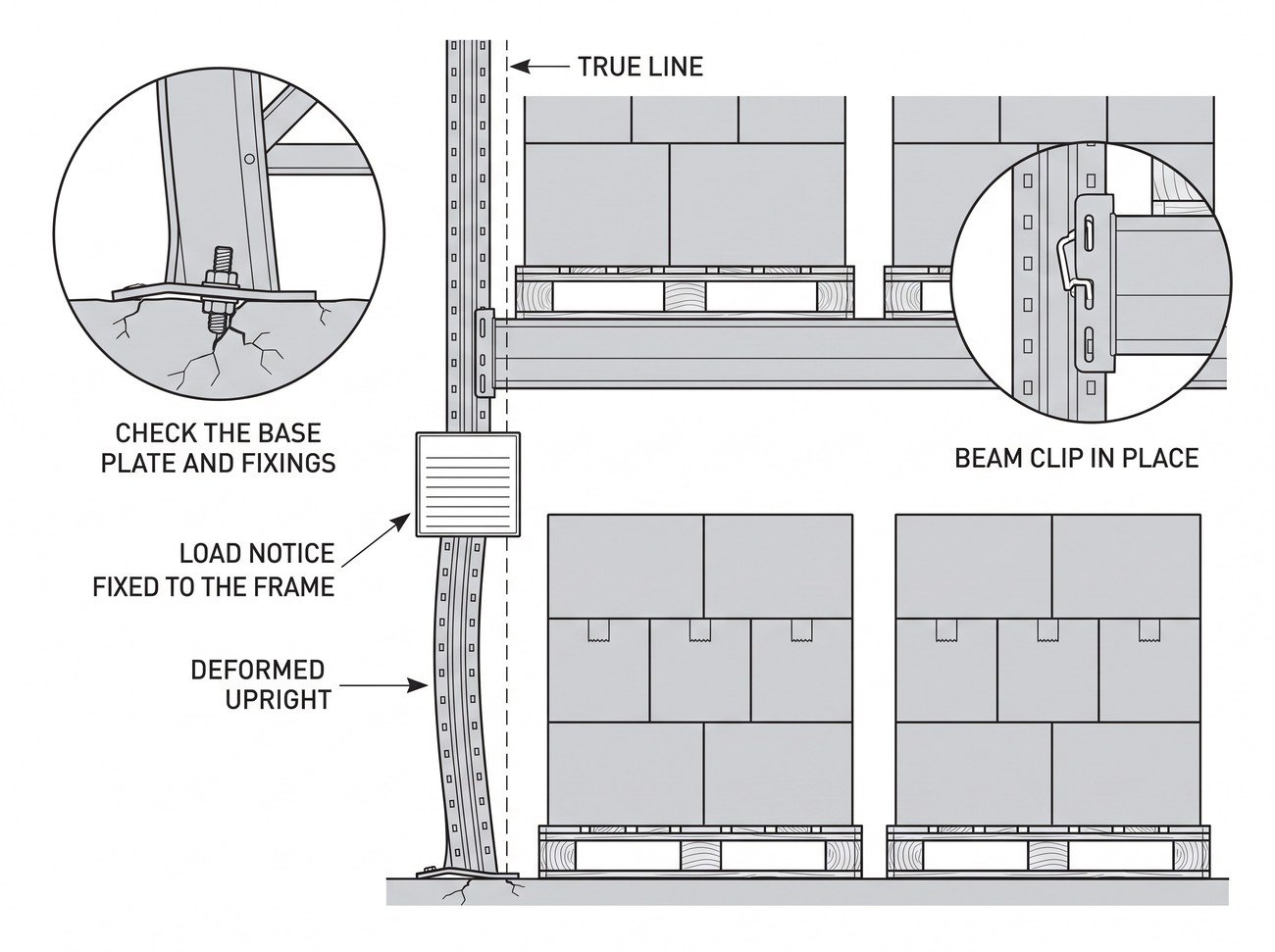
Regular racking inspection checks for bent or damaged uprights and beams, missing or damaged safety clips and locking pins, misaligned or unlevel sections, and any signs of overloading such as visible beam deflection under load. A structured inspection schedule, with damage categorized by severity and a clear process for what happens at each severity level, from monitoring through to immediate load removal and repair, gives the process the consistency an occasional or informal check does not.
Load limits and load notices
Racking is engineered for a specific maximum load per bay and level, displayed on a load notice at the racking itself, and exceeding this limit — even with apparently sturdy-looking material — loads the structure beyond what it was actually designed and tested for. Load limits should be checked against the load notice for the specific bay in use, not assumed from a general sense of what racking typically holds, since load ratings can genuinely differ between different sections of racking within the same facility depending on their design and configuration.
Reporting culture and immediate hazard removal
A reporting process that workers actually use depends on damage being treated as a normal, expected part of operations to flag, not as something that reflects badly on whoever caused it, since a punitive response to reported impact damage discourages exactly the reporting the inspection process depends on. Any damage assessed as an immediate structural risk should have the load removed and the section taken out of use until repaired, rather than left in service while awaiting a scheduled repair.
Uprights and floor fixing
Racking uprights need to remain securely fixed to the floor, and floor fixing can loosen over time from repeated impact vibration even without a single dramatic incident causing it, which is a specific check that a purely visual inspection of the upright itself, without checking the base fixing, can miss.
For the traffic controls that reduce forklift impact against racking in the first place, see forklift-pedestrian segregation and warehouse traffic management.
Related standards
The standards below set the test methods and performance levels behind the equipment referenced in this note.
Common errors
1Treating minor racking impact damage as not worth reporting because it looks small at the time.
2Exceeding a bay's rated load limit based on a general assumption rather than checking the specific load notice.
3Responding punitively to reported impact damage, discouraging future reporting.
4Inspecting the visible upright structure without checking whether floor fixing has loosened over time.
Frequently asked questions
Why does racking damage often accumulate unnoticed?
A single impact often looks minor at the time, and without a deliberate reporting process, multiple minor impacts on the same member can accumulate without any one incident seeming serious enough to prompt action.
What does a routine racking inspection actually check for?
Bent or damaged uprights and beams, missing or damaged safety clips and locking pins, misaligned sections, and signs of overloading such as visible beam deflection.
Can racking load limits differ between sections of the same warehouse?
Yes, load ratings depend on the specific design and configuration of each section, so limits should be checked against the load notice for the specific bay in use, not assumed generally.
Why does a punitive response to reported racking damage undermine safety?
It discourages the reporting that the inspection process depends on, since workers become less likely to flag damage they fear will reflect badly on them.
What should happen when racking damage is assessed as an immediate structural risk?
The load should be removed and the section taken out of use until repaired, rather than left in service while awaiting a scheduled repair.
Need this as a document you can issue? The template library gives you the risk assessments, permits and inspection logs in editable form — and employer plans cover a whole team with completion records.