Safety / Tips and Tricks / Warehouse and Logistics
Activity 07 · Warehouse
Safe Use of Pallet Trucks and Hand Trucks
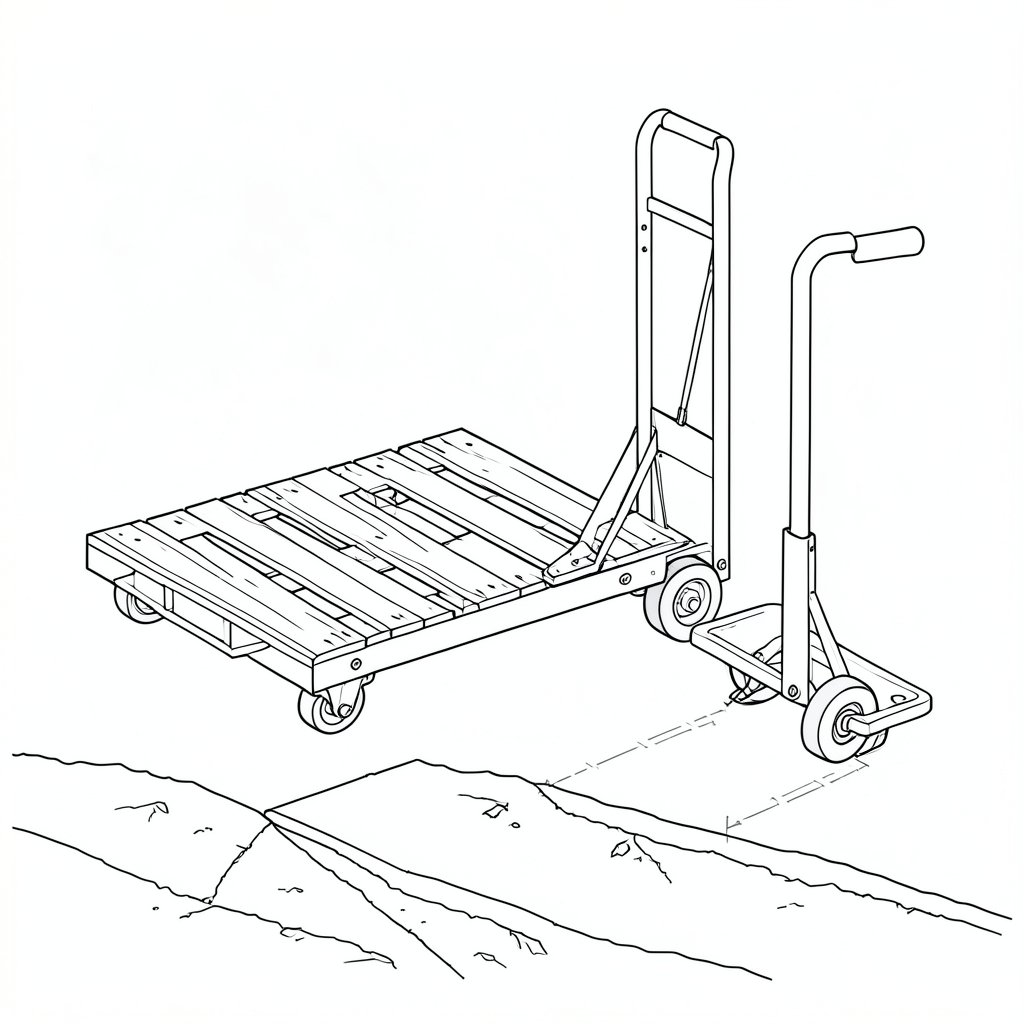
Pallet trucks and hand trucks look simple enough to use without much thought, and that apparent simplicity is exactly why injuries involving them are so common — the real hazards are in the details of load stability, foot positioning, and terrain that a genuinely simple-looking task can still get wrong.
Foot positioning and crush risk
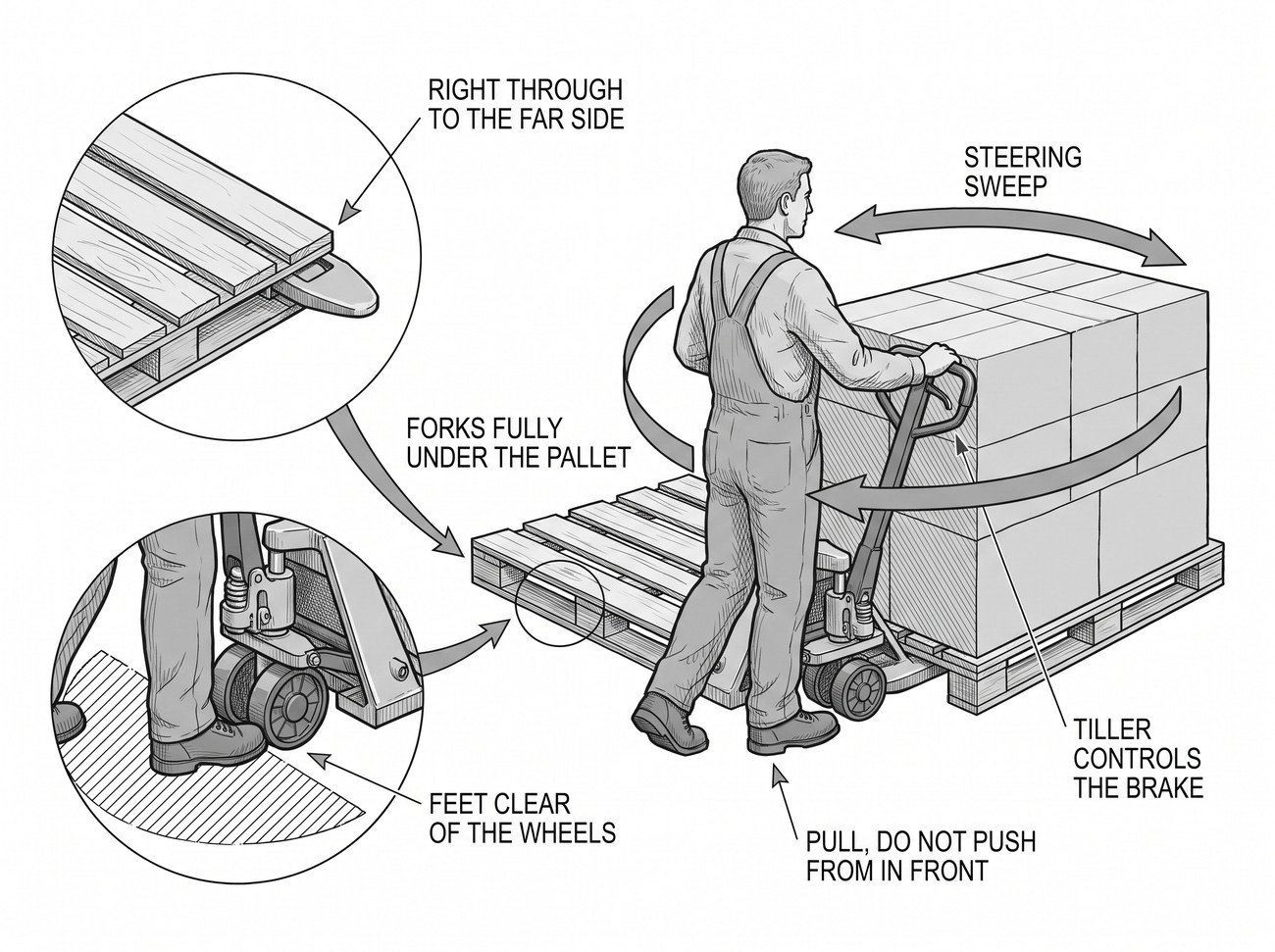
A pallet truck’s wheels and the pallet itself can crush a foot positioned underneath or immediately alongside the load path, and this risk is specifically elevated when maneuvering in tight spaces or turning, where the operator’s own feet can end up closer to the load’s path than intended without a deliberate awareness of foot position throughout the movement. Keeping feet clear of the truck’s wheel path and the pallet’s footprint at all times, not just when moving in a straight line, addresses a risk that is easy to underestimate given how slow-moving pallet trucks generally are.
Load stability and pallet condition
An unstable or poorly stacked load on a pallet truck can shift during movement, particularly when turning or on any incline, and checking load stability before moving, not just the truck’s mechanical function, is part of a complete pre-use check. Pallet condition itself matters too — a damaged or split pallet can fail under load during transport in a way that has nothing to do with the truck or the load’s own stacking.
Ramps, inclines and floor transitions
Manual pallet trucks are considerably harder to control on any incline than on a level floor, since the operator has less ability to stop or control a loaded truck’s momentum going downhill, and pushing rather than pulling on a downward incline, keeping the truck between the operator and any hazard below, reduces the consequence if control is lost. Floor transitions, such as the edge of a loading dock leveler or a threshold between different floor surfaces, can also unexpectedly destabilize a load if crossed too quickly or at an angle.
Pushing versus pulling
Pushing a hand truck or pallet truck generally gives better visibility of the path ahead and more control than pulling, though pulling can be appropriate in certain tight or reversing situations, and the choice should reflect which gives better visibility and control for the specific space being navigated, rather than defaulting to whichever feels more natural without considering the actual layout.
Weight limits and hand truck selection
Both pallet trucks and hand trucks have a rated maximum load capacity, and exceeding it strains the equipment’s mechanical components and control in ways that increase both mechanical failure risk and loss-of-control risk during movement. Selecting equipment rated for the actual load, rather than the nearest available truck regardless of its rated capacity, matters directly for both these risks.
For safe stacking practices that affect load stability before transport even begins, see safe stacking and load securing for storage.
Related standards
The standards below set the test methods and performance levels behind the equipment referenced in this note.
Common errors
1Positioning feet within the wheel path or pallet footprint during turning or tight maneuvering.
2Moving a load without checking its stability and the pallet's own condition beforehand.
3Pulling a loaded pallet truck downhill rather than pushing it with the truck positioned between the operator and the hazard below.
4Using equipment rated below the load's actual weight because it happened to be the nearest available truck.
Frequently asked questions
Why is foot crush risk a specific concern with pallet trucks despite their slow speed?
The wheels and pallet can crush a foot positioned underneath or alongside the load path, and this risk is elevated during turning or tight maneuvering, when feet can end up closer to the load path than intended.
What should be checked about a load before moving it with a pallet truck?
Its stability and the condition of the pallet itself, since an unstable load can shift during movement and a damaged pallet can fail under load independent of how well the load is stacked.
Why are manual pallet trucks harder to control on an incline?
The operator has less ability to stop or control a loaded truck's momentum going downhill, which is why pushing rather than pulling, with the truck between the operator and any hazard below, reduces the consequence of losing control.
Is pushing or pulling generally the safer way to move a pallet truck or hand truck?
Pushing generally gives better visibility and control, though pulling can be appropriate in tight or reversing situations, so the choice should reflect what gives better visibility for the specific space.
Why does using equipment rated for the actual load weight matter?
Exceeding the rated capacity strains mechanical components and control in ways that increase both mechanical failure risk and loss-of-control risk during movement.
Need this as a document you can issue? The template library gives you the risk assessments, permits and inspection logs in editable form — and employer plans cover a whole team with completion records.