Safety / Tips and Tricks / Warehouse and Logistics
Activity 07 · Warehouse
Safe Stacking and Load Securing for Storage
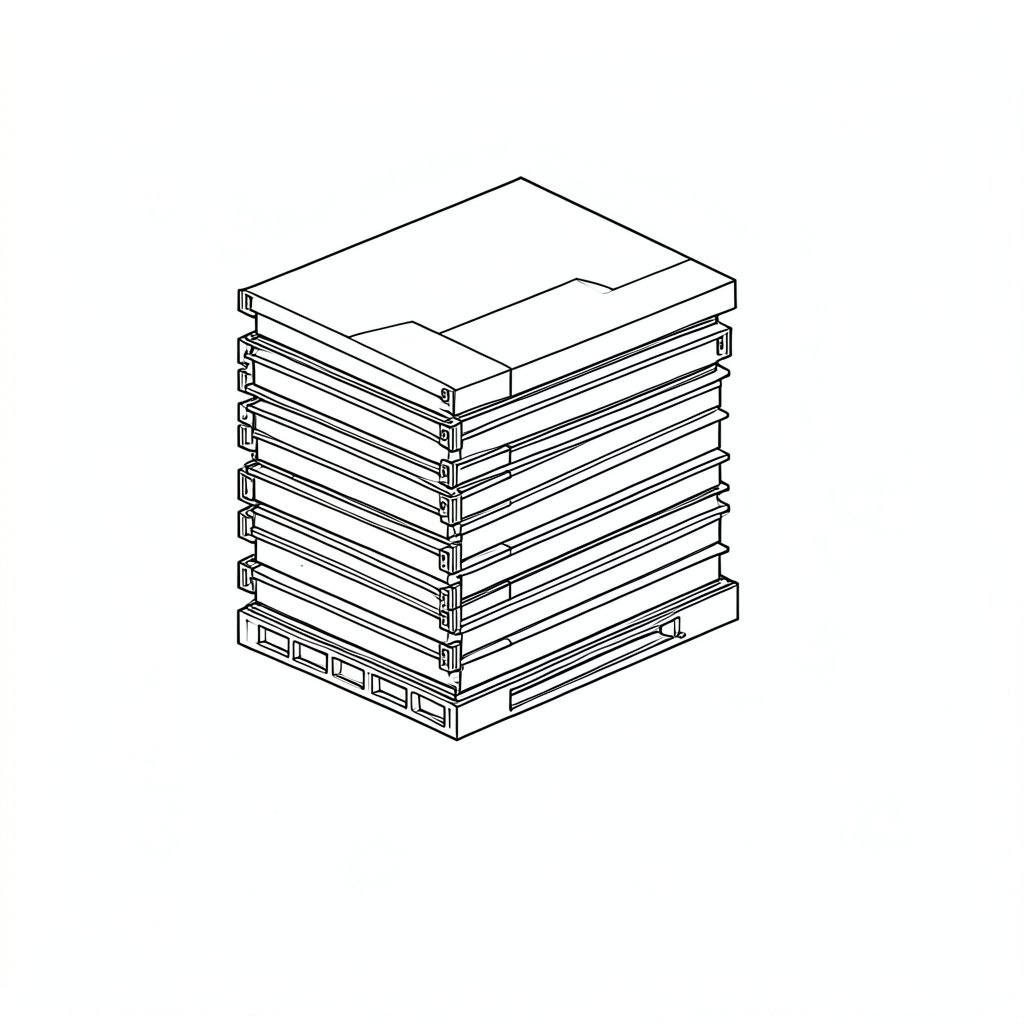
A stack that looks stable sitting still can behave completely differently the moment it is bumped, vibrated by nearby forklift traffic, or subjected to even a small lateral force, which is why stacking safety has to account for more than whether a stack simply stands up under its own weight.
Base stability and interlocking
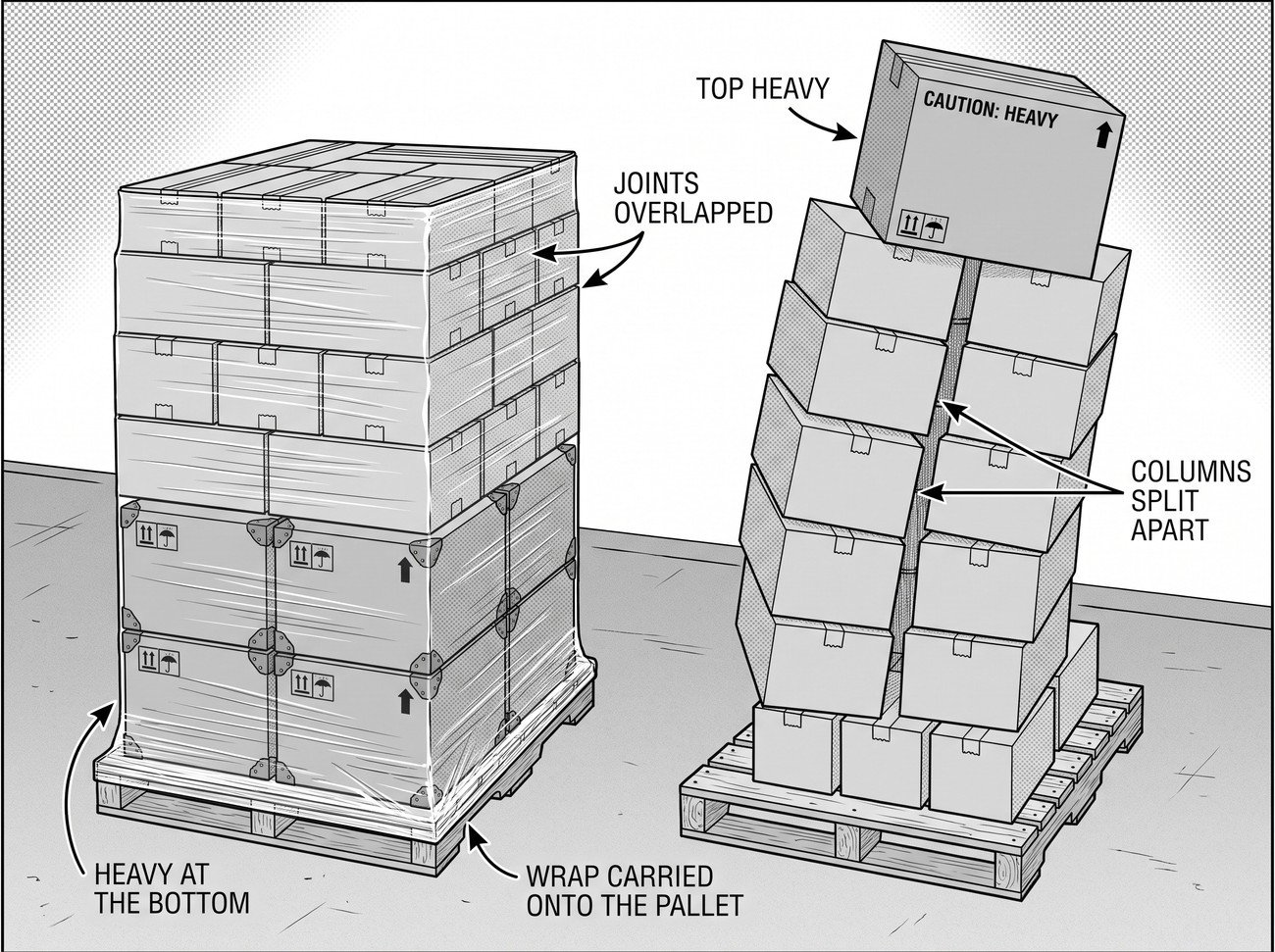
A stable stack starts with a solid, level base, and pallets or cartons stacked with some degree of interlocking pattern between layers resist lateral movement far better than a straight, uninterlocked column, where every layer can shift independently of the ones above and below it. Stacking directly on an uneven or damaged pallet at the base compromises the whole stack above it regardless of how carefully the upper layers are arranged.
Weight distribution: heavier items low, lighter items high
Placing heavier items toward the base of a stack and progressively lighter items higher up keeps the stack’s center of gravity low, which improves stability under the kind of lateral force a passing forklift or a bump can introduce, and stacking a heavy item on top of lighter, less rigid items beneath it risks crushing those lower items and destabilizing the whole stack from below.
Maximum stack height and rated capacity
Stack height limits, whether set by the storage area’s own design, the pallet or packaging manufacturer’s rating, or general stability principles for the specific product being stacked, should be respected rather than exceeded because the space allows it or because a slightly taller stack seems achievable. A stack that exceeds its safe height for the base it sits on, or for the product’s own structural capacity, becomes progressively less stable the taller it goes, in a way that is not always obvious just from looking at it.
Securing methods: wrap, strapping and netting
Stretch wrap, strapping, or netting around a stack adds a genuine mechanical control against shifting that stacking pattern and weight distribution alone do not fully provide, particularly for stacks that will be moved or that sit in an area with meaningful vibration or traffic nearby. The securing method should match the actual product and stack height — a method adequate for a low, light stack may not provide equivalent security for a taller or heavier one.
Aisle and clearance considerations
Stacks positioned too close to aisles or traffic routes are more exposed to incidental contact from passing vehicles or equipment, and maintaining adequate clearance between stored stacks and active traffic routes reduces the chance of exactly the kind of bump or lateral force that destabilizes an otherwise well-built stack. This clearance decision is a storage layout choice made before stacking begins, not something correctable after a stack is already in place.
For traffic controls that reduce the chance of a stack being struck by a passing vehicle, see forklift-pedestrian segregation and warehouse traffic management.
Related standards
The standards below set the test methods and performance levels behind the equipment referenced in this note.
- EN 388 — Gloves against mechanical risks
- EN ISO 20345 — Safety footwear
- EN 397 — Industrial safety helmets
Common errors
1Stacking on an uneven or damaged base pallet, compromising the entire stack above it.
2Placing heavier items above lighter, less rigid items rather than keeping the heaviest items at the base.
3Exceeding safe stack height because the available space allows it, without checking the product's actual structural capacity.
4Positioning stacks too close to active traffic routes where incidental contact is likely.
Frequently asked questions
Why can a stack that looks stable still be at risk of collapse?
Its stability under its own weight while sitting still does not guarantee stability when bumped, vibrated by nearby traffic, or subjected to a small lateral force, which behaves very differently from static weight-bearing.
Why does interlocking pattern between stacked layers matter?
It resists lateral movement far better than a straight, uninterlocked column, where every layer can shift independently of the ones above and below it.
Why should heavier items be placed at the base of a stack?
It keeps the stack's center of gravity low, improving stability under lateral force, and prevents crushing lighter, less rigid items that would otherwise sit beneath a heavier load.
Should stack height limits be exceeded if the storage space allows it?
No, exceeding a stack's safe height for its base or the product's structural capacity makes it progressively less stable in a way that is not always visually obvious.
When does a stack need additional securing like wrap or strapping?
Particularly for stacks that will be moved or that sit in areas with meaningful vibration or traffic nearby, since stacking pattern and weight distribution alone do not fully prevent shifting in those conditions.
Need this as a document you can issue? The template library gives you the risk assessments, permits and inspection logs in editable form — and employer plans cover a whole team with completion records.