Safety / Tips and Tricks / Warehouse and Logistics
Activity 07 · Warehouse
Picking at Height and Order Picker Safety
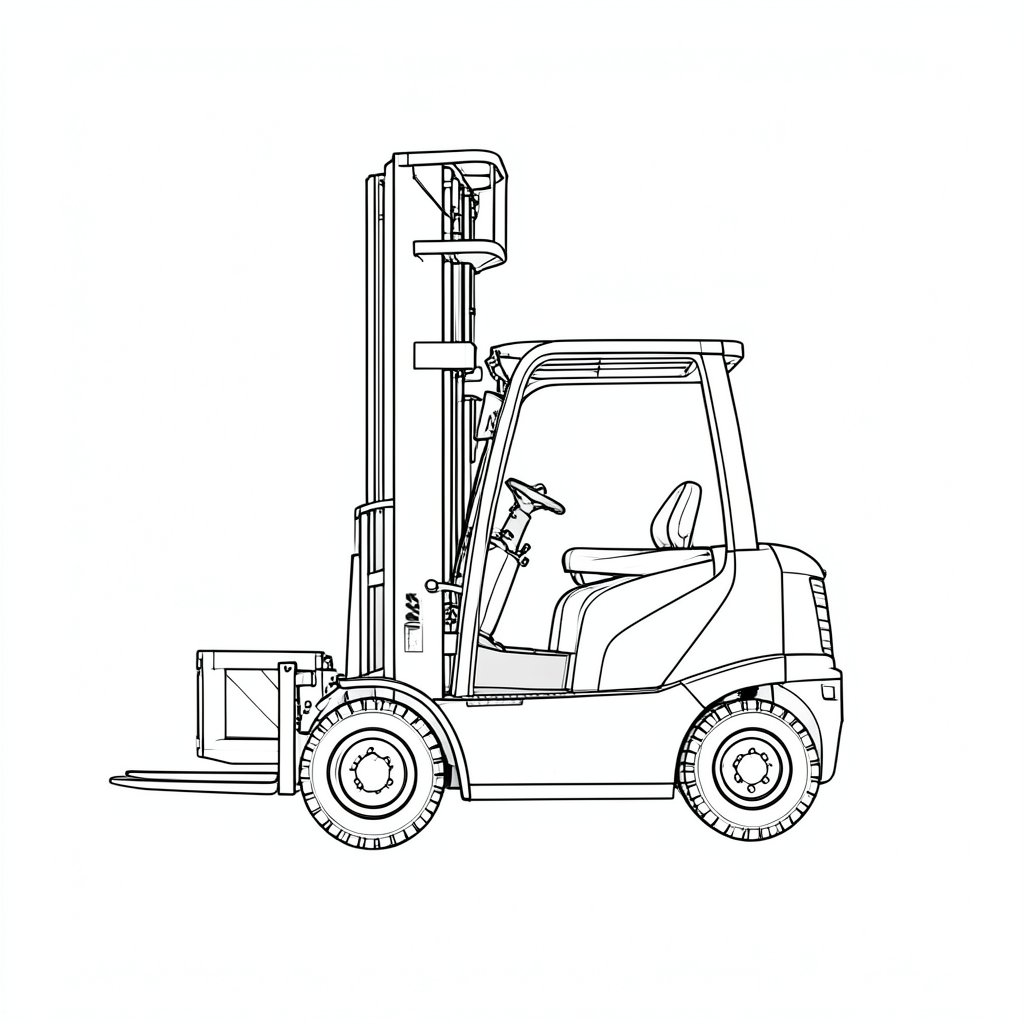
An order picker truck elevates the operator along with the load, which turns a routine picking task into genuine work at height, and the fall protection this requires is often the piece of the task that gets the least attention precisely because the primary focus stays on the picking itself rather than on the height involved.
Fall protection requirements on order pickers
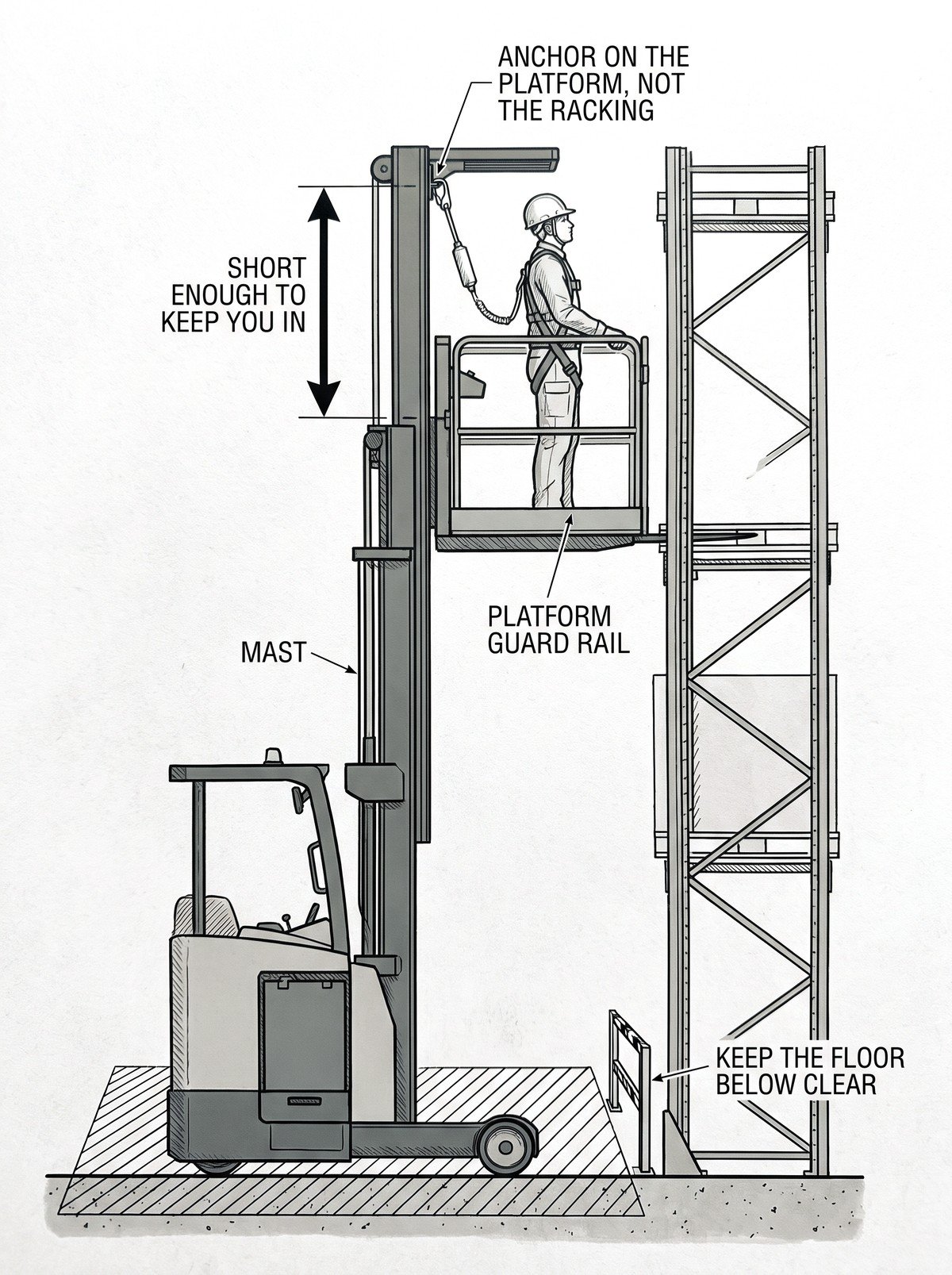
Most order picker trucks require the operator to wear a harness connected to an anchor point on the truck’s own cage or platform, following the truck manufacturer’s specific fall protection requirements, since the cage rails alone are not necessarily sufficient fall prevention at the platform heights these trucks commonly reach. Harness components used for this purpose should meet the same standards used elsewhere for fall arrest, including a body harness meeting EN 361 and a suitable connecting lanyard meeting EN 358 where a restraint-style connection to the truck’s anchor point is specified by the manufacturer.
Checking the anchor point and lanyard length
The anchor point on the truck itself needs to be the one specified by the manufacturer for this purpose, not an improvised attachment point elsewhere on the cage that happens to be convenient, since only the designated anchor point has been assessed for this specific use. Lanyard length should be set so the operator cannot climb or lean over the cage rails, which is a restraint function preventing the operator reaching a position where a fall becomes possible, rather than a fall-arrest function catching a fall already in progress.
Items falling from height during picking
Items picked at height can be dropped, either by the operator or by disturbing adjacent stock while reaching for a specific item, and this creates a falling-object risk to anyone on the warehouse floor below the picking operation. Establishing a clear zone beneath active elevated picking work, and picking technique that avoids reaching awkwardly past or across adjacent stock in a way that risks dislodging it, both reduce this specific and often underappreciated risk.
Platform and cage inspection
The cage, platform, and lifting mechanism of an order picker truck need routine inspection specific to their function as elevated work equipment, not just the general mechanical inspection any powered truck would receive, since a fault in the lifting or platform locking mechanism at height carries a materially different consequence than the same category of fault on a ground-level truck.
Reaching and leaning
Reaching or leaning beyond the cage’s rails to access a pick, rather than repositioning the truck to bring the item within safe reach, is a common shortcut that defeats the purpose of the cage and harness restraint system together, and repositioning, even though it takes slightly longer, keeps the operator within the zone the fall protection system is actually designed to manage.
For general conveyor and machine safety encountered in the same picking environment, see conveyor belt and sortation system safety.
Related standards
The standards below set the test methods and performance levels behind the equipment referenced in this note.
- EN 361 — Full body harnesses
- EN 358 — Work positioning and restraint belts
- EN 362 — Connectors for fall protection
- EN 397 — Industrial safety helmets
Common errors
1Attaching the harness to an improvised point on the cage rather than the manufacturer-designated anchor point.
2Setting lanyard length long enough to allow climbing or leaning over the cage rails.
3Reaching or leaning beyond the cage to access a pick instead of repositioning the truck.
4Picking without establishing a clear zone below for the falling-object risk elevated picking creates.
Frequently asked questions
Why does an order picker truck turn picking into genuine work at height?
It elevates the operator along with the load to platform heights where cage rails alone are not necessarily sufficient fall prevention, requiring a harness connected to a manufacturer-specified anchor point.
Where should the fall protection harness be attached on an order picker?
To the manufacturer-designated anchor point on the truck's cage or platform, not an improvised attachment point elsewhere that happens to be convenient.
What is the purpose of setting a specific lanyard length on an order picker?
It functions as restraint, preventing the operator from climbing or leaning over the cage rails to reach a position where a fall becomes possible, rather than catching a fall already in progress.
What falling-object risk does elevated picking create for workers below?
Items can be dropped or adjacent stock dislodged while reaching for a pick, creating a risk to anyone on the floor below, which is why a clear zone beneath active picking work matters.
Why should an operator reposition the truck rather than lean beyond the cage rails to reach an item?
Leaning beyond the rails defeats the purpose of the cage and harness restraint system together, while repositioning keeps the operator within the zone the fall protection is designed to manage.
Need this as a document you can issue? The template library gives you the risk assessments, permits and inspection logs in editable form — and employer plans cover a whole team with completion records.