Safety / Tips and Tricks / Warehouse and Logistics
Activity 07 · Warehouse
Conveyor Belt and Sortation System Safety
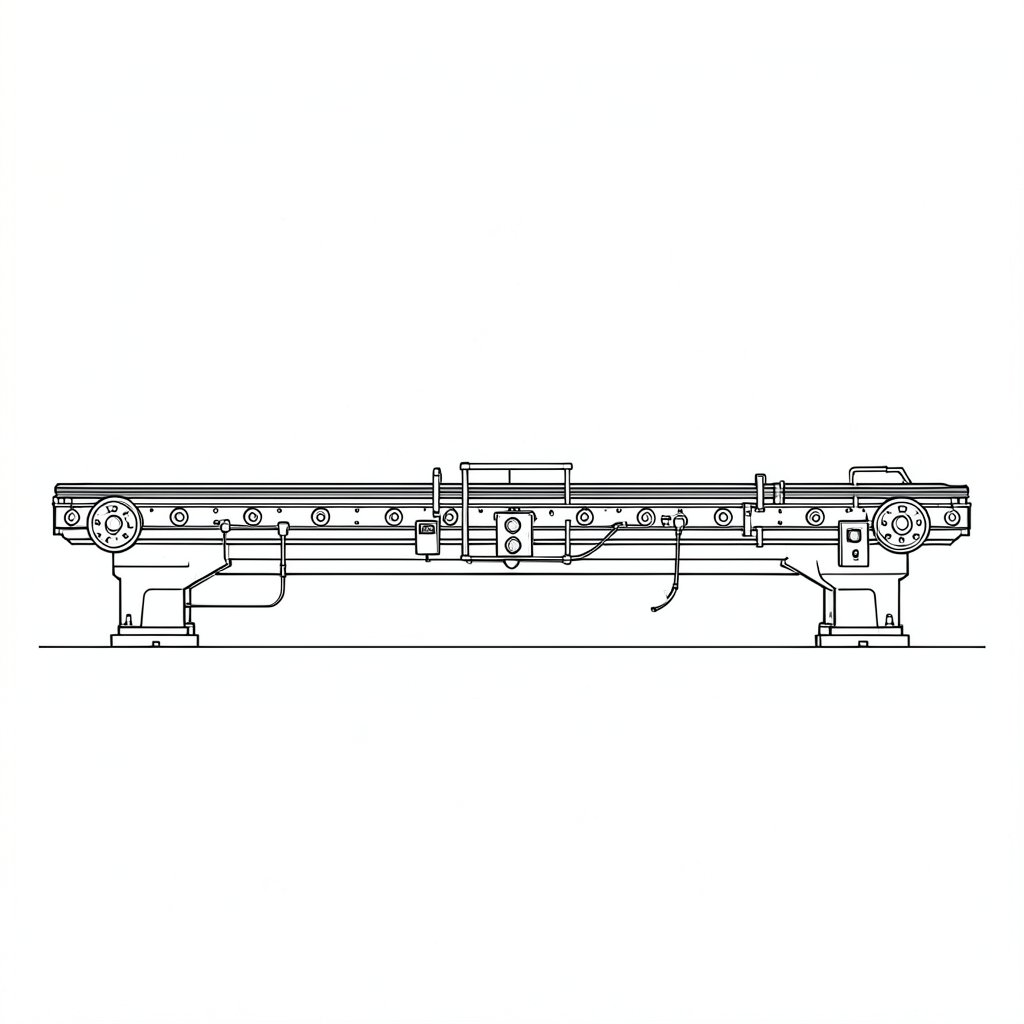
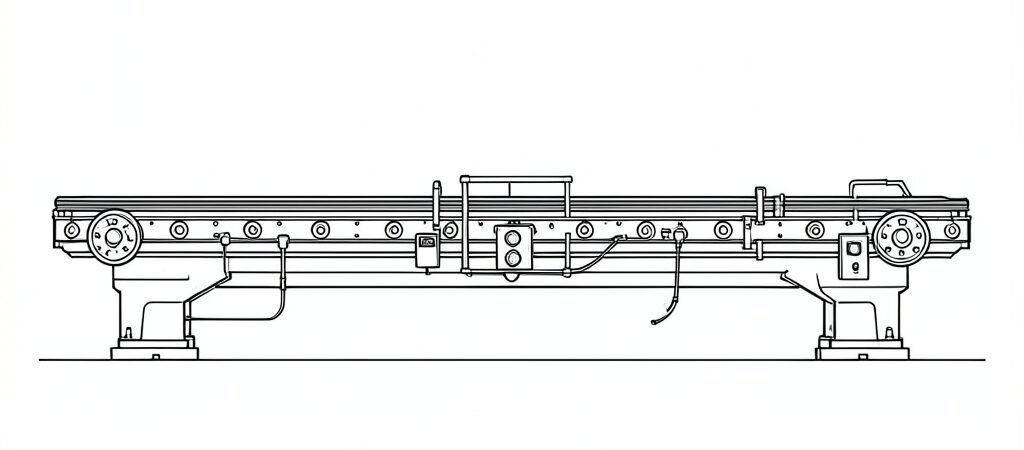
A conveyor system moves continuously and often automatically, which means the machine does not pause to check whether a hand, sleeve, or piece of loose clothing has come too close to a pinch point — the guarding and control systems around it have to do that job entirely on their own.
Pinch points and nip hazards
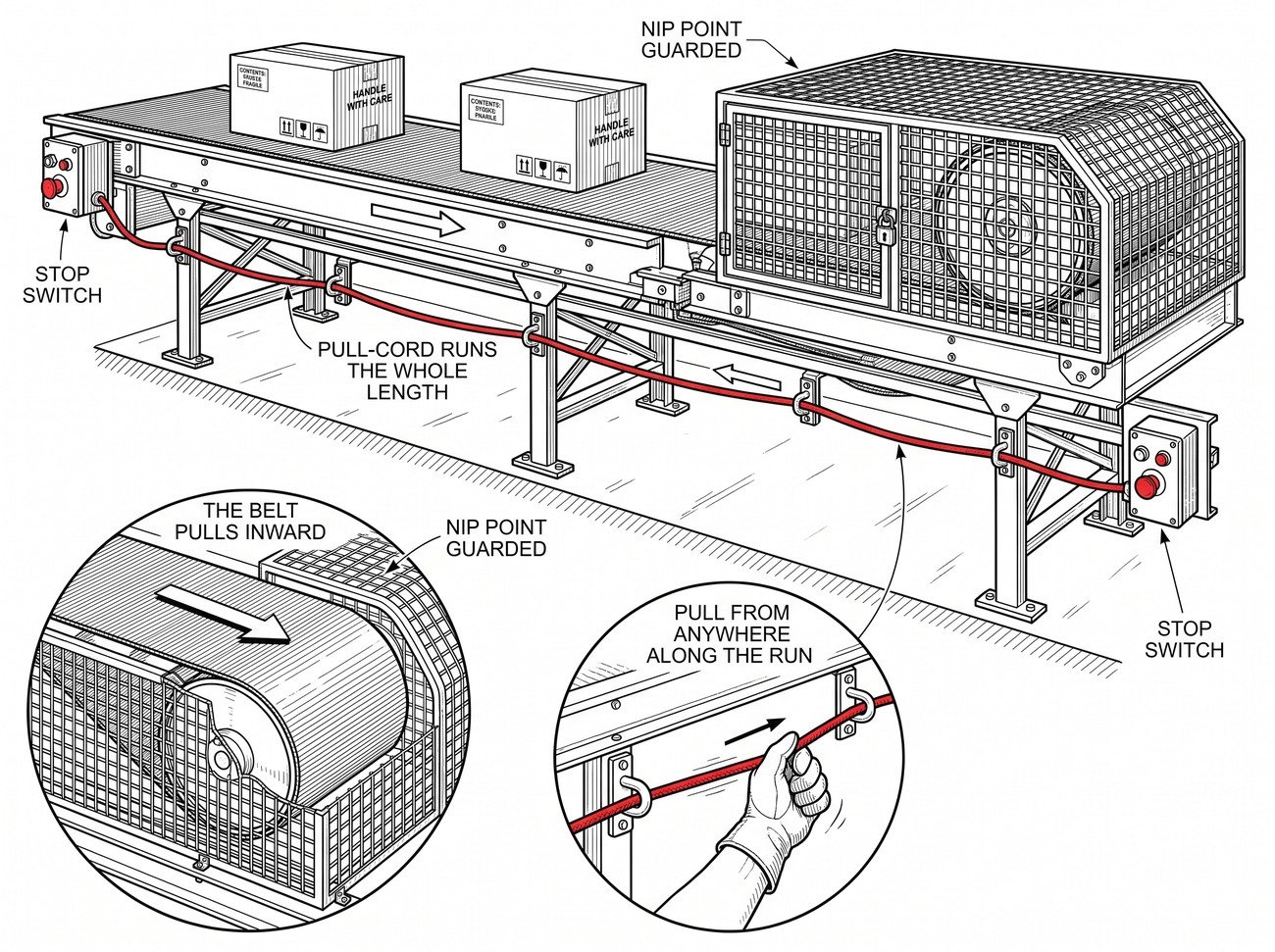
Following the same machine-guarding principles set out in ISO 12100, the points where a conveyor belt runs onto a roller or pulley create a nip hazard capable of drawing in clothing, hair, or a hand that gets too close, and this hazard exists at multiple points along a typical conveyor system, not just at the obvious start and end points. Guarding at these nip points needs to prevent contact during normal operation while the belt is running, not just when the system is stopped for maintenance.
Safety-related control systems
Emergency stop cables or pull-cords running the length of a conveyor, and interlocked guards that stop the system if opened during operation, are examples of safety-related control functions covered by principles in ISO 13849, which addresses how reliably a safety function itself needs to perform. An emergency stop that exists but has degraded reliability over time — a cable that has lost tension, or a switch that does not always trigger — undermines exactly the function it exists to provide, even though it appears present and functional on casual inspection.
Clearing jams and blockages
A jammed conveyor should be isolated and locked out before anyone reaches in to clear the blockage, since a jam that suddenly clears itself while someone’s hand is inside the mechanism can pull that hand into the exact nip point the guarding was designed to prevent contact with. Reaching into a running or merely stopped-but-not-isolated conveyor to clear a jam quickly, intending to save the time a proper lockout takes, is one of the more common and serious conveyor-related injury mechanisms.
Sortation system merge and diverter points
Automated sortation systems add merge points, diverters, and moving guides that create additional pinch and impact hazards beyond a simple belt conveyor, and these points, where items and mechanical components move relative to each other at speed, need their own specific guarding assessment rather than being covered by the same general guarding applied to the straight-run sections of the system.
Working near running equipment
Loose clothing, dangling lanyards, or unrestrained hair all present entanglement risk near running conveyor and sortation equipment beyond what standard warehouse PPE addresses, and this specific risk should be part of the site’s PPE and dress code assessment for roles working in proximity to this equipment, not assumed covered by general warehouse safety clothing requirements.
For the shrink wrap and strapping equipment often positioned at the end of a conveyor or sortation line, see shrink wrap and strapping machine safety.
Related standards
The standards below set the test methods and performance levels behind the equipment referenced in this note.
- ISO 12100 — Safety of machinery
- ISO 13849 — Safety-related parts of control systems
- EN 388 — Gloves against mechanical risks
Common errors
1Guarding conveyor nip points only at the obvious start and end, missing intermediate points along the system.
2Assuming an emergency stop is functional because it is present, without checking its actual reliability over time.
3Reaching into a stopped-but-not-locked-out conveyor to clear a jam rather than fully isolating it first.
4Applying general conveyor guarding assessments to sortation merge and diverter points without their own specific review.
Frequently asked questions
Where do conveyor nip hazards typically occur?
At points where the belt runs onto a roller or pulley, and these occur at multiple points along a typical system, not just at the obvious start and end.
What does ISO 13849 address in the context of conveyor safety controls?
How reliably a safety-related control function, such as an emergency stop pull-cord or an interlocked guard, actually needs to perform, since a degraded but still-present control undermines its own purpose.
Why should a conveyor be locked out before clearing a jam?
A jam that suddenly clears itself while someone's hand is inside the mechanism can pull that hand into the nip point the guarding was designed to prevent contact with.
Do sortation systems need different guarding assessment than a simple belt conveyor?
Yes, merge points, diverters and moving guides create additional pinch and impact hazards that need their own specific guarding assessment beyond general belt conveyor guarding.
Why does entanglement risk near conveyors need its own PPE consideration?
Loose clothing, dangling lanyards or unrestrained hair present entanglement risk beyond what standard warehouse PPE addresses, so it needs specific assessment for roles working near this equipment.
Need this as a document you can issue? The template library gives you the risk assessments, permits and inspection logs in editable form — and employer plans cover a whole team with completion records.