Safety / Tips and Tricks / Warehouse and Logistics
Activity 07 · Warehouse
Warehouse Fire Safety and Storage Configuration
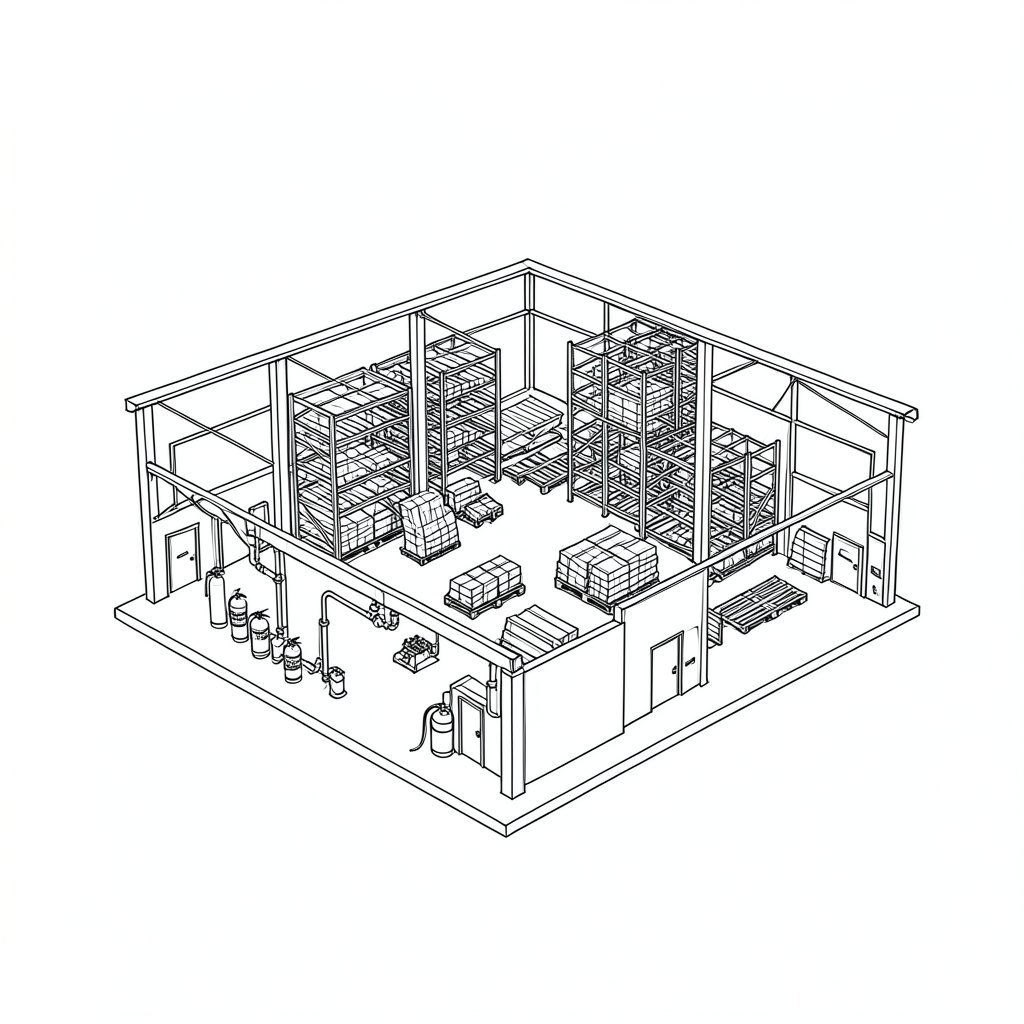
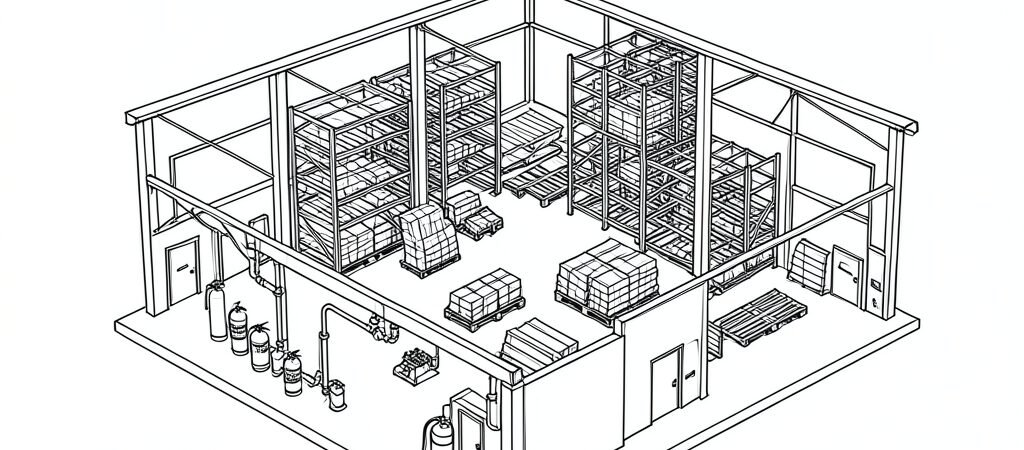
How stock is physically arranged in a warehouse has a direct and often underappreciated effect on how a fire would actually develop and spread, which means storage configuration decisions made for space efficiency can unintentionally work against the fire safety measures the building was designed around.
Storage height and sprinkler system design
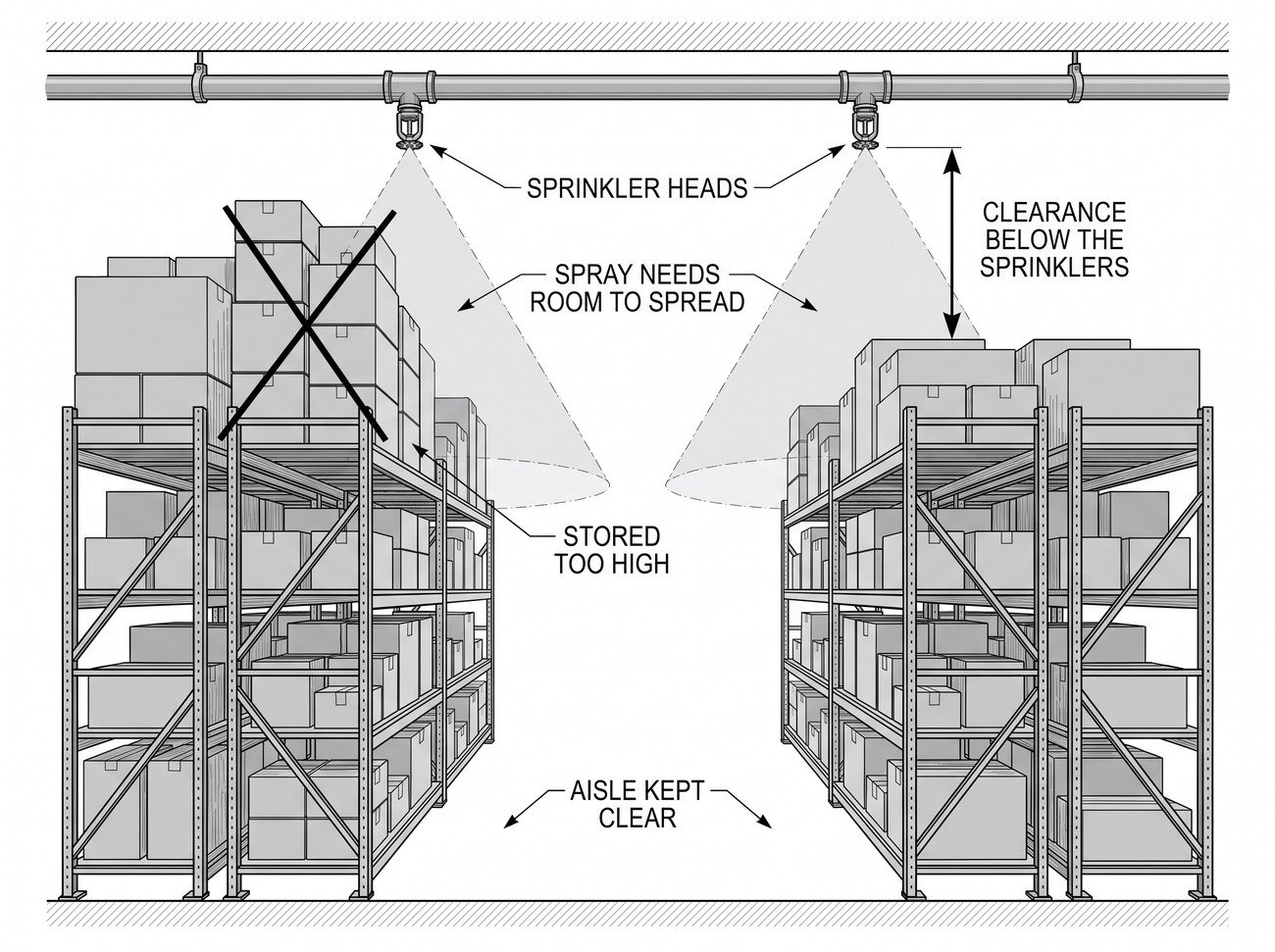
Automatic sprinkler systems are designed around assumptions about maximum storage height and the specific commodity being stored, since taller storage and more combustible materials both change how a fire would develop and what water application the sprinkler system needs to deliver to control it. Storing goods above the height the sprinkler system was actually designed for, even if space physically allows it, can leave a fire underserved by a system that appears, on paper, to protect the whole space.
Aisle width and fire spread
Adequate aisle width between storage racks does more than support forklift movement — it also limits how easily fire can spread laterally between adjacent stacks or racking rows, and narrowing aisles to fit additional storage reduces this separation in a way that is not always obvious as a fire safety decision at the time it is made, since it looks, on the surface, like a purely space-planning choice.
Combustible material segregation
Highly combustible stock, such as certain plastics or packaging materials, stored without separation from general inventory can accelerate a fire’s development well beyond what the surrounding storage configuration was designed to contain, and segregating known higher-combustibility materials, whether by dedicated storage area or adequate separation distance, addresses this specific risk directly.
Keeping fire routes and equipment accessible
Fire exits, fire extinguisher locations, and access routes for emergency responders all need to remain genuinely clear of stored goods, not just clear according to a floor plan that has drifted from actual current storage practice over time. Temporary storage overflow is a particularly common way this drift happens, where goods placed just for now near an exit or extinguisher location become effectively permanent obstructions without anyone deciding that outcome directly.
Reviewing configuration as storage needs change
Storage configuration that was fire-safe when a facility was designed can become less so as inventory mix, storage height, or layout changes over time, and periodic review of actual current storage practice against the original fire safety design assumptions catches this drift before it becomes a genuine gap, rather than relying on the original design remaining accurate indefinitely.
For the emergency response planning this storage configuration supports, see trapped or crushed worker rescue planning in warehouses.
Related standards
The standards below set the test methods and performance levels behind the equipment referenced in this note.
Common errors
1Storing goods above the height a sprinkler system was actually designed to protect.
2Narrowing aisles for additional storage capacity without recognizing the fire-spread implications of reduced separation.
3Storing highly combustible materials without segregation from general inventory.
4Allowing temporary storage overflow to obstruct fire exits or extinguisher locations over time.
Frequently asked questions
Why does storage height matter for sprinkler system effectiveness?
Sprinkler systems are designed around assumptions about maximum storage height and commodity type, so storing goods above that design height can leave a fire underserved even though the system appears to protect the whole space.
How does aisle width relate to fire safety, not just forklift movement?
Adequate aisle width limits how easily fire can spread laterally between adjacent stacks or racking rows, so narrowing aisles for more storage reduces this separation even though it looks like a purely space-planning choice.
Why does highly combustible stock need to be segregated from general inventory?
It can accelerate a fire's development well beyond what the surrounding storage configuration was designed to contain, so dedicated storage or adequate separation distance addresses this specific risk.
How does temporary storage overflow become a fire safety problem?
Goods placed near an exit or extinguisher location for temporary convenience can become effectively permanent obstructions over time, without anyone deciding that outcome directly.
Why does storage configuration need periodic review against original fire safety design assumptions?
Inventory mix, storage height, or layout can change gradually over time in ways that drift away from what was fire-safe when the facility was originally designed.
Need this as a document you can issue? The template library gives you the risk assessments, permits and inspection logs in editable form — and employer plans cover a whole team with completion records.