Safety / Tips and Tricks / Warehouse and Logistics
Activity 07 · Warehouse
Trapped or Crushed Worker Rescue Planning in Warehouses
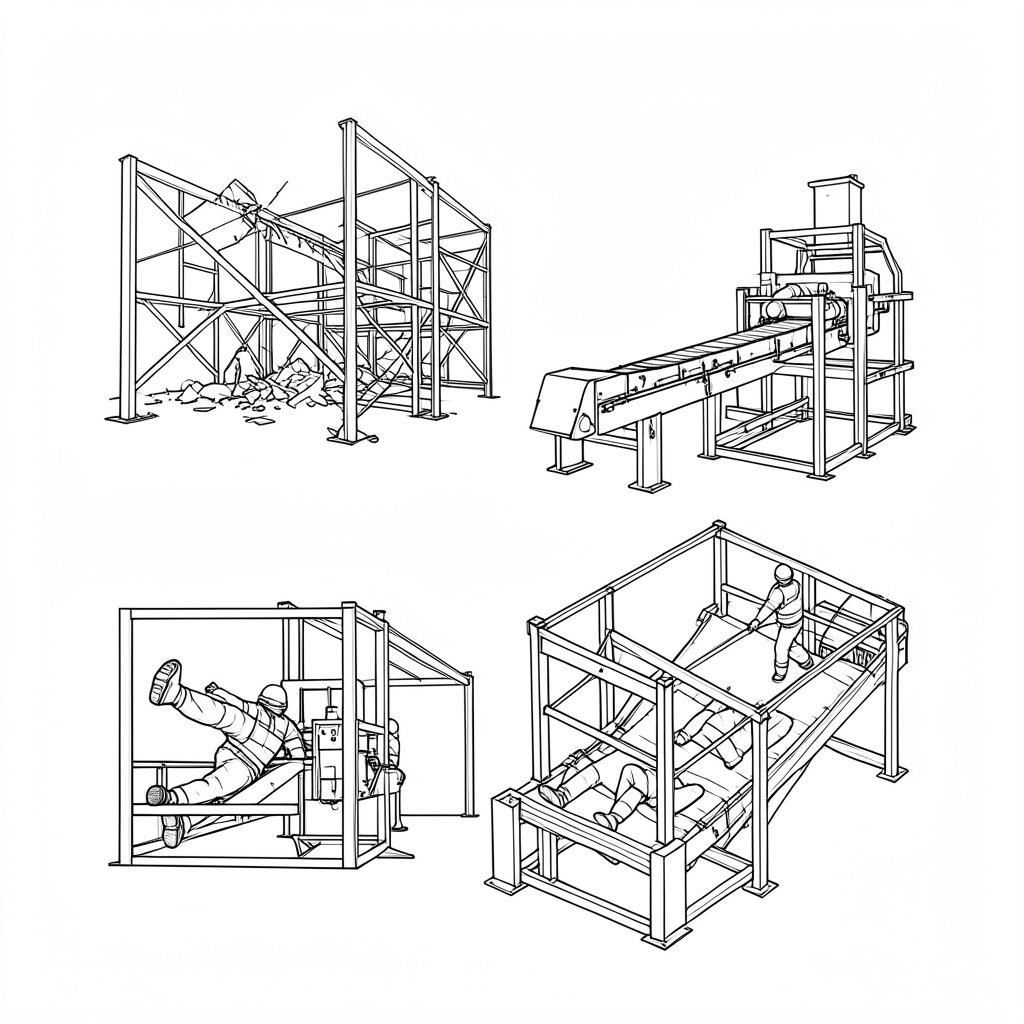
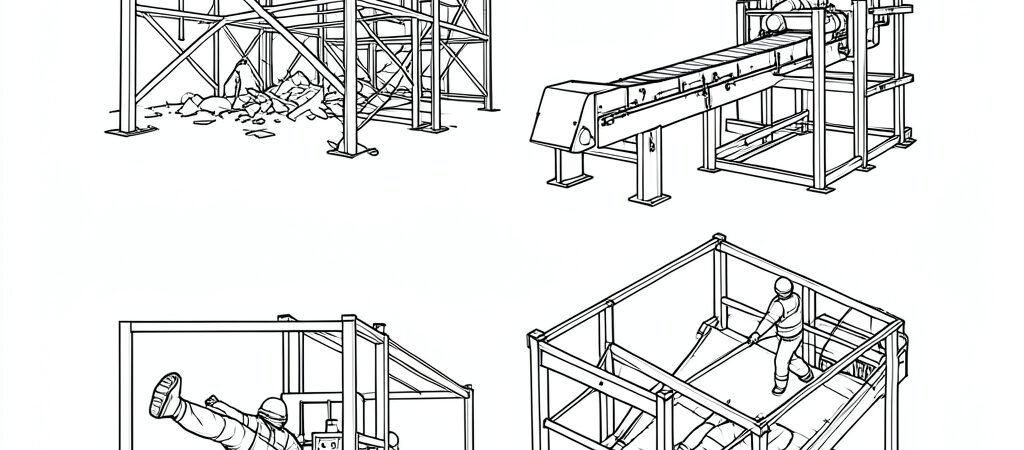
Racking collapse, a trapped limb in conveyor machinery, or a worker pinned by a shifted load are low-frequency events in most warehouses, and that low frequency is exactly why rescue planning for them tends to be underdeveloped compared to more routine hazards — the plan is rarely tested by actual events, so gaps in it can persist unnoticed for a long time.
Why generic first aid response is not enough
A worker trapped or crushed by racking, stock, or machinery needs a response that addresses the specific mechanism of entrapment before general first aid can even begin, and attempting to move or free someone without understanding what is actually holding them in place risks worsening the injury, particularly where a partially collapsed structure or a load under tension is still capable of shifting further during a rescue attempt. Rescue planning specific to these warehouse-specific entrapment scenarios needs to exist separately from, and before, general first aid training.
Assessing whether the situation is still unstable
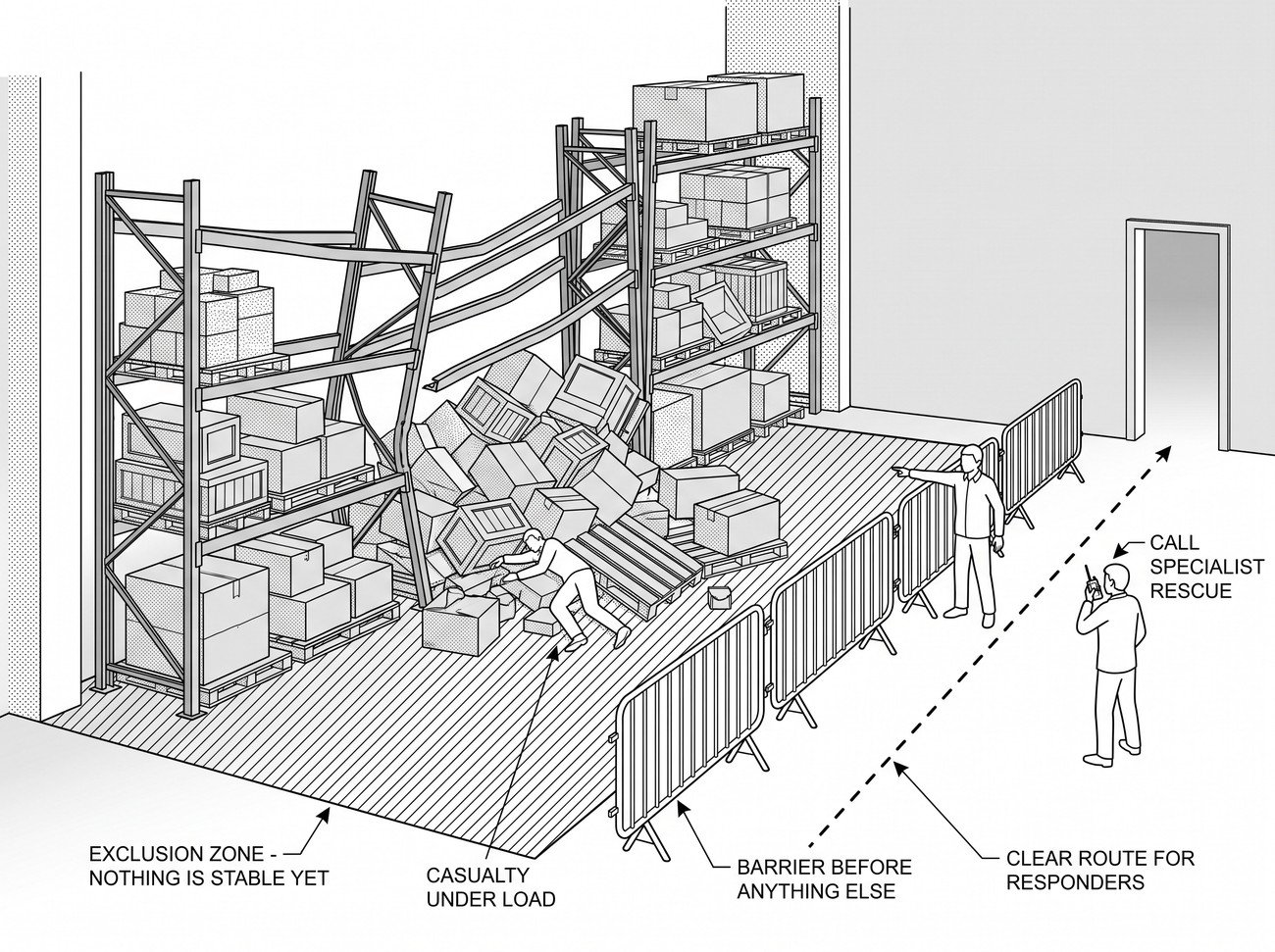
The first judgment in any warehouse entrapment scenario is whether the hazard that caused the entrapment — a partially collapsed rack, an unstable stack, machinery that could restart — is now stable, or whether it remains capable of further movement that could worsen the situation during a rescue attempt. Machinery involved in an entrapment should be isolated and locked out before any attempt is made to free someone from it, following the same lockout principle covered for routine maintenance, but now under far higher pressure and urgency.
Communication and calling for specialist help
Warehouse rescue plans should identify, in advance, which scenarios are within the capability of on-site trained personnel to manage and which require specialist emergency response, such as structural collapse requiring technical rescue expertise beyond standard workplace first aid. Establishing this distinction before an incident, not deciding it under pressure during one, means the call for specialist help happens promptly rather than after an on-site attempt has already been made and found insufficient.
Equipment and access for rescue
Basic rescue equipment appropriate to the site’s actual hazards — tools to help stabilize a partially collapsed structure, equipment to safely relieve tension on a shifted load — should be identified and accessible in advance, alongside confirming that emergency access routes to the affected area remain genuinely clear, not obstructed by the same storage configuration issues covered in general warehouse fire and access planning.
Practising the plan
A rescue plan that exists only as a document performs differently in an actual event than one that has been walked through, and a periodic drill or tabletop exercise covering a plausible warehouse entrapment scenario — who does what, how specialist help is contacted, where equipment is located — surfaces gaps in the plan that reading it alone will not reveal, the same principle that applies to emergency response planning in other high-risk activities.
For the racking inspection practices that reduce the likelihood of a structural entrapment scenario occurring, see racking inspection and load limits.
Related standards
The standards below set the test methods and performance levels behind the equipment referenced in this note.
- EN 1497 — Rescue harnesses
- EN 341 — Descender devices for rescue
- EN 361 — Full body harnesses
- EN 397 — Industrial safety helmets
Common errors
1Attempting to move or free a trapped worker without first confirming the entrapment hazard itself is stable.
2Freeing someone from machinery without first isolating and locking it out.
3Deciding whether a scenario needs specialist rescue response only after an on-site attempt has already been made.
4Treating a written rescue plan as sufficient without ever practising it through a drill or tabletop exercise.
Frequently asked questions
Why is generic first aid training not sufficient for warehouse entrapment scenarios?
A trapped or crushed worker needs a response that addresses the specific mechanism of entrapment first, since moving or freeing someone without understanding what is holding them in place risks worsening the injury.
What is the first judgment to make in a warehouse entrapment scenario?
Whether the hazard that caused the entrapment is now stable or remains capable of further movement that could worsen the situation during a rescue attempt.
Should machinery involved in an entrapment be isolated before a rescue attempt?
Yes, it should be isolated and locked out first, following the same lockout principle used for routine maintenance, but under far higher pressure and urgency.
Why should the line between on-site and specialist rescue response be decided in advance?
Deciding it during an actual incident delays the call for specialist help until after an on-site attempt has already been made and found insufficient, rather than promptly.
Why does a warehouse rescue plan need to be practised, not just written?
A plan that exists only as a document performs differently in an actual event, and a drill or tabletop exercise surfaces gaps that reading the plan alone will not reveal.
Need this as a document you can issue? The template library gives you the risk assessments, permits and inspection logs in editable form — and employer plans cover a whole team with completion records.