Safety / Tips and Tricks / Warehouse and Logistics
Activity 07 · Warehouse
Loading Dock Safety and Vehicle Restraint Systems
The gap between a loading dock and a trailer bed is one of the more deceptively dangerous features of a warehouse, because the hazard it creates — a trailer pulling away or shifting while a forklift is still driving on and off it — is entirely invisible from inside the warehouse itself, where everything looks completely normal.
Why trailer movement during loading is so dangerous
A trailer that creeps forward, settles on its suspension, or is driven away prematurely while a forklift is on the dock plate or inside the trailer creates a sudden gap or drop that the forklift operator, focused on the loading task itself, may not notice until it is too late to stop. This is a different and generally more severe hazard than a typical warehouse-floor forklift incident, since the consequence is often a fall from height rather than a lower-severity collision.
Vehicle restraint systems
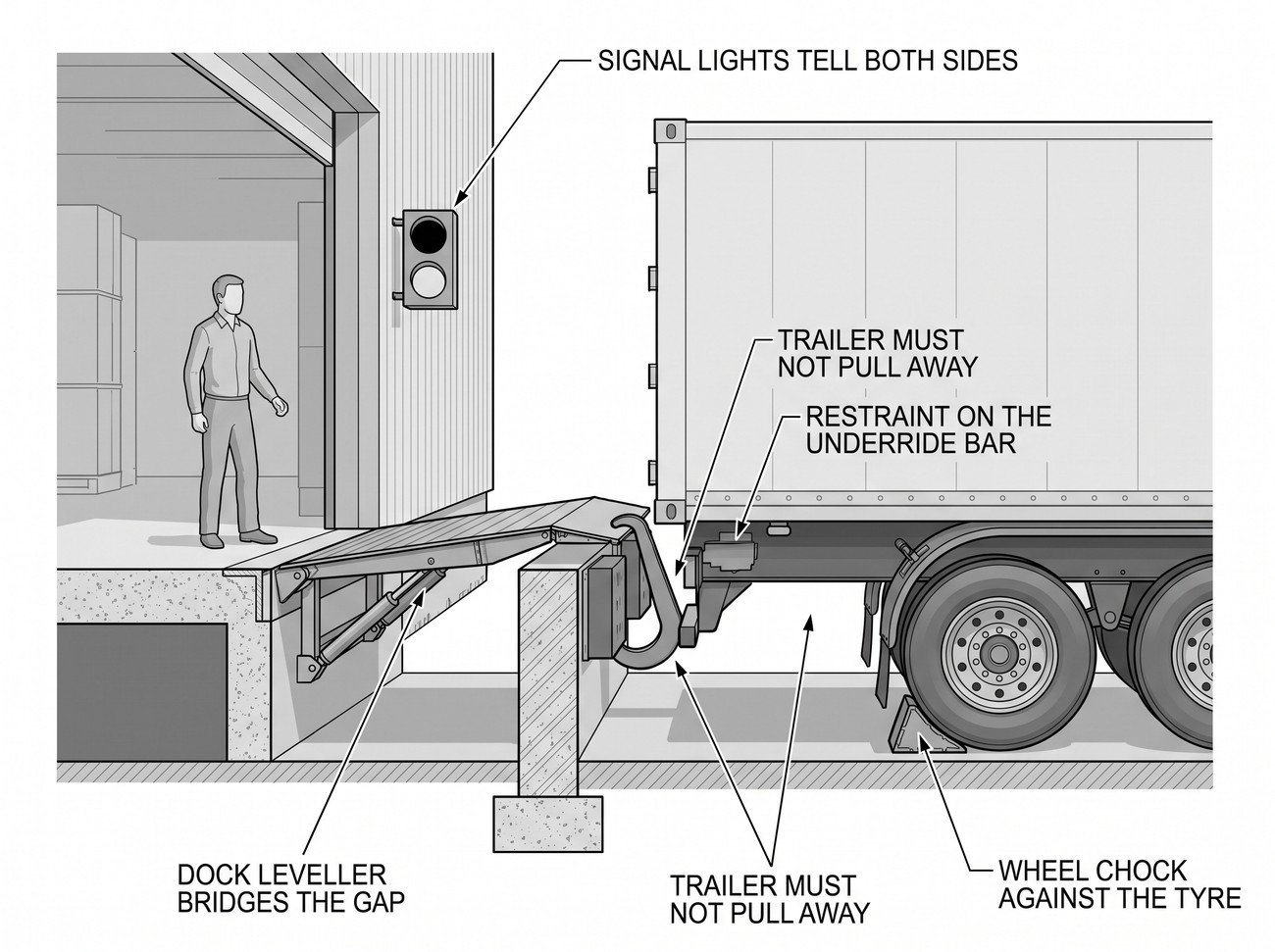
A vehicle restraint system, whether a wheel chock, a mechanical hook restraint engaging the trailer’s rear impact guard, or an integrated dock-locking system, physically prevents the trailer from moving away from the dock while loading is in progress, and this restraint should be engaged and verified before any loading activity begins, not assumed to be in place because it usually is. A restraint that is present but not actually engaged provides no protection at all despite being visibly there.
Communication between dock and driver
Clear communication protocols between dock personnel and the vehicle driver — confirming the restraint is engaged, confirming loading is complete before any movement, and using a visual signal system such as dock lights that indicate when it is safe to move the vehicle — close the gap that can otherwise occur when a driver, unaware loading is still in progress, decides independently that it is time to leave. A driver who cannot see into the warehouse has no way to know loading has finished without this kind of deliberate signal.
Dock plate and leveler inspection
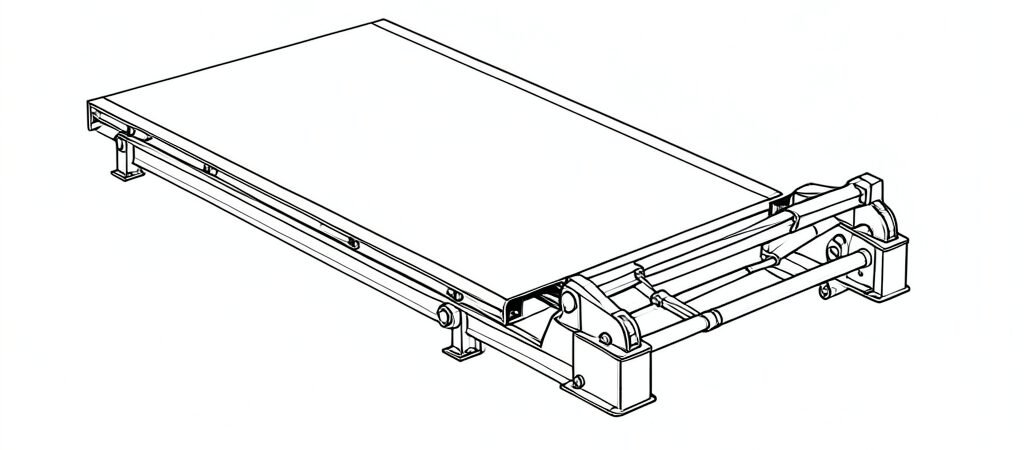
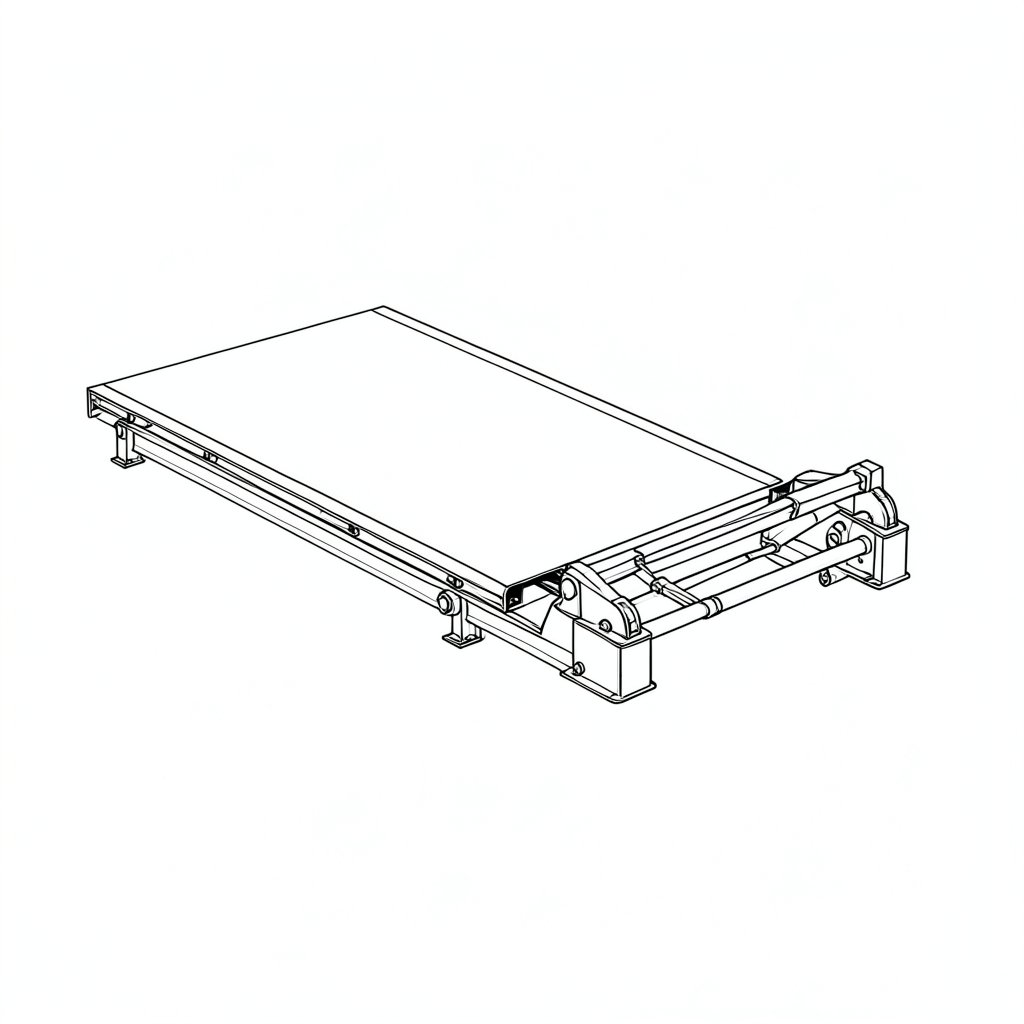
The dock plate or leveler bridging the gap between the warehouse floor and the trailer bed needs to be rated for the actual load crossing it and inspected for damage or wear that could cause it to fail or shift under a loaded forklift’s weight, since this bridging point carries concentrated load repeatedly throughout a loading operation. A dock leveler that shifts or fails while a forklift is crossing it creates essentially the same drop hazard as an unrestrained trailer pulling away.
Edge protection and fall risk at the dock itself
The dock edge itself, when no trailer is present, is effectively an elevated open edge, and barriers, gates, or clear procedural controls preventing personnel or vehicles from approaching an open dock edge without a trailer or leveler in place address this specific and sometimes overlooked fall hazard, distinct from the trailer-movement hazard covered above.
For load securing that protects the load itself once it is on the vehicle, see safe stacking and load securing for storage.
Related standards
The standards below set the test methods and performance levels behind the equipment referenced in this note.
- EN ISO 20471 — High-visibility clothing
- EN ISO 20345 — Safety footwear
- EN 397 — Industrial safety helmets
Common errors
1Beginning loading activity without verifying the vehicle restraint system is actually engaged, not just present.
2Relying on informal or assumed communication between dock personnel and the driver about when loading is complete.
3Using a dock plate or leveler without checking it is rated for and free of damage relative to the actual load crossing it.
4Leaving a dock edge unguarded when no trailer is present, creating an unaddressed fall hazard.
Frequently asked questions
Why is trailer movement during loading such a dangerous hazard?
A trailer that creeps forward, settles, or is driven away while a forklift is on the dock plate or inside it creates a sudden gap or drop the operator may not notice until too late, often resulting in a fall from height.
What does a vehicle restraint system actually do?
It physically prevents the trailer from moving away from the dock during loading, whether through a wheel chock, a mechanical hook restraint, or an integrated dock-locking system.
Is a visible vehicle restraint always providing protection?
No, a restraint that is present but not actually engaged provides no protection at all despite being visibly in place, which is why engagement needs to be verified before loading begins.
Why does communication between dock personnel and the driver matter?
A driver who cannot see into the warehouse has no way to know loading has finished without a deliberate signal, so clear protocols close the gap that can lead to premature departure.
What is the fall hazard at a dock edge when no trailer is present?
The open dock edge is effectively an elevated drop, requiring barriers, gates, or procedural controls preventing approach when no trailer or leveler bridges the gap.
Need this as a document you can issue? The template library gives you the risk assessments, permits and inspection logs in editable form — and employer plans cover a whole team with completion records.