Safety / Tips and Tricks / Construction and demolition
Activity 09
Construction and demolition
Scaffolds, excavations, dust, vibration and structural removal — the technique notes behind the permits, registers and RAMS you already fill in.
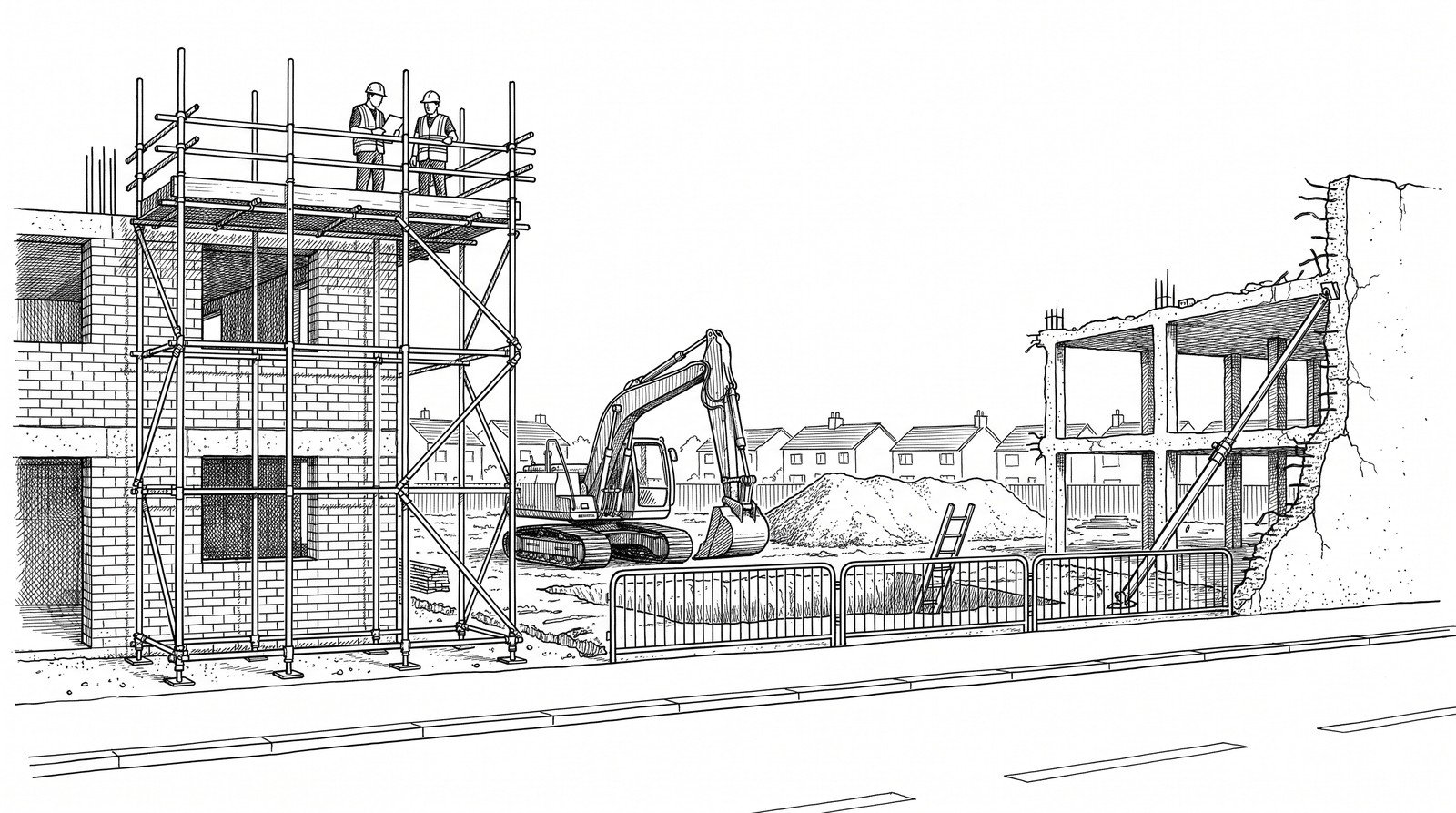
16 technique notes
Every note on this page is written for work carried out from the ground and from scaffolds erected against a structure. Fall arrest systems, roof anchors and rescue from a roof edge belong to Roofing and Work at Height, and the two link to each other where they meet. Each note also links to the record or permit it relates to, so the technique and the paperwork sit together rather than in separate places.
Frequently asked questions
Which of these notes apply to groundworks rather than building work?
The excavation notes, the mobile plant note and the temporary works note are written from a groundworks position: assessing whether a trench needs support, keeping spoil and plant back from the crest, access that nobody has to climb the face to use, and the propping that holds a structure while the ground beside it is opened up.
Where does this activity stop and Roofing and Work at Height begin?
This activity covers work carried out from the ground and from scaffolds erected against a structure. Fall arrest systems, roof anchors, fragile roof surfaces and rescue from a roof edge are covered under Roofing and Work at Height, and the two link to each other where they meet.
Do I need a scaffold tag to be present before I use a scaffold?
A tag records the state of the structure when it was last inspected by a competent person. It is a necessary condition and never a sufficient one, because it cannot know about a board lifted overnight or a tie removed to fit a window since then. The pre-use check still belongs to you.
Is there a depth at which an excavation always needs support?
No single depth is a reliable test on its own. A shallow trench in soft, wet or previously backfilled ground can bury someone to the chest, which is enough to stop them breathing. The material, the water in it and what is loaded beside it govern the decision, which is why the safe default is that support is required until a competent assessment says otherwise.
Which of these tasks need the highest respiratory protection?
Anything that cuts, chases, drills or grinds material containing silica, and anything that might disturb asbestos. Both produce a fraction too fine to see that stays airborne after the work stops, and neither has a safe level of accumulation in the lung.
Where do the document templates for this work live?
The scaffold inspection record, scaffold handover certificate, excavation inspection register, permit to dig, demolition plan, asbestos plan of work and the trade RAMS packs are all in the templates section, and each technique note links to the ones it relates to.