Safety / Tips and Tricks / Construction and demolition
Activity 09 · Construction
Rescue Planning for an Excavation or Structural Collapse
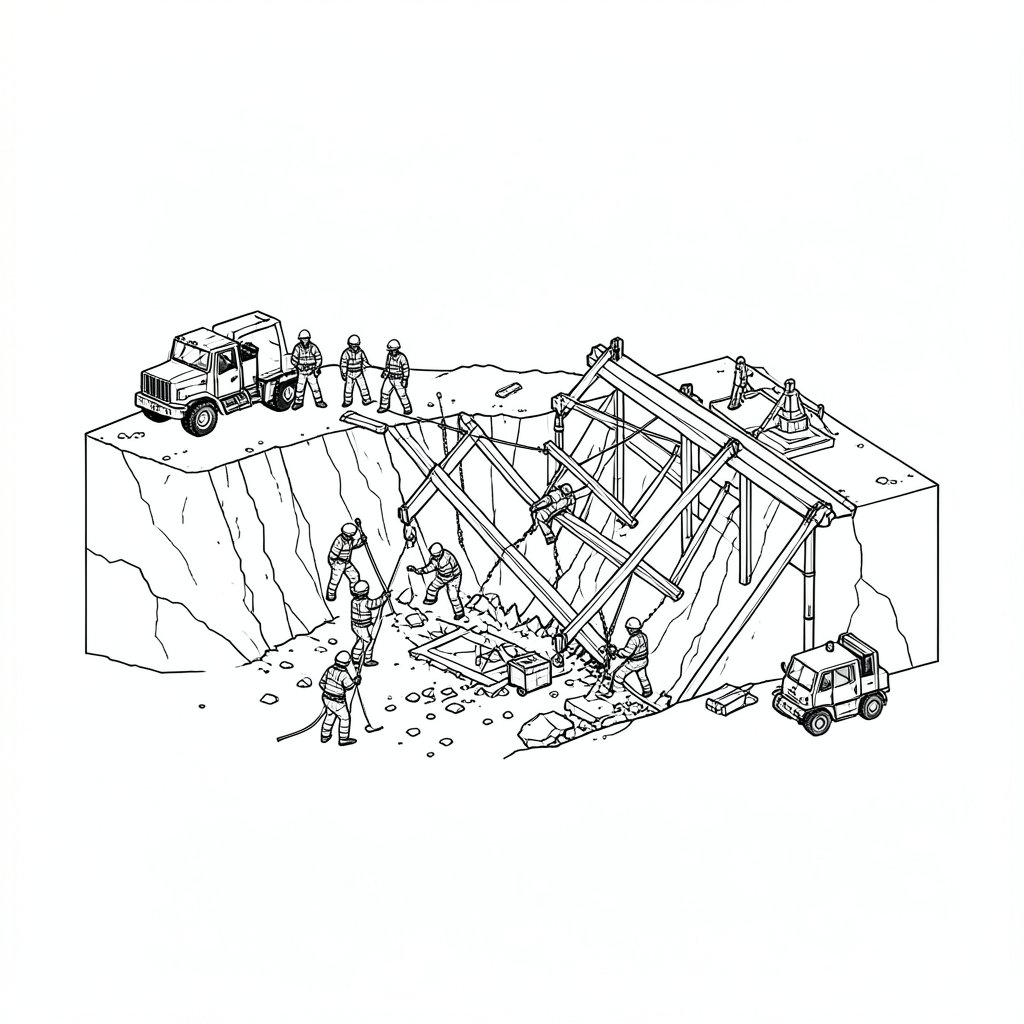
The people most likely to die in a trench collapse are the ones who arrive to help. Secondary collapse into a partly failed excavation, onto rescuers who entered without support, is the defining pattern of these incidents.
Why the instinct to climb in is the danger
Ground that has failed once has demonstrated that it will fail, and the remaining face is now less stable than it was before, not more. The material that has already moved has removed support from what is behind it, and the vibration of people and equipment working at the edge adds to the load. Every minute that passes without support being introduced increases the risk to anyone in the excavation, which is exactly the opposite of what the urgency of the situation suggests.
What can be done from outside straight away
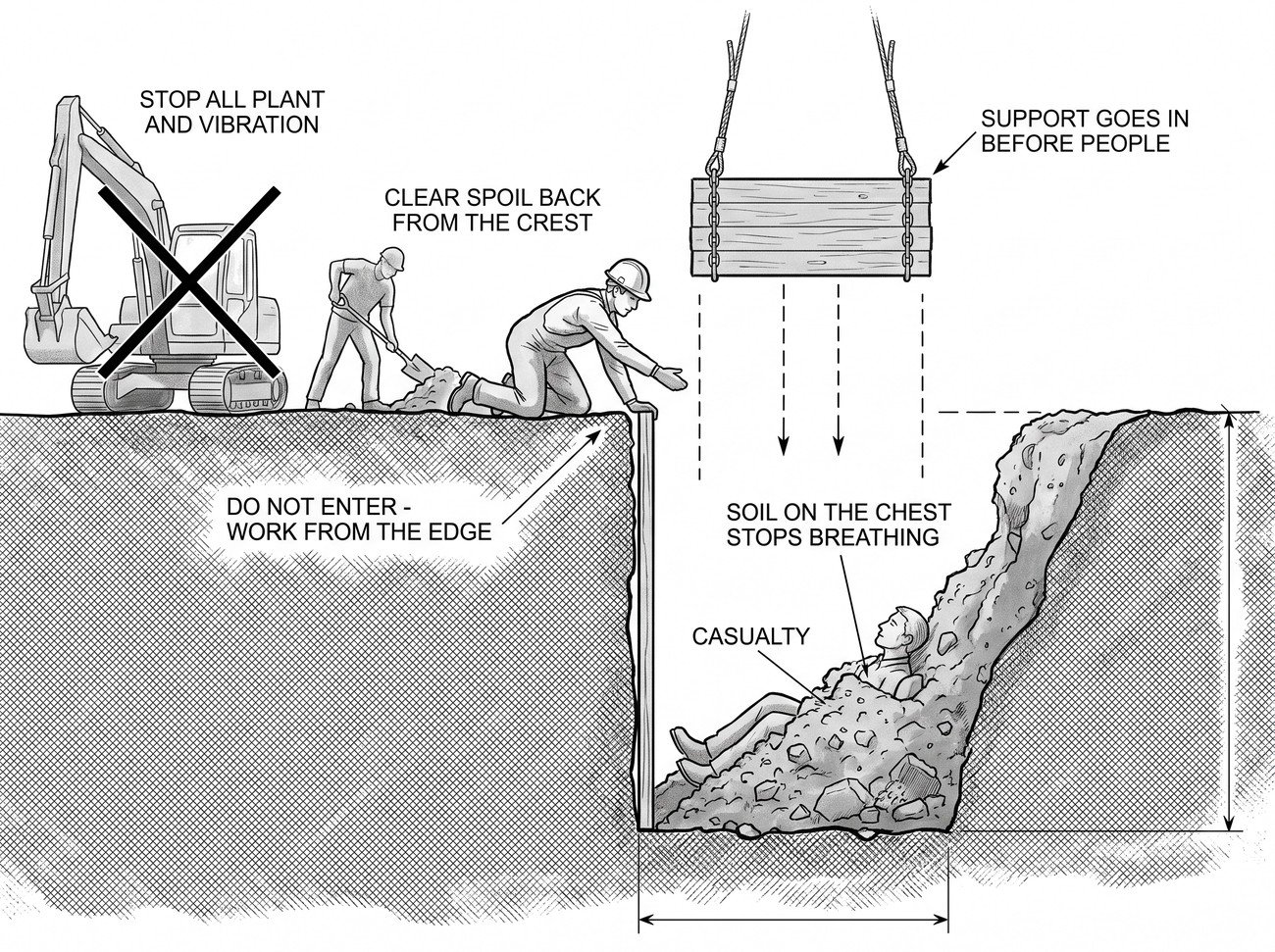
A great deal is possible without entering. Stopping all plant and vehicle movement nearby removes the vibration and the surcharge. Clearing spoil back from the crest reduces the load on the material that is still standing. Making the location and the access route known to the emergency services, and putting someone at the site entrance to meet them, saves more time than anything done at the trench itself. Where a casualty’s head and chest are clear, uncovering the airway may be achievable from the edge without anyone descending.
Why burial is a breathing problem before it is anything else
Soil pressing on the chest prevents the ribcage expanding, so a casualty buried to the chest can be unable to breathe even with the head completely clear. That is why partial burial is a genuine emergency rather than a delayed one, and why the priority is relieving pressure on the chest rather than extracting the whole person. It is also why digging a casualty out from the waist down first achieves very little in the time available.
Specialist rescue and the honest limits of a site team
Excavation and collapse rescue is a specialist capability requiring shoring equipment, training and enough people to work in relays. A construction site team’s role is to raise the alarm accurately, control the scene, remove the loads that are making things worse, and hand over a clear picture to the people who arrive with the equipment. Planning that in advance — who calls, what they say, who meets the appliance, where it can get to — is worth far more than any equipment kept in a container.
The plan has to exist before the excavation is open
Rescue arrangements belong in the planning of the work, alongside the support design, because they change decisions about the work itself. If the answer to how someone would be recovered is unacceptable, the method has to change — a battered slope instead of a vertical face, a shored trench instead of an unsupported one, or a technique that keeps people out of the excavation entirely. A rescue plan that is only consulted after a collapse has already failed at the thing it was for.
For the support decisions the plan depends on, see when an excavation needs support. For the comparable problem under collapsed racking, see trapped or crushed worker rescue planning.
Related standards
The standards below set the test methods and performance levels behind the protective equipment used for this work.
- EN 1497 — Rescue Harnesses
- EN 341 — Descender Devices for Rescue
- EN 361 — Full Body Harnesses
- EN 362 — Connectors for Fall Protection
Common errors
1Entering a partly collapsed excavation to reach a casualty, when the remaining face is now less stable.
2Leaving plant running and spoil at the crest while attempting a rescue.
3Treating partial burial as less urgent, when soil on the chest prevents breathing with the head clear.
4Digging from the feet upward instead of relieving pressure on the chest first.
5Writing the rescue plan after the excavation is open, when it can no longer change the method.
Frequently asked questions
Why is entering a collapsed trench so dangerous?
Ground that has failed once has shown it will fail. The material that moved has removed support from what is behind it, and people and equipment at the edge add load, so the remaining face is less stable than before.
What can be done without entering the excavation?
Stopping plant and vehicle movement, clearing spoil back from the crest, meeting the emergency services at the entrance with the access route, and where the head and chest are clear, uncovering the airway from the edge.
Why is partial burial a breathing emergency?
Soil pressing on the chest prevents the ribcage expanding, so a casualty buried to the chest can be unable to breathe even with the head completely clear.
What is a site team's realistic role in a collapse rescue?
Raising the alarm accurately, controlling the scene, removing the loads making things worse, and handing over a clear picture. Excavation rescue needs shoring equipment, training and people working in relays.
Why must the rescue plan exist before the excavation is opened?
Because it changes decisions about the work itself. If the answer to how someone would be recovered is unacceptable, the method changes to a battered slope, a shored trench, or a technique that keeps people out.
Need this as a document you can issue? The template library gives you the risk assessments, permits and inspection logs in editable form — and employer plans cover a whole team with completion records.