Safety / Tips and Tricks / Construction and demolition
Activity 09 · Construction
When an Excavation Needs Support: Assessing the Ground Before You Dig
A cubic metre of soil weighs comfortably more than a tonne, and it arrives without warning, which is why excavation collapse kills people standing in trenches that looked entirely stable a moment earlier.
Why depth is the wrong question on its own
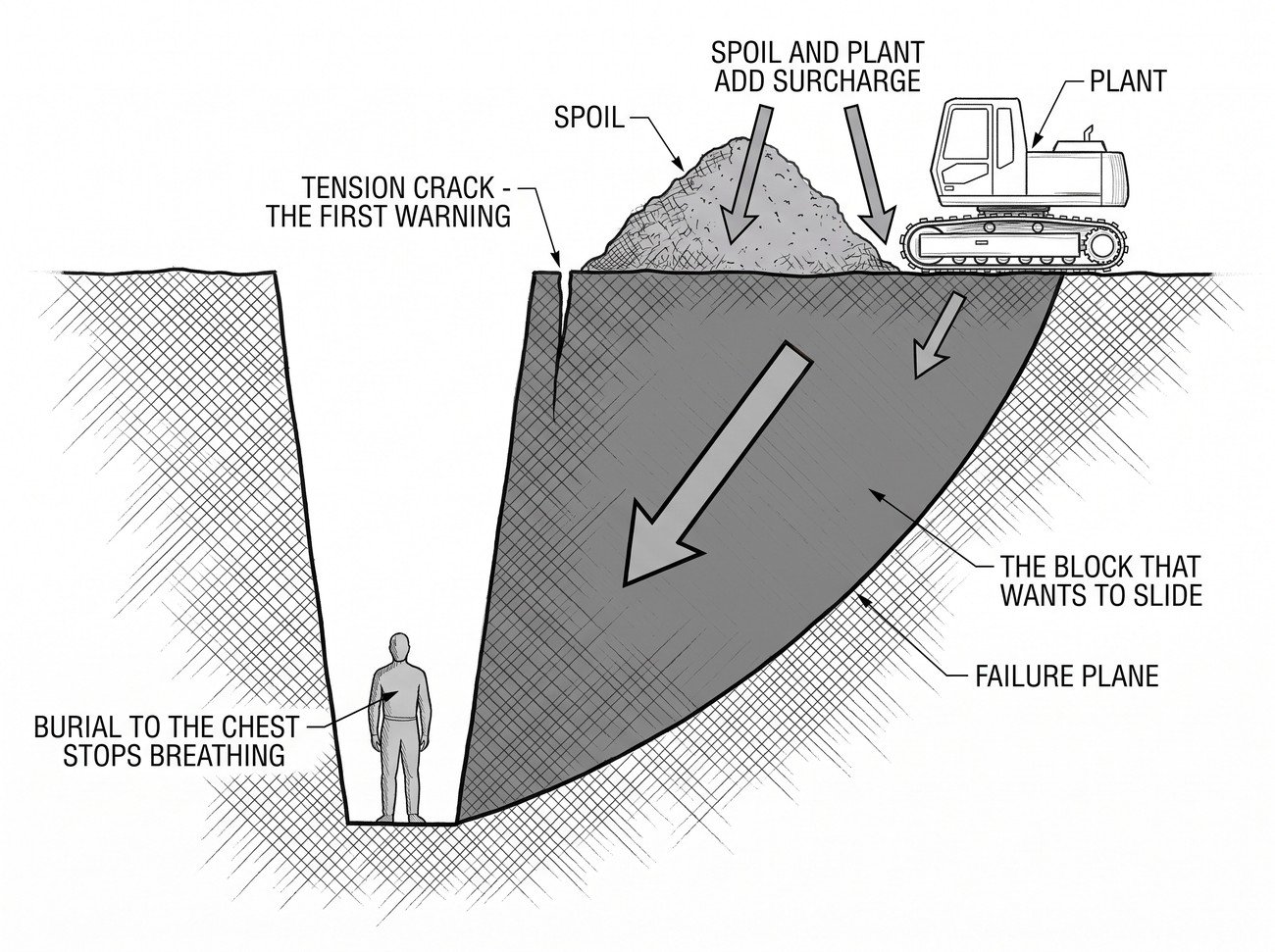
The instinct to treat a particular depth as the threshold for support is understandable and misleading. A shallow excavation in soft, wet, previously disturbed ground can bury someone to the chest, and burial to the chest is sufficient to prevent breathing against the weight of the soil. What governs is the behaviour of the material, the water in it, and what is loading the ground beside it — not a number on its own. The safe default is that an excavation requires support unless a competent assessment has established that it does not.
What actually holds a face up
An unsupported face stands because of cohesion between the particles and because of friction within the material. Both are variable. Water reduces cohesion in fine-grained soils and then adds weight; drying can produce shrinkage cracks that create a plane for a block to slide along; and previously excavated and backfilled ground has almost none of the structure that intact material has. Ground that has been dug before is one of the strongest indicators that support will be needed, and it is often the least visible from the surface.
Surcharge: the load you put there yourself
Spoil heaped at the edge, a stack of pipes, a mixer, a delivery lorry standing beside the trench, or an excavator tracking along the crest all add load directly above the wedge of soil that wants to move. This is the most frequent contributing factor in trench collapse and the easiest to remove, because it is entirely within the control of the people on site. Keeping spoil and plant back from the edge is worth more than any amount of inspection of the face itself.
Support systems and what each is for
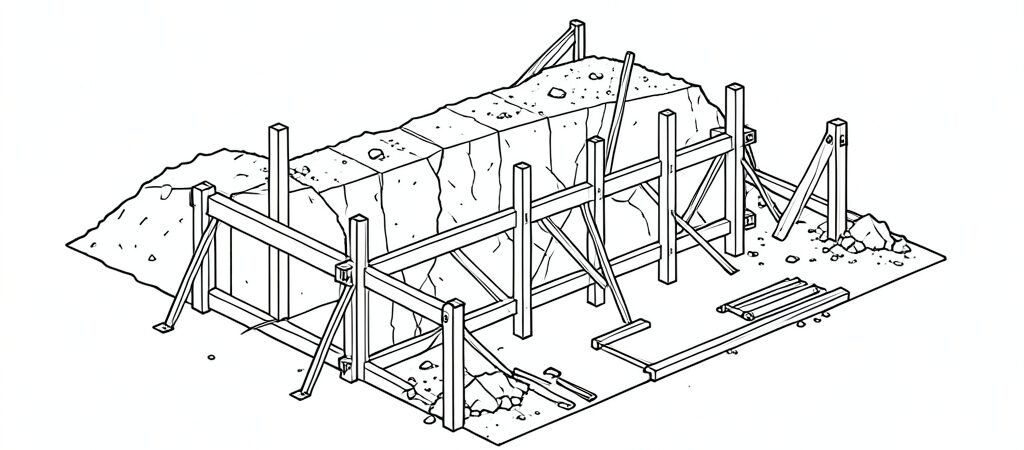
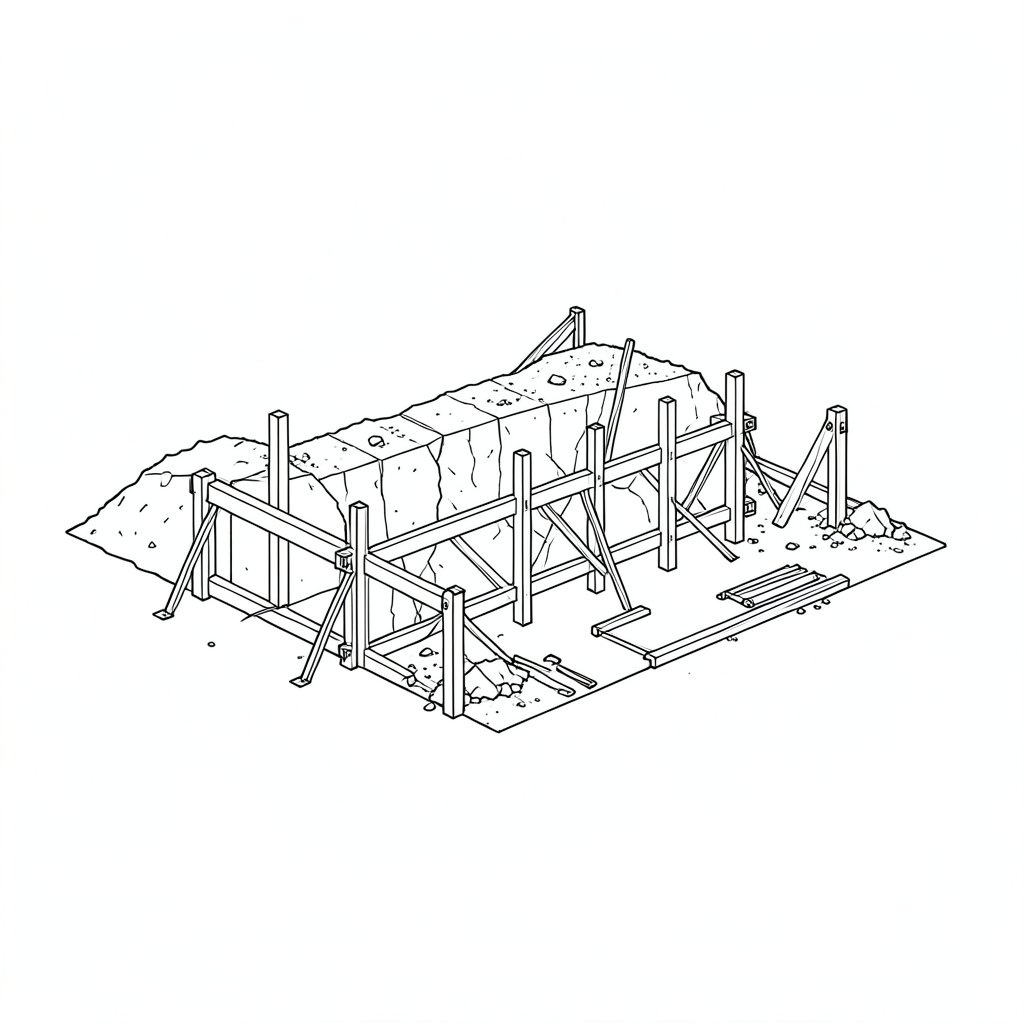
Trench boxes protect people inside the excavation without necessarily preventing the ground from moving, which makes them appropriate where the aim is worker protection in a straight run. Hydraulic or proprietary shoring supports the face itself and is used where movement of the surrounding ground matters, for instance beside a structure or a live service. Battering the sides back to a stable angle removes the problem instead of resisting it, but consumes space that a confined site often does not have. The choice belongs to a competent person, not to the machine driver.
Signs a face is about to go
A tension crack running parallel to the trench a short distance back from the crest is the clearest warning available and is often visible before anything else changes. Small falls of material from the face, water seeping through it, a bulge low down, or spoil that starts to run are all late indicators. By the time material is moving audibly, the time to act has already passed — which is why the decision has to be made before entry rather than judged from inside.
Record excavation inspections on the excavation inspection register, and see safe access and edge protection around an excavation.
Related standards
The standards below set the test methods and performance levels behind the protective equipment used for this work.
- EN 397 — Industrial Safety Helmets
- EN ISO 20345 — Safety Footwear
- EN ISO 20471 — High-Visibility Clothing
Common errors
1Using depth alone as the test for whether support is needed.
2Assuming previously backfilled ground behaves like intact ground.
3Placing spoil, pipe stacks or plant close to the crest, loading the wedge that wants to slide.
4Choosing a trench box where the surrounding ground must not move, or shoring where a box would do.
5Judging stability from inside the excavation once work has started.
Frequently asked questions
Why is depth alone not the test for trench support?
A shallow excavation in soft, wet or previously disturbed ground can bury someone to the chest, which is enough to prevent breathing against the soil weight. Material behaviour, water and surcharge govern, not a single number.
What makes previously excavated ground so unreliable?
Backfilled material has almost none of the cohesion and structure of intact ground, and the fact that it was dug before is often invisible from the surface.
What is surcharge and why does it matter most?
Load placed above the wedge of soil that wants to move: spoil at the edge, pipe stacks, a mixer, a delivery lorry, or an excavator tracking the crest. It is the most frequent contributing factor and the easiest to remove.
What is the difference between a trench box and shoring?
A trench box protects people inside without necessarily stopping ground movement. Shoring supports the face itself and is used where surrounding ground must not move, such as beside a structure or a live service.
What is the earliest warning that a face is failing?
A tension crack running parallel to the trench a short distance back from the crest, usually visible before anything else changes. Falls of material, seepage and a bulge low down are late indicators.
Need this as a document you can issue? The template library gives you the risk assessments, permits and inspection logs in editable form — and employer plans cover a whole team with completion records.