Safety / Tips and Tricks / Construction and demolition
Activity 09 · Construction
Respiratory Protection for Silica and Construction Dust
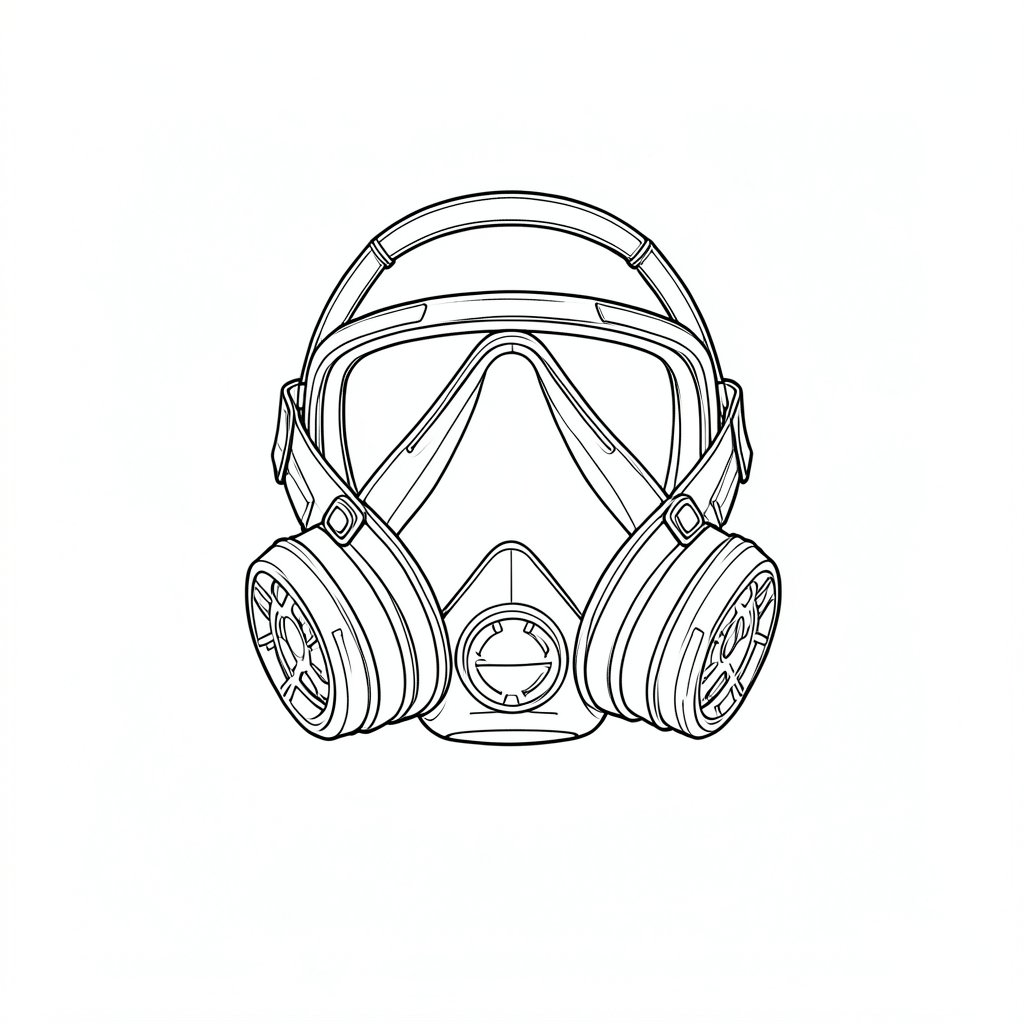
Respirable crystalline silica is the reason construction dust is treated differently from ordinary nuisance dust: the fraction that causes the damage is far too fine to see, and a visibly clean site can still be an unacceptable exposure.
Why the visible dust is not the problem
The particles that settle quickly and coat everything are largely too big to reach the deep lung. The fraction that matters is small enough to stay airborne for a long time after the cutting stops, and small enough to travel past the body’s own filtration into the alveoli, where it cannot be cleared. That is why the air can look clear an hour after the work and still carry a meaningful dose, and why a mask put on only while the saw is running is being worn for the wrong part of the job.
Filtering facepieces and what the classes mean
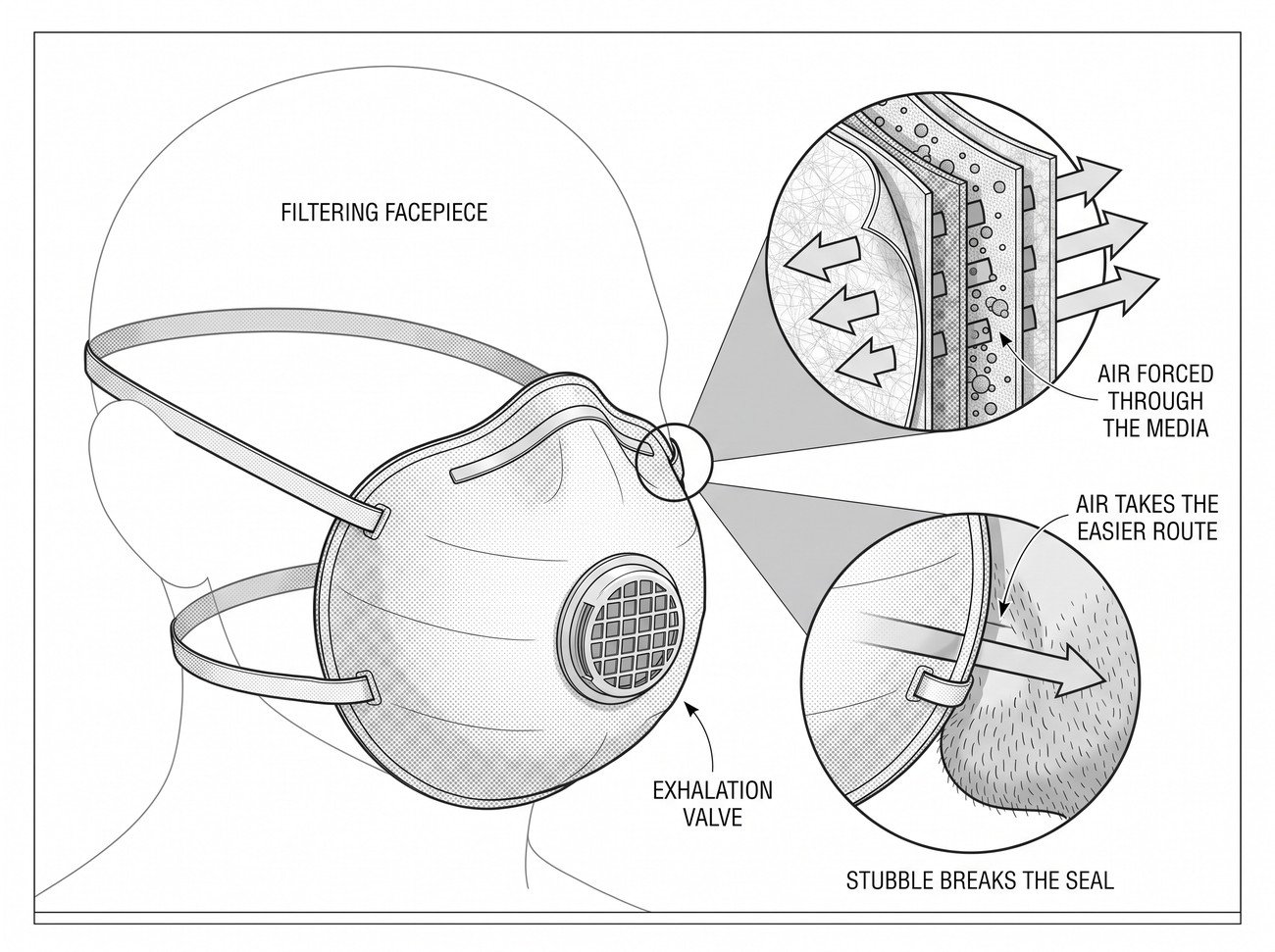
Disposable filtering facepieces are classified by how much of a test aerosol penetrates them, and for respirable silica the highest of the three classes is the realistic starting point. The lower classes exist and have legitimate uses, but they are not appropriate where the contaminant has no safe accumulation. A valved version reduces heat and moisture build-up inside the mask and makes long wear more tolerable, at the cost of doing nothing to protect anyone else from the wearer’s exhaled breath.
The seal decides everything
A respirator only filters the air that is forced through the filter, and air will always take the easier route. A gap at the cheek, a strap routed over a hood, spectacle arms crossing the seal, or a day of stubble all create that easier route, and the protection collapses to a fraction of the rated figure. This is why fit testing is done on the individual and on the specific model, and why a mask that fits one person can be useless on another with the same face size.
When a disposable mask is the wrong tool
Filtering facepieces are designed for intermittent use over a limited period. For long-duration cutting, for enclosed spaces where dust cannot disperse, or for work where the wearer cannot break for air, a reusable half mask with replaceable filters or a powered air-fed hood is the appropriate step up. A powered hood also solves the beard problem, because it does not rely on a tight seal against the skin, and that alone often makes it the practical answer on a real site.
Respiratory protection is the last control, not the first
Every control that removes dust before it becomes airborne outperforms every mask, because it protects everyone nearby rather than only the person wearing equipment. Water suppression and on-tool extraction should be exhausted first, and the respirator specified for the residual exposure that remains after them. A site where the mask is doing all the work is a site where the dust is also reaching everyone without one.
For the controls that come before the mask, see controlling silica dust at source. For the equivalent problem with fume rather than dust, see respiratory protection for welding fume.
Related standards
The standards below set the test methods and performance levels behind the protective equipment used for this work.
- EN 149 — Filtering Half Masks (FFP1/FFP2/FFP3)
- EN 140 — Half Masks and Quarter Masks
- EN 143 — Particle Filters
- EN 136 — Full Face Masks
Common errors
1Judging exposure by visible dust, when the harmful fraction is invisible and stays airborne after the work stops.
2Removing the mask as soon as cutting stops, while the fine fraction is still suspended.
3Using a lower filter class for a contaminant with no safe accumulation.
4Relying on a tight-fitting mask over stubble, or with strap or spectacle arms crossing the seal.
5Treating the respirator as the primary control instead of extraction and water suppression.
Frequently asked questions
Why is visible dust a poor guide to silica risk?
The particles large enough to see settle quickly. The respirable fraction that reaches the deep lung is invisible and stays airborne long after cutting stops, so clear-looking air can still carry a meaningful dose.
Which filter class is appropriate for respirable silica?
The highest of the three filtering facepiece classes is the realistic starting point, because silica has no safe accumulation in the lung.
What does an exhalation valve change?
It reduces heat and moisture inside the mask, making long wear more tolerable. It does nothing to protect other people from the wearer's exhaled breath.
Why does facial hair defeat a respirator?
Air takes the easiest route. Stubble breaks the seal against the skin, so air bypasses the filter entirely and the protection collapses regardless of the filter class.
When should a disposable mask be replaced by powered air?
For long-duration cutting, enclosed spaces where dust cannot disperse, or where the wearer cannot break for air. A powered hood also removes the dependence on a tight seal against the skin.
Need this as a document you can issue? The template library gives you the risk assessments, permits and inspection logs in editable form — and employer plans cover a whole team with completion records.