Safety / Tips and Tricks / Construction and demolition
Activity 09 · Construction
Scaffold Inspection Before You Step On It: What to Check and When
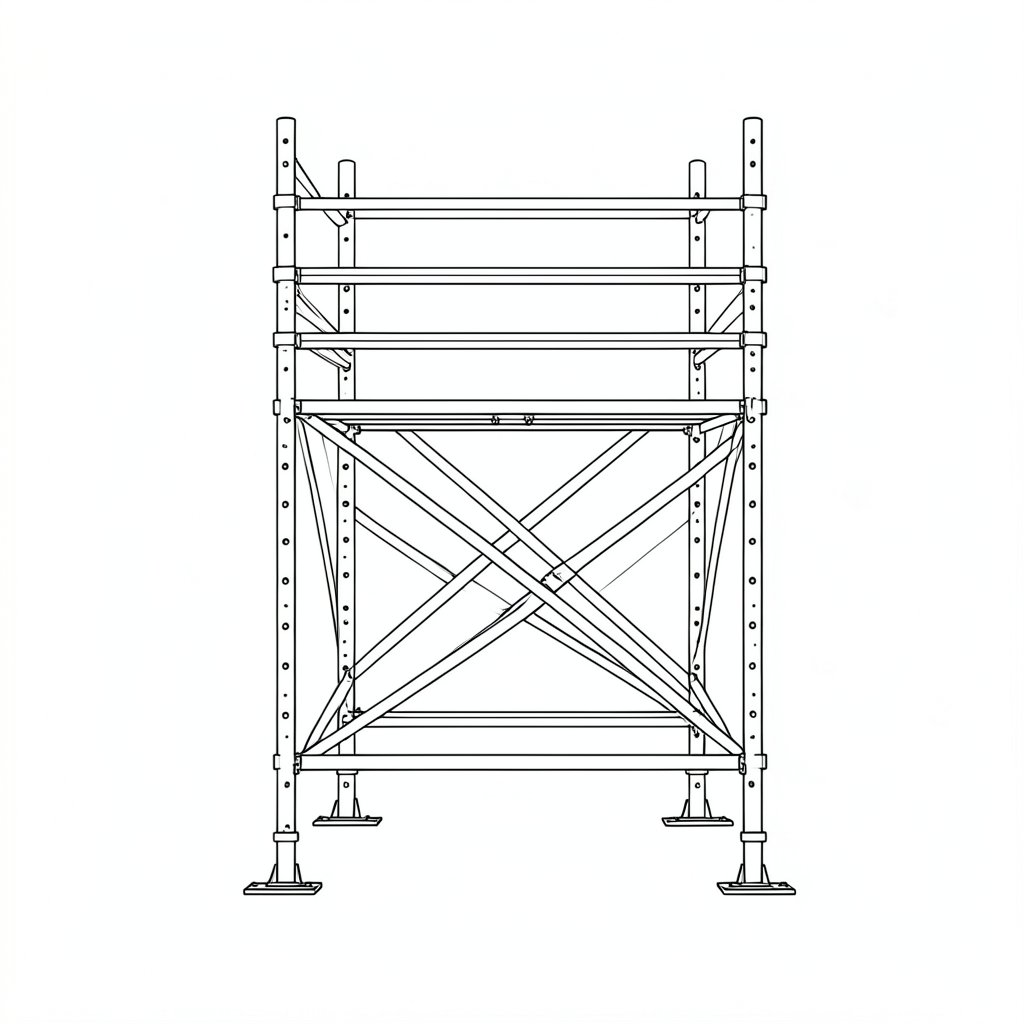
A scaffold is a temporary structure that changes every time someone works on it, and the inspection that matters most is not the formal one recorded in a register but the look you take before your own weight goes onto it.
The tag tells you the last answer, not the current one
A scaffold tag records the state of the structure at the moment it was last inspected by a competent person. It does not know that a board was lifted overnight to pass material through, that a tie was removed to get a window in, or that a brace was struck by a delivery. The tag is a necessary condition for using a scaffold and it is never a sufficient one, and treating it as a guarantee is the single most common way people end up on an altered structure.
What to look at from the ground before climbing
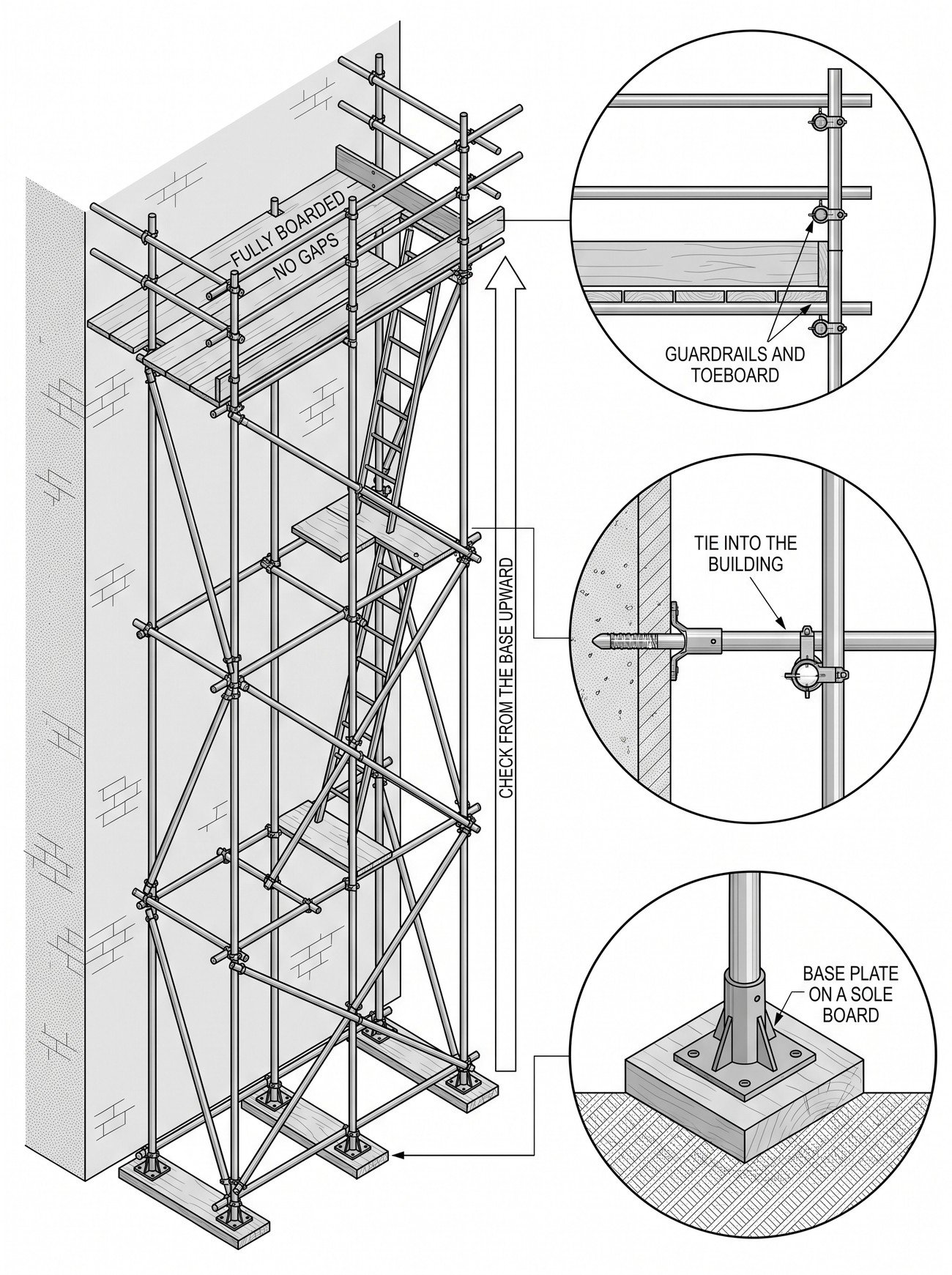
Start at the bottom, because that is where the structure is carrying the most and where a failure removes everything above it. Base plates should be sitting squarely on sole boards, on ground that has not softened or been undercut by an adjacent excavation. Standards should be vertical, and any that are visibly out of plumb, bowed, or resting on made-up packing are a reason to stop. Then look for the ties into the building: a scaffold relies on them for stability, and a run of missing or cut ties is often obvious from twenty metres away.
The working platform itself
On the lift you intend to use, the platform should be fully boarded with no gaps that a foot or a dropped tool can pass through, and the boards should be supported at the correct spacing rather than spanning further than they were designed to. Guardrails should be present at both the main and intermediate height, and toeboards fitted to stop material rolling off. A single missing guardrail on the side you happen not to be working on is still a missing guardrail, because that is the side you will end up on when the job moves.
Loading, and the thing that is easiest to get wrong
Scaffolds are designed for a duty class, and the class determines both how much material may be stacked on a lift and how many lifts may be loaded at once. Stacking block or bagged material on a platform designed for light trades is a straightforward overload, and it is common because the platform looks solid and nothing visibly moves. Where the scaffold has to carry material, that requirement belongs in the design rather than in a decision made on the lift.
Adverse weather and what changes afterwards
High wind, heavy rain that softens ground, frost that lifts base plates, and any impact from plant are all events after which the structure needs looking at again before use, regardless of when the last formal inspection was. Sheeting and netting dramatically increase wind loading, and a scaffold that was stable unsheeted can be a very different structure once it is wrapped. If something has happened, the tag from before it happened is out of date.
Record the formal inspection on the scaffold inspection record, and see scaffold handover and tagging for who is permitted to change the structure.
Related standards
The standards below set the test methods and performance levels behind the protective equipment used for this work.
- EN 361 — Full Body Harnesses
- EN 362 — Connectors for Fall Protection
- EN 795:2012 — Anchor Devices for Fall Protection
- EN ISO 20345 — Safety Footwear
Common errors
1Treating a scaffold tag as a guarantee of the current state rather than a record of the last inspection.
2Starting the check at the working lift instead of at the base plates and ties.
3Accepting a partly boarded platform or a missing guardrail on the side not currently in use.
4Stacking material on a scaffold designed for a lighter duty class.
5Using a sheeted scaffold after high wind on the strength of an inspection carried out before it.
Frequently asked questions
What does a scaffold tag actually tell you?
The state of the structure at the moment a competent person last inspected it. It cannot know about a board lifted overnight, a tie removed for a window, or a brace struck by a delivery since then.
Where should a pre-use check start?
At the base. Base plates on sole boards, ground that has not softened or been undercut, standards vertical and not packed up, then the ties into the building, because a failure there removes everything above it.
Why does a missing guardrail on the unused side still matter?
Because that is the side you will be working from when the job moves along the scaffold. The condition of the platform has to be judged for the whole task, not the current position.
How do scaffolds get overloaded without anyone noticing?
The platform looks solid and nothing visibly moves, so material is stacked on a scaffold designed for a lighter duty class. Where material must be carried, that belongs in the design.
What events invalidate a previous inspection?
High wind, heavy rain softening the ground, frost lifting base plates, and any impact from plant. Sheeting greatly increases wind loading, so a wrapped scaffold behaves differently from the one that was inspected.
Need this as a document you can issue? The template library gives you the risk assessments, permits and inspection logs in editable form — and employer plans cover a whole team with completion records.