Safety / Tips and Tricks / Welding and hot work
Activity 05 · Welding
Respiratory Protection for Welding Fume
Welding fume is a mixture of very fine metal oxide particles generated as vaporized metal condenses in air, and its health risk is driven as much by the base metal and coating being welded as by the welding process itself — which makes respiratory protection a task that has to be reassessed material by material, not set once and left alone.
Why welding fume composition varies so much
Welding mild steel produces predominantly iron oxide fume, but welding stainless steel adds hexavalent chromium and nickel compounds, welding galvanized steel adds zinc oxide fume with its own acute short-term symptoms, and manganese — present in most steel alloys and many electrode coatings — is a specific ongoing concern for its long-term neurological effects at sustained exposure. Respiratory protection decisions should be based on what is actually being welded, not a single generic assumption about “welding fume” as one uniform hazard.
Ventilation before respiratory protection
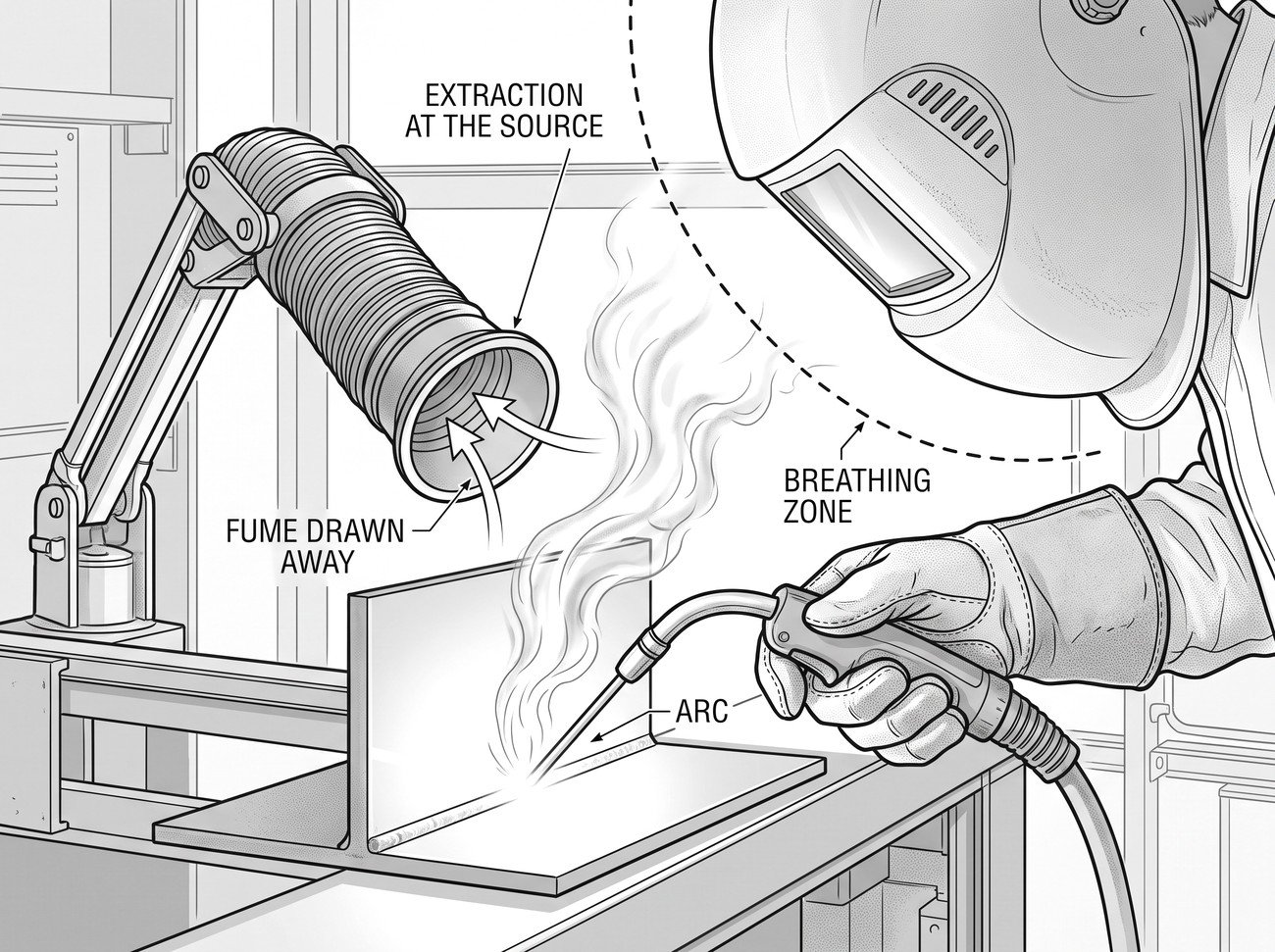
The control hierarchy places ventilation ahead of respiratory protective equipment: general room ventilation to dilute fume concentration, and local exhaust ventilation — a fume extraction torch or a positioned extraction arm — to capture fume close to its source before it disperses into the welder’s breathing zone. A respirator compensates for what ventilation does not remove; it is not a substitute for adequate extraction, and relying on a mask alone where extraction is genuinely achievable skips a control that is generally more effective and does not depend on correct fit or consistent wear.
Filtering facepieces and half masks
EN 149 covers filtering half masks (FFP-class disposable respirators), rated FFP1 through FFP3 by filtration efficiency, while EN 140 covers reusable half masks fitted with replaceable particulate filters. For welding fume, a particulate filter rated P2 or P3 (or the equivalent FFP2/FFP3 disposable class) is generally appropriate given the very fine particle size of welding fume; general dust masks without a specific particulate filter rating do not provide equivalent protection and should not be treated as interchangeable.
Fit and facial hair
A filtering facepiece or half mask only performs to its rated efficiency if it forms a proper seal against the face, and facial hair crossing the sealing line is one of the most common causes of a respirator underperforming its rating in practice, regardless of the filter class chosen. Fit testing, appropriate to the specific mask model in use, confirms the seal actually works for the individual wearer rather than assuming a given mask size fits everyone adequately.
When a filtering respirator is not enough
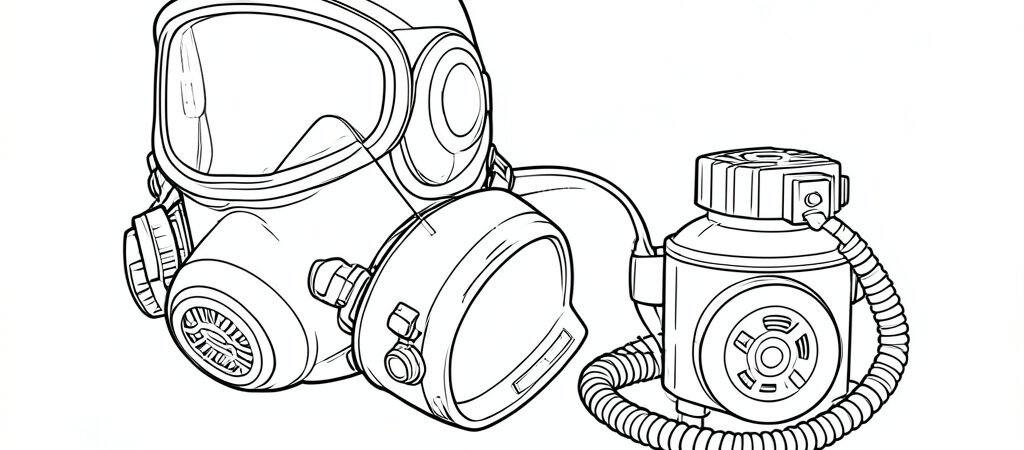
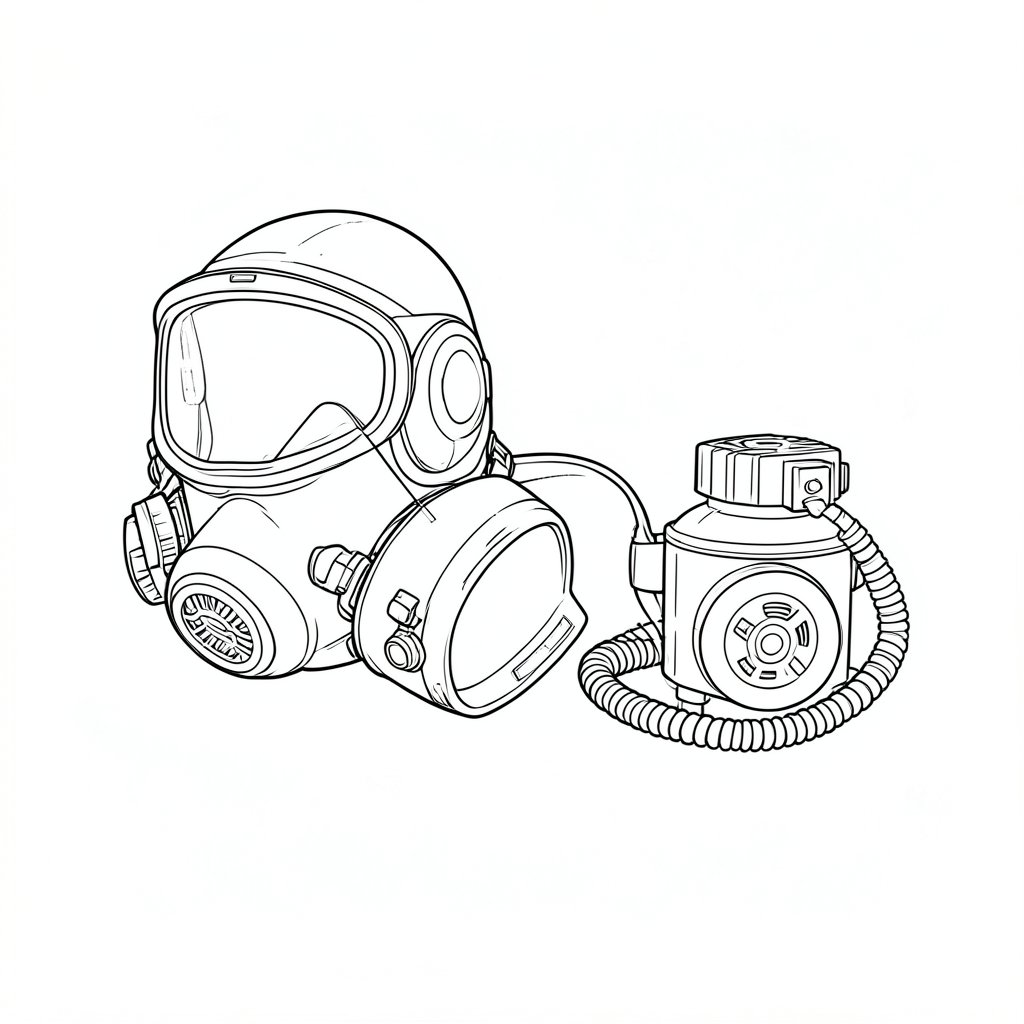
Confined spaces, poorly ventilated enclosed areas, or welding processes generating unusually high fume concentrations can exceed what a filtering respirator is designed to handle, and supplied-air respiratory protection, drawing clean air from outside the contaminated space, is the appropriate escalation in those conditions rather than simply selecting a higher filter class. Recognizing when the task has moved beyond what a filtering mask can safely manage is a judgment call that should be made before starting the work, not discovered partway through it.
For the confined space conditions that most often push respiratory protection past what a filtering mask can handle, see confined space hot work.
Related standards
The standards below set the test methods and performance levels behind the equipment referenced in this note.
- EN 149 — Filtering half masks (FFP1/FFP2/FFP3)
- EN 140 — Half masks and quarter masks
- EN 143 — Particle filters
- EN 136 — Full face masks
Common errors
1Treating all welding fume as the same hazard regardless of the base metal or coating being welded.
2Relying on a respirator as the primary control where local exhaust ventilation is genuinely achievable.
3Using a general dust mask without a specific particulate filter rating for fine welding fume.
4Continuing to rely on a filtering respirator in confined or poorly ventilated conditions that call for supplied air instead.
Frequently asked questions
Why does welding fume composition matter for choosing respiratory protection?
Different base metals and coatings produce very different fume — stainless steel adds hexavalent chromium and nickel, galvanized steel adds zinc oxide, and manganese is present in most steel alloys — so protection should be based on what is actually being welded.
Why does ventilation come before respiratory protection in the control hierarchy?
Local exhaust ventilation captures fume close to its source before it disperses, and it does not depend on correct mask fit or consistent wear the way a respirator does, making it generally more reliable as a control.
What filter class is generally appropriate for welding fume?
A particulate filter rated P2 or P3, or the equivalent FFP2/FFP3 disposable class under EN 149, given the very fine particle size of welding fume; general dust masks without this specific rating are not an equivalent substitute.
Why does facial hair matter for respiratory protection during welding?
It is one of the most common causes of a respirator underperforming its rated efficiency, because facial hair crossing the sealing line prevents the mask from forming a proper seal against the face.
When does welding fume exposure exceed what a filtering respirator can handle?
In confined spaces, poorly ventilated enclosed areas, or with processes generating unusually high fume concentrations, where supplied-air respiratory protection is the appropriate escalation rather than simply choosing a higher filter class.
Need this as a document you can issue? The template library gives you the risk assessments, permits and inspection logs in editable form — and employer plans cover a whole team with completion records.