Safety / Tips and Tricks / Welding and hot work
Activity 05 · Welding
Confined Space Hot Work
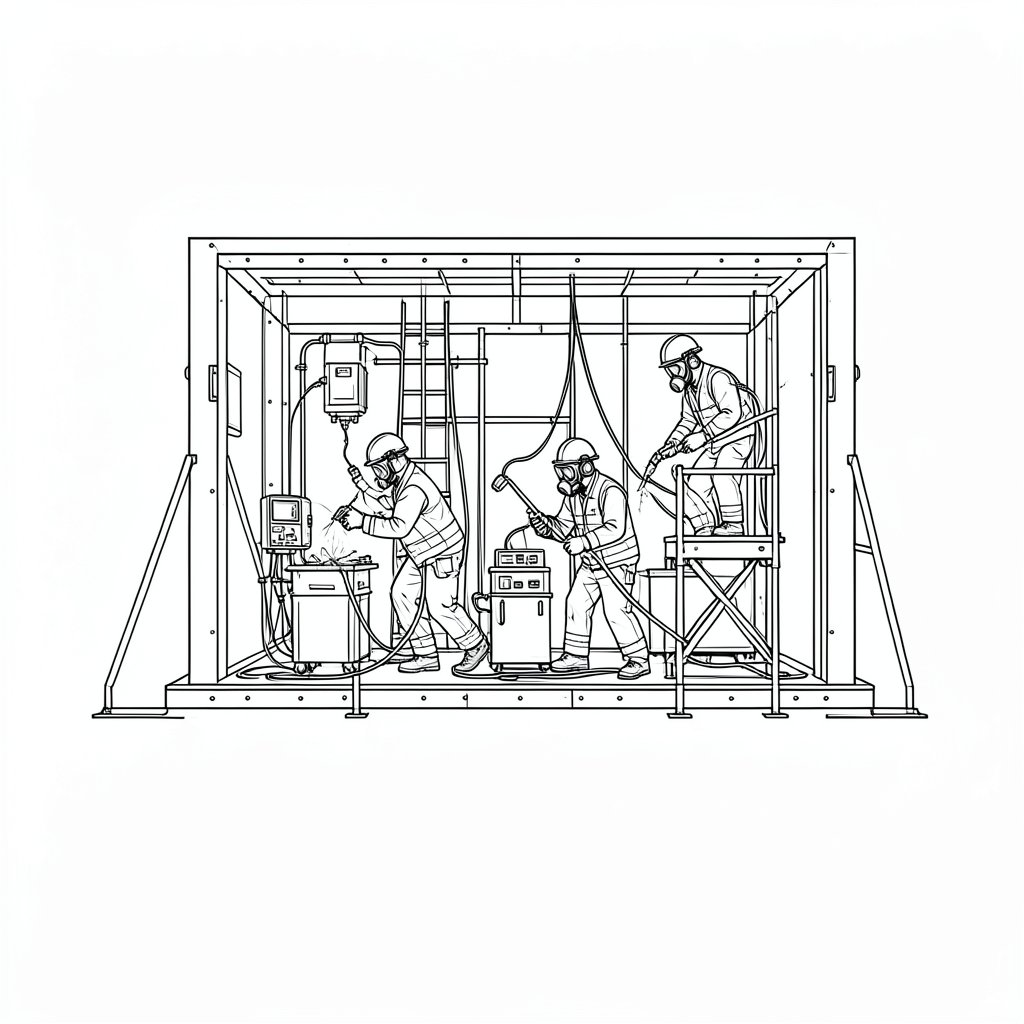
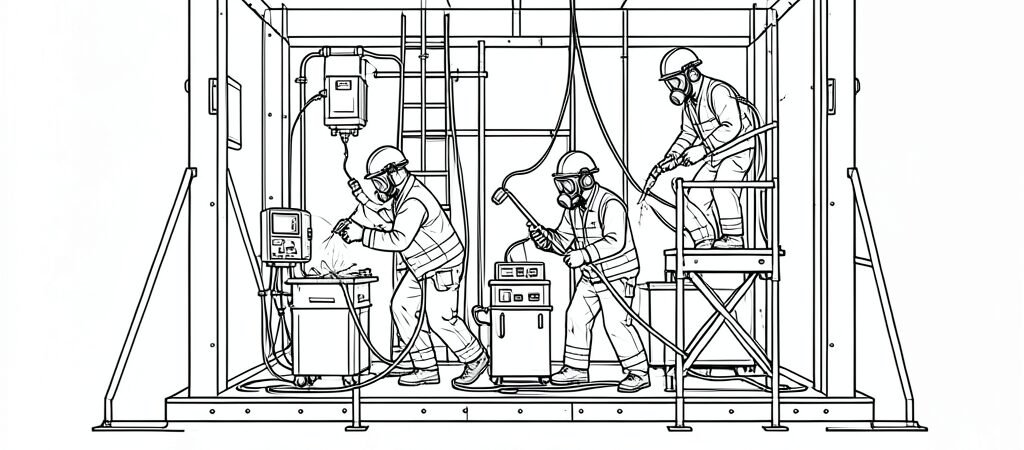
Hot work and confined space entry are each demanding enough on their own, and combining them does not simply add their risks together — welding and cutting inside a confined space actively consumes oxygen and adds fume to an atmosphere that already has limited ventilation, making the space more dangerous as the work continues rather than staying at whatever condition it was in at entry.
Why the atmosphere changes during the work, not just before it
Combustion consumes oxygen, and welding fume adds particulate and gaseous byproducts to an enclosed atmosphere that has little or no natural air exchange, meaning an atmosphere that tested safe at entry can deteriorate meaningfully over the course of the work itself. Continuous atmospheric monitoring throughout hot work in a confined space, not just a single check before entry, is necessary specifically because of this ongoing consumption and contamination, which a one-time entry check cannot account for.
Ventilation as the primary control
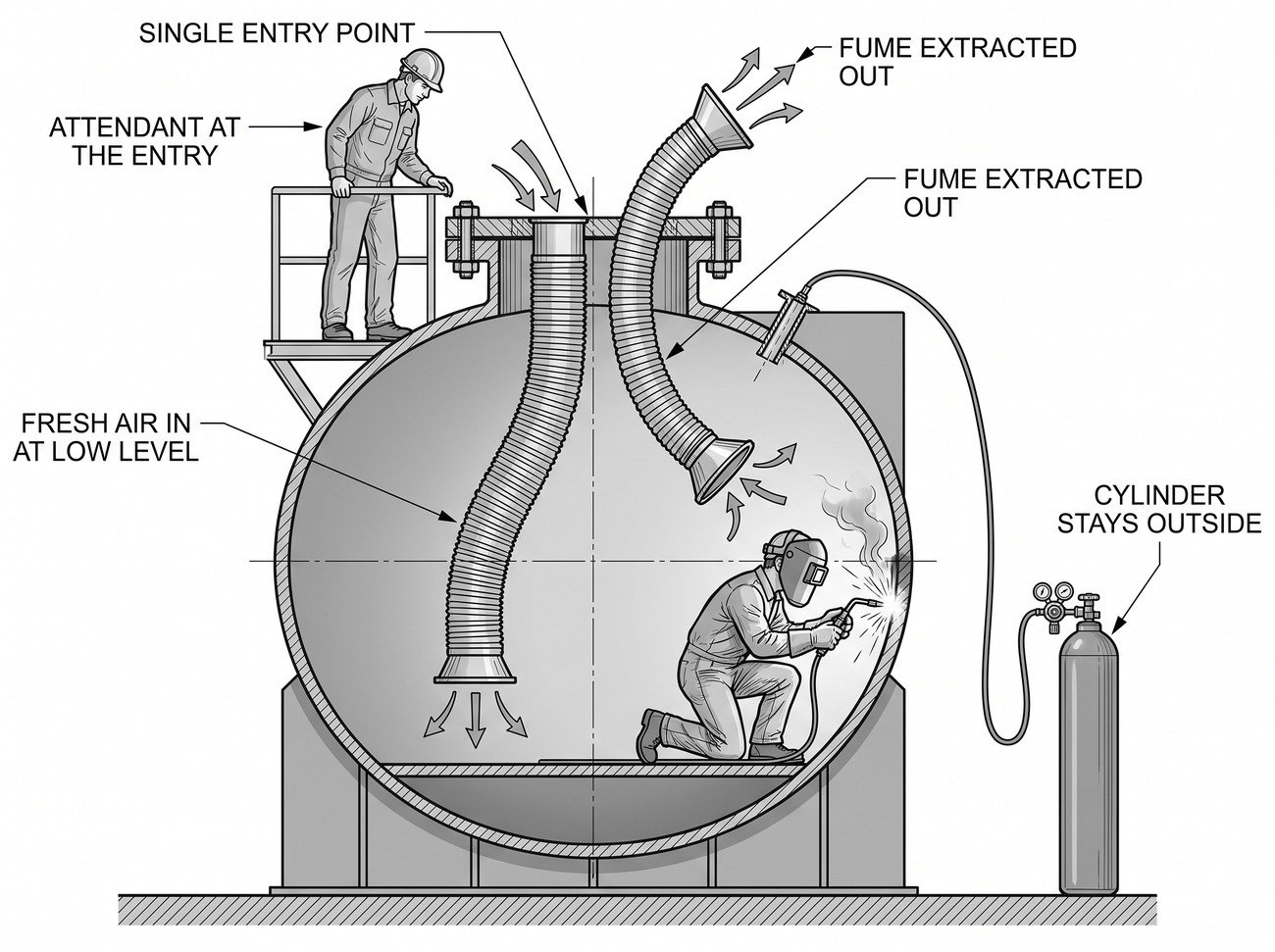
Forced-air ventilation, actively exchanging the space’s atmosphere rather than relying on whatever natural airflow exists, is the primary control for keeping oxygen levels and fume concentration within safe limits during confined space hot work, and this need is greater than for ordinary confined space entry precisely because hot work is actively consuming oxygen and generating fume as the ventilation works to compensate. Ventilation equipment should be running and confirmed effective before hot work begins, not started reactively once a monitor alarms.
Combined permit requirements
Confined space hot work needs both a confined space entry permit and a hot work permit satisfied together, not one substituting for the other, since each addresses a distinct set of controls — atmospheric testing and rescue arrangements from the confined space side, combustible clearance and fire watch from the hot work side. A standby attendant positioned at the entry point, in continuous communication with anyone inside, remains a confined space entry requirement regardless of what the hot work permit itself specifies.
Equipment positioning
Gas cylinders should generally remain outside the confined space, with hoses run in to the work location, rather than being taken inside — a leak from a cylinder positioned inside a poorly ventilated enclosed space has far less opportunity to disperse than the same leak outside, and rapidly worsens both fire risk and atmospheric conditions. Where equipment must be positioned inside, it should be removed at the end of each work period rather than left in the space, reducing the leak risk during periods when the space is unattended.
Rescue planning specific to hot work conditions
A confined space rescue plan needs to account for the specific conditions hot work introduces — heat, reduced visibility from fume, and potential fire — not just the general atmospheric or engulfment hazards a standard confined space rescue plan is built around. Reviewing and adapting the space’s existing rescue plan for the added conditions hot work creates, rather than assuming a generic confined space rescue plan covers this scenario adequately, is a necessary step before work begins.
For the full confined space entry procedure this hot work sits inside, see Rope Access and Confined Space. For the gas cylinder handling principles referenced here, see gas cylinder handling and storage.
Related standards
The standards below set the test methods and performance levels behind the equipment referenced in this note.
- EN 136 — Full face masks
- EN 140 — Half masks and quarter masks
- EN 361 — Full body harnesses
- EN 1497 — Rescue harnesses
Common errors
1Testing the atmosphere once at entry and not continuing to monitor throughout the hot work itself.
2Relying on a confined space entry permit or a hot work permit alone, rather than satisfying both together.
3Bringing gas cylinders inside the confined space rather than positioning them outside with hoses run in.
4Assuming a generic confined space rescue plan adequately covers the added heat, fume and fire conditions hot work introduces.
Frequently asked questions
Why does the atmosphere in a confined space change during hot work, not just before it?
Combustion consumes oxygen and welding fume adds contamination to an enclosed atmosphere with little natural air exchange, so a space that tested safe at entry can deteriorate meaningfully as the work continues.
Is a single atmospheric test before entry enough for confined space hot work?
No, continuous monitoring throughout the work is necessary because oxygen consumption and fume buildup from the hot work itself keep changing conditions inside the space.
Do both a confined space entry permit and a hot work permit apply together?
Yes, they address distinct sets of controls — atmospheric testing and rescue arrangements from the confined space side, combustible clearance and fire watch from the hot work side — and neither substitutes for the other.
Where should gas cylinders be positioned for confined space hot work?
Generally outside the confined space with hoses run in, since a leak from a cylinder positioned inside a poorly ventilated space has far less opportunity to disperse and rapidly worsens both fire and atmospheric risk.
Does a standard confined space rescue plan cover hot work adequately?
Not without review, since it needs to account for the specific heat, reduced visibility from fume, and fire risk hot work introduces, beyond the general atmospheric or engulfment hazards a standard plan addresses.
Need this as a document you can issue? The template library gives you the risk assessments, permits and inspection logs in editable form — and employer plans cover a whole team with completion records.