Safety / Tips and Tricks / Welding and hot work
Activity 05 · Welding
Welding and Hot Work at Height
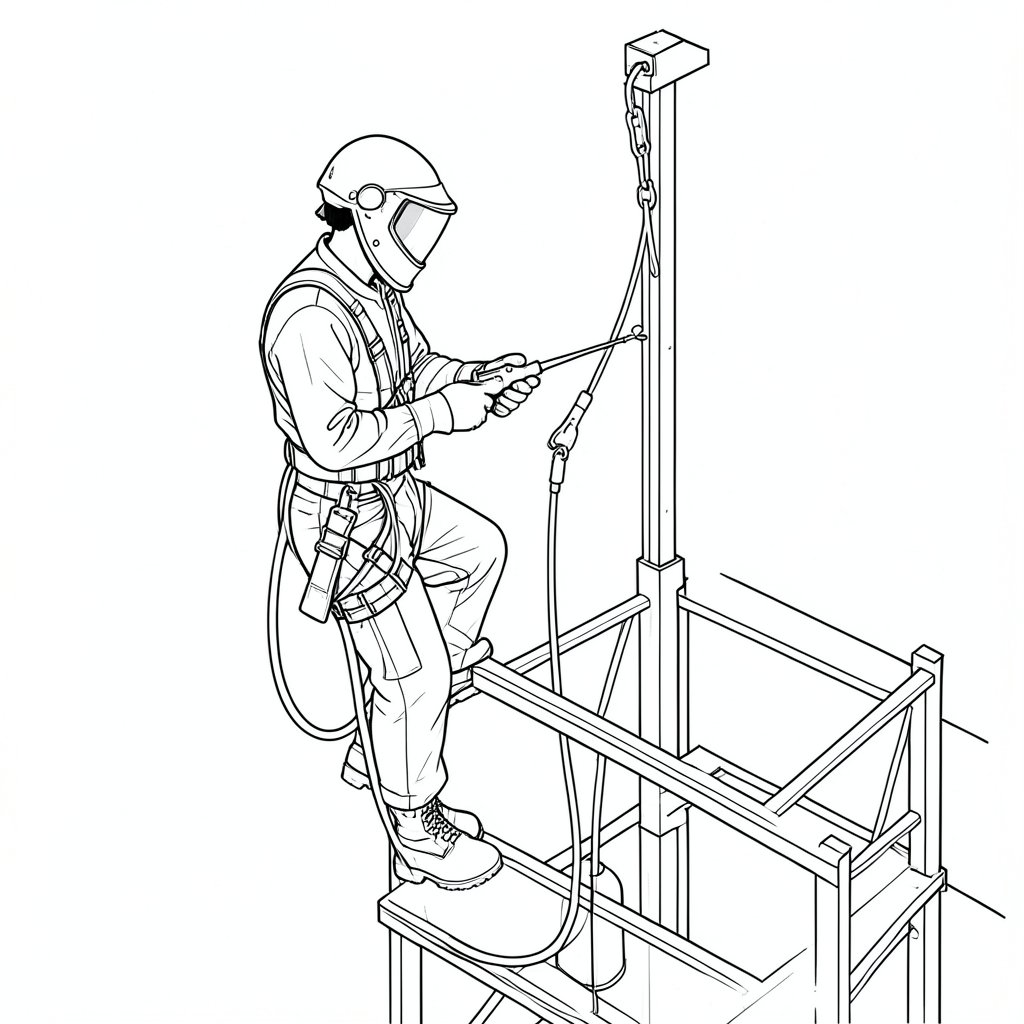
Welding at height combines two hazard sets that each demand careful equipment selection on their own, and the point where they intersect — fall protection equipment exposed to sparks, gas cylinders and hoses managed at an elevated position — is where most of the added risk of this combination actually sits.
Fall protection equipment and heat exposure
Standard fall-arrest lanyards and harness webbing can be damaged, weakened, or melted by direct spark contact in a way that is not always visible on inspection, and equipment that has been exposed to hot work sparks should be treated as suspect and inspected specifically for that exposure, not just checked against a routine general wear inspection. Fall protection components rated for use in hot work environments, or shielded from direct spark exposure by their positioning relative to the work, address this risk more reliably than hoping ordinary equipment survives incidental contact undamaged.
Falling slag to areas below
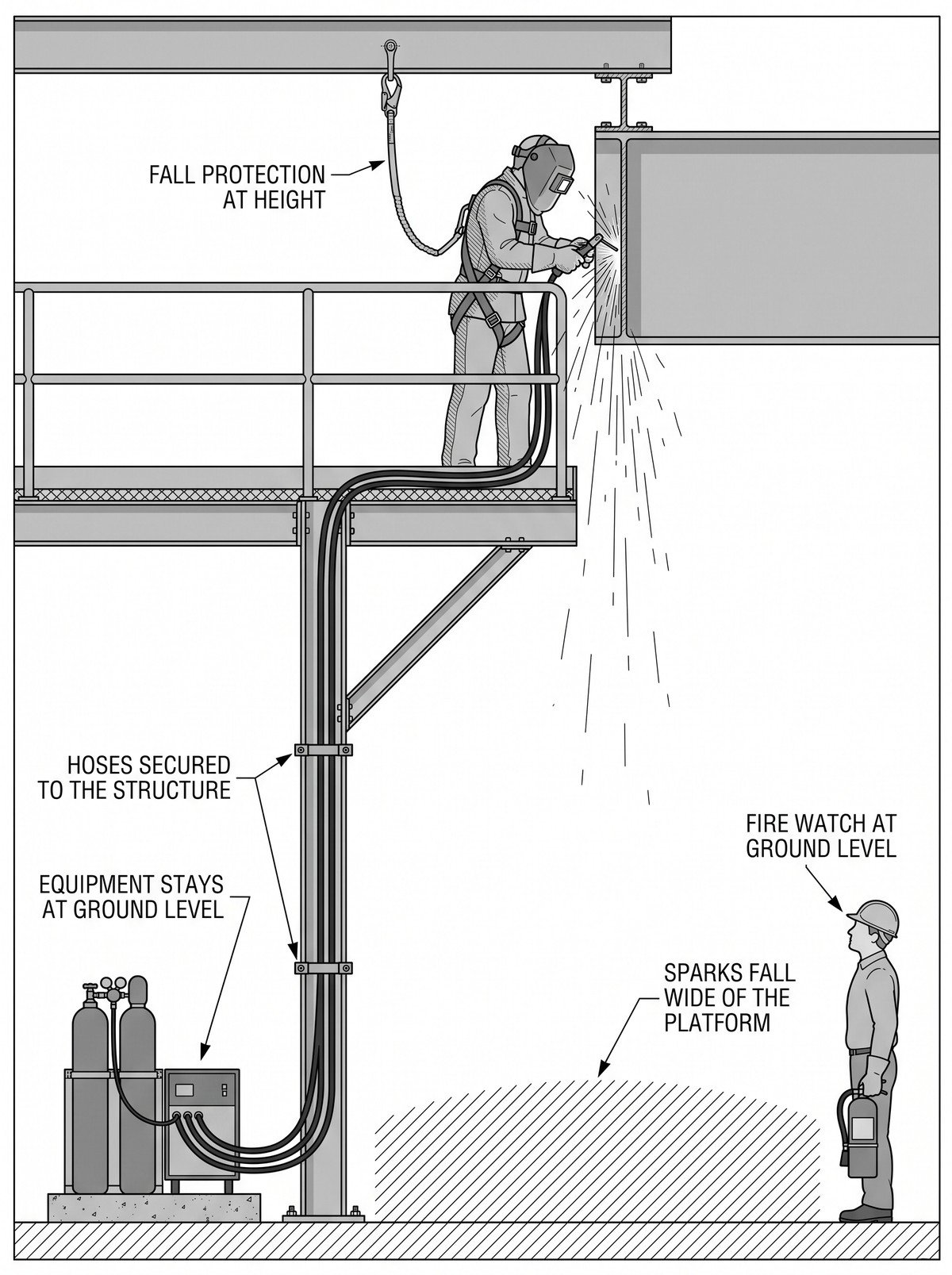
Slag and spatter from welding at height falls further and less predictably than from ground-level work, and the area beneath elevated hot work needs to be barricaded and confirmed clear before starting, following the same principle covered for oxy-fuel cutting but applying it specifically to the sustained duration typical of welding tasks rather than a single cut. This barricading needs to account for wind, which can carry lighter spatter further from the vertical drop line than a still-air assumption would suggest.
Cylinder and hose positioning
Gas cylinders are generally kept at ground level for elevated hot work, with hoses run up to the work position, rather than hoisting the cylinders themselves to the working level, since a dropped or impacted cylinder at height carries far greater consequence than the same event at ground level. Hoses run up an elevated structure need to be routed and secured to avoid snagging on edges, sharp features, or moving parts of access equipment, and kept clear of the fall-protection system’s own lines so the two do not become entangled.
Anchor point selection
An anchor point positioned where it is exposed to direct spark fall or sustained heat from the work below can be damaged by the very task the fall protection system is meant to protect against, which makes anchor point selection for welding at height a task-specific decision rather than simply using whatever anchor is already in place for other work at the same location. Confirming the anchor point is positioned clear of the expected spark and heat zone, not just adequately rated for the fall-arrest load, is a check specific to this combination of hazards.
Coordinating the two permit systems
A work-at-height plan and a hot work permit need to be reviewed together for this kind of task, since a work-at-height plan written without hot work in mind may not address spark exposure to equipment, and a hot work permit written without height in mind may not address falling slag to areas below or fall-protection equipment condition. Neither plan alone is complete for a task that combines both hazards.
For the broader work-at-height guidance this task sits within, see Roofing and Work at Height. For falling slag hazards from cutting specifically, see oxy-fuel cutting hazards.
Related standards
The standards below set the test methods and performance levels behind the equipment referenced in this note.
- EN 361 — Full body harnesses
- EN 358 — Work positioning and restraint belts
- EN 362 — Connectors for fall protection
- EN 795 — Anchor devices for fall protection
Common errors
1Continuing to use fall protection equipment that has had direct spark contact without a specific inspection for heat or melt damage.
2Barricading only the area directly below the work without accounting for wind carrying spatter further from the vertical drop line.
3Hoisting gas cylinders to the working level instead of keeping them at ground level with hoses run up.
4Using an existing anchor point without confirming it is positioned clear of the expected spark and heat zone.
Frequently asked questions
Can standard fall-arrest equipment be used safely during welding at height?
It can be damaged, weakened or melted by direct spark contact in ways that are not always visible, so equipment exposed to sparks should be specifically inspected for that exposure, or equipment rated for hot work environments should be used instead.
Why does the area below elevated welding need to be barricaded?
Slag and spatter fall further and less predictably than from ground-level work, and wind can carry lighter spatter beyond the vertical drop line, so the barricaded area needs to account for that spread.
Why are gas cylinders generally kept at ground level rather than hoisted up during welding at height?
A dropped or impacted cylinder at height carries far greater consequence than the same event at ground level, so hoses are run up to the work position instead of hoisting the cylinders themselves.
Why does anchor point selection need special consideration for welding at height?
An anchor point exposed to direct spark fall or sustained heat can be damaged by the work itself, so it needs to be positioned clear of the expected spark and heat zone, not just adequately rated for the fall-arrest load.
Is a standard work-at-height plan or hot work permit enough on its own for this combined task?
No, a work-at-height plan without hot work in mind may not address spark exposure to equipment, and a hot work permit without height in mind may not address falling slag or fall-protection equipment condition, so both need to be reviewed together.
Need this as a document you can issue? The template library gives you the risk assessments, permits and inspection logs in editable form — and employer plans cover a whole team with completion records.