Safety / Tips and Tricks / Welding and hot work
Activity 05 · Welding
Oxy-Fuel Cutting Hazards
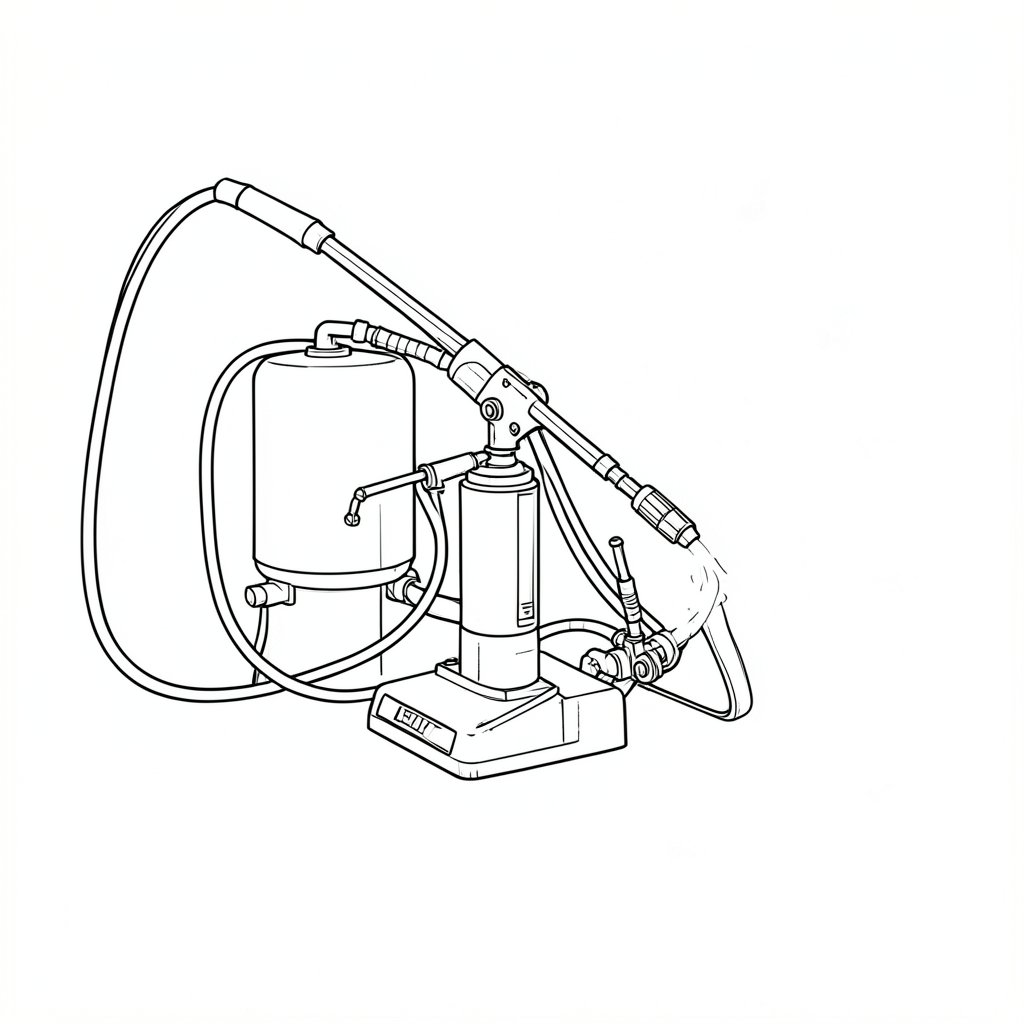
Oxy-fuel cutting combines a pressurized fuel gas and pure oxygen at the same torch tip, and several of its most serious failure modes — flashback, hose ignition, oxygen-enriched clothing — involve the gas supply itself rather than the cutting flame or falling slag that are the more obvious visible hazards.
Backfire versus flashback
A backfire is a momentary pop or bang as the flame burns back into the tip and re-establishes, usually harmless and often caused by the tip briefly touching the work or overheating, while a flashback is the flame burning back into the torch body, the hoses, or even the regulator, a genuinely dangerous condition that can cause the hose itself to ignite or explode. Recognizing the difference matters for how to respond — a backfire can usually be relit after a brief check, but any suspected flashback (often accompanied by a hissing or screeching sound and the flame disappearing) means shutting off both cylinders immediately and not relighting until the equipment has been inspected.
Flashback arrestors
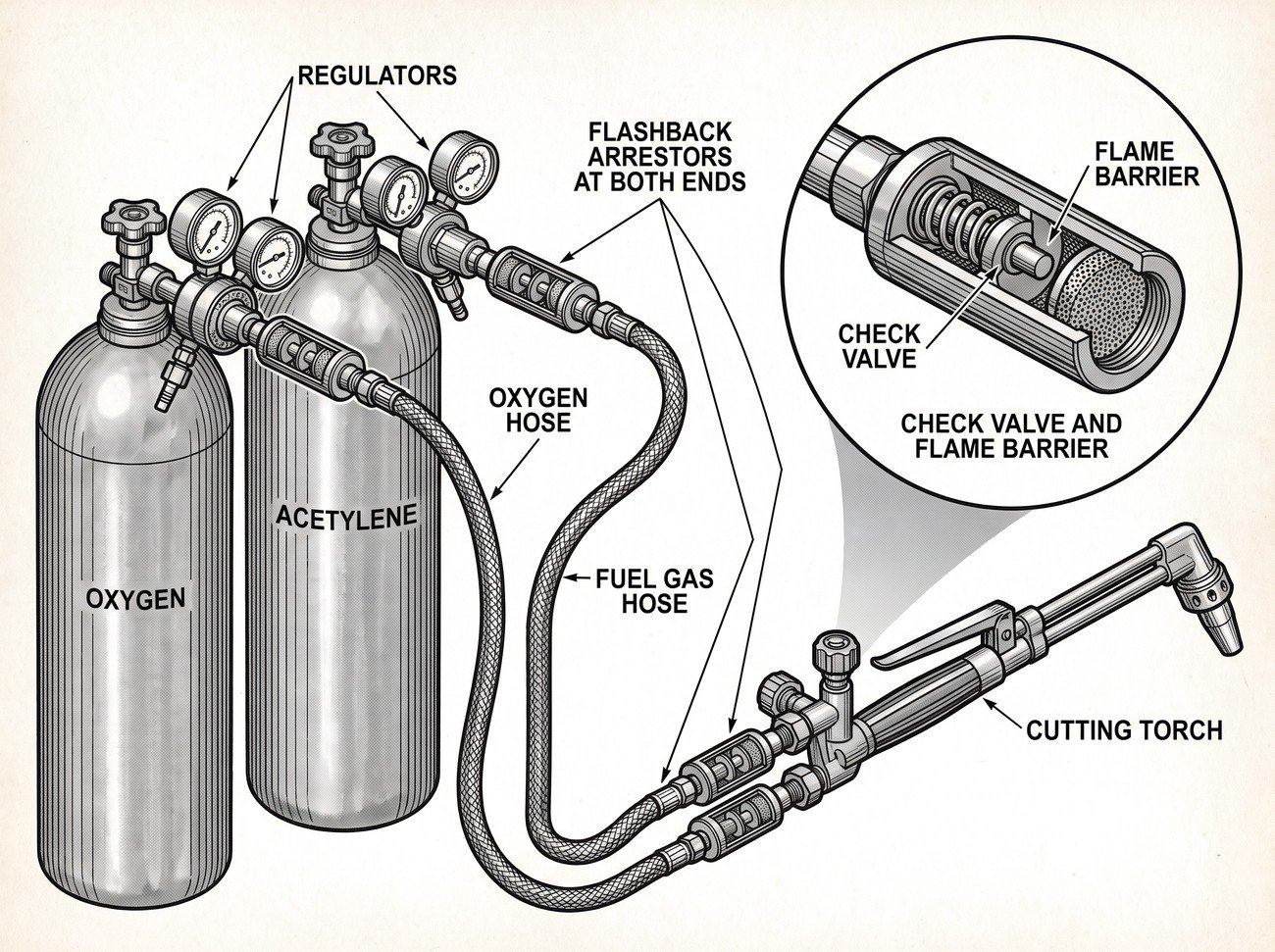
Flashback arrestors fitted at the regulator and, ideally, at the torch end of each hose stop a flashback from traveling further back into the gas supply, and their presence is what limits a flashback to a torch or hose problem rather than one that reaches the cylinder itself. Equipment without properly fitted, well-maintained flashback arrestors on both the fuel and oxygen lines is missing a control specifically designed to prevent this failure mode from becoming far more serious than it needs to be.
Oxygen-enriched clothing
A slow oxygen leak from a fitting or hose can saturate nearby clothing without being obvious at the time, and oxygen-enriched fabric ignites far more easily and burns dramatically faster than the same fabric in normal air — a hazard that is easy to underestimate because the leak itself may be silent and the clothing shows no visible change before ignition. Checking fittings for leaks regularly, and treating any smell or hiss of escaping gas as reason to stop and investigate before continuing, prevents this specific and serious failure mode.
Cutting coated and painted metal
Cutting through paint, galvanizing, or other surface coatings releases whatever fumes those coatings produce when heated, and older paint in particular can contain lead or other hazardous compounds that generate a fume hazard well beyond the metal fume itself. Coatings should be removed from the cut line before starting wherever practical, and where that is not possible, respiratory protection and ventilation should be assessed against the specific coating’s hazards, not just the base metal being cut.
Falling slag and cutting at height or over open areas
Molten slag from cutting falls and can travel further than it appears likely to from the cutting position itself, particularly when the work is elevated, and anyone or anything below the cut line is at risk from material the person cutting cannot directly see falling. Barricading the area below overhead cutting work, and confirming no one is working or passing underneath before starting, is a distinct control from the cutter’s own PPE.
For the gas cylinder handling this equipment depends on, see gas cylinder handling and storage. For the fume and respiratory protection considerations, see respiratory protection for welding fume.
Related standards
The standards below set the test methods and performance levels behind the equipment referenced in this note.
- EN 175 — Eye and face protection for welding
- EN 169 — Welding filters
- EN 407 — Thermal risk gloves
- EN ISO 11612 — Heat and flame protective clothing
Common errors
1Relighting after a suspected flashback without shutting off cylinders and inspecting the equipment first.
2Using equipment without flashback arrestors fitted on both the fuel and oxygen lines.
3Ignoring a small oxygen leak that can silently saturate nearby clothing and dramatically increase its flammability.
4Cutting through painted or coated metal without accounting for the fume hazard the coating itself produces.
Frequently asked questions
What is the difference between a backfire and a flashback in oxy-fuel cutting?
A backfire is a momentary pop as the flame burns back into the tip and re-establishes, usually harmless, while a flashback is the flame burning back into the torch body, hoses, or regulator, a dangerous condition that can ignite the hose itself.
What should be done if a flashback is suspected?
Shut off both cylinders immediately and do not relight until the equipment has been inspected, since flashback is often accompanied by a hissing or screeching sound and the flame disappearing.
What do flashback arrestors do?
Fitted at the regulator and torch ends of the hoses, they stop a flashback from traveling further back into the gas supply, limiting it to a hose or torch problem rather than one that reaches the cylinder.
Why is oxygen-enriched clothing a serious hazard?
A slow, silent oxygen leak can saturate nearby clothing without being obvious, and oxygen-enriched fabric ignites far more easily and burns dramatically faster than the same fabric in normal air.
What is the added hazard of cutting painted or coated metal?
The coating releases its own fumes when heated, and older paint in particular can contain lead or other hazardous compounds, adding a fume hazard beyond the base metal being cut.
Need this as a document you can issue? The template library gives you the risk assessments, permits and inspection logs in editable form — and employer plans cover a whole team with completion records.