Safety / Tips and Tricks / Welding and hot work
Activity 05 · Welding
Fire Response and Emergency Planning for Hot Work
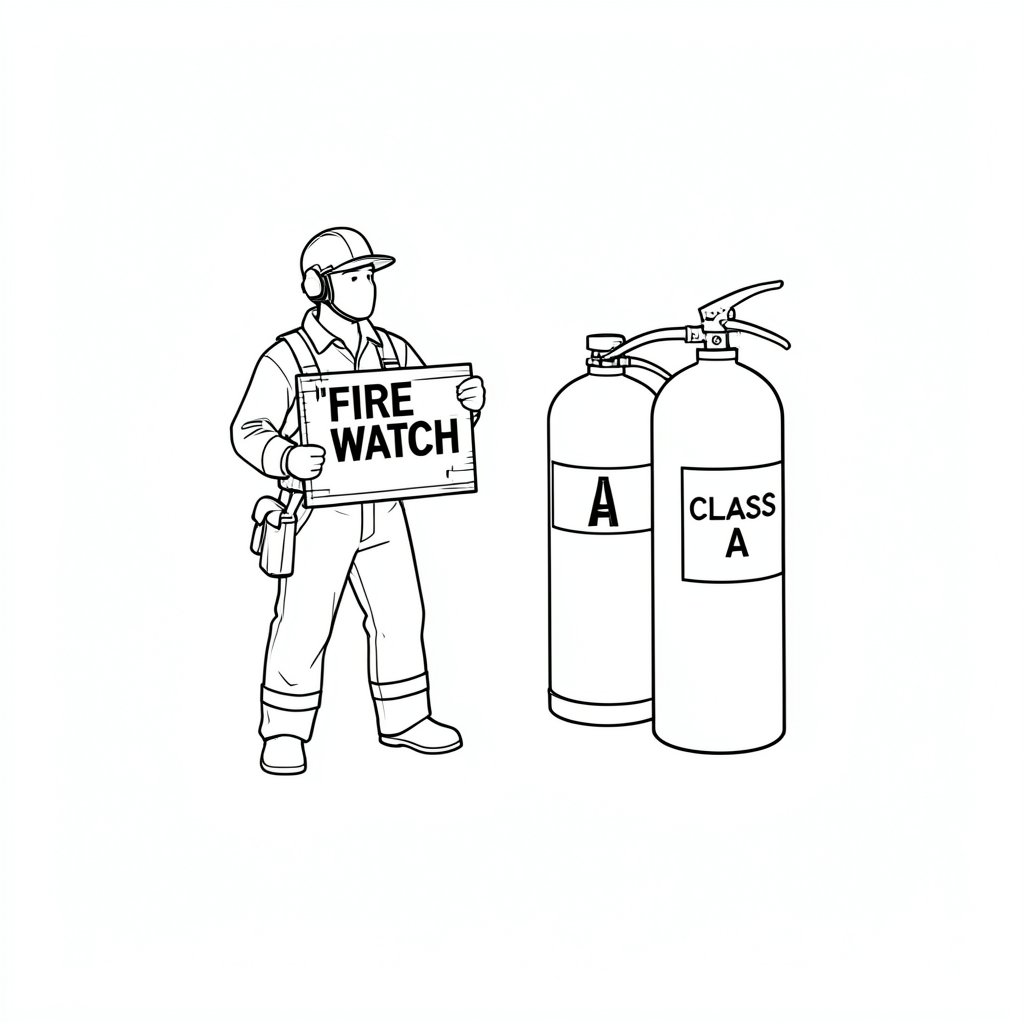
A fire watch and a fire extinguisher only work as intended if the response plan behind them has already been thought through — the right extinguisher for the actual materials present, a clear point at which to stop fighting a fire and evacuate, and a communication method that works from wherever the hot work is actually taking place.
Matching extinguisher type to the actual hazard
Different fire classes call for different extinguisher types, and a general-purpose extinguisher is not automatically appropriate for every hot work environment — work involving flammable liquids, combustible metals, or energized electrical equipment nearby each call for a specific extinguisher rating suited to that material, and a mismatch can be ineffective or, in the case of some combustible metal fires, actively dangerous to fight with the wrong agent. Confirming the correct extinguisher type for the specific materials present at the work location, as part of the same assessment that produces the hot work permit, is not a detail to leave to whatever extinguisher happens to be nearest.
Knowing when to stop fighting and evacuate
A fire watch’s role includes recognizing the point at which a fire has moved beyond what a single extinguisher and one person can control, and that decision needs to be made early and decisively — continuing to attempt suppression past that point, rather than evacuating and raising the alarm, is a documented pattern in how small fires become serious incidents. Establishing this threshold in advance, as part of planning rather than deciding it in the moment under pressure, gives the fire watch a clear standard to act on rather than a judgment call made from scratch during an actual event.
Communication and raising the alarm
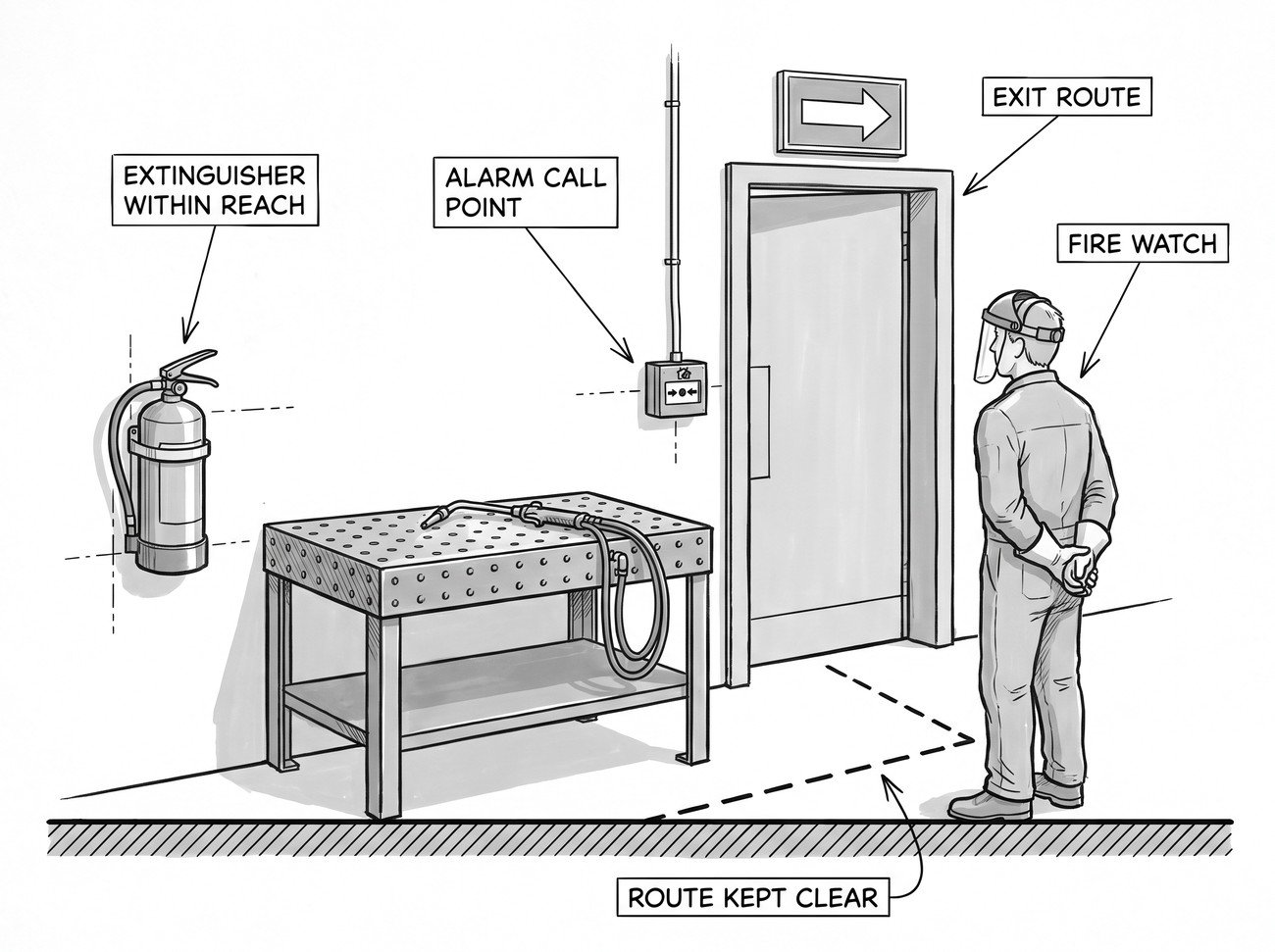
Hot work in a remote area, inside a confined space, or at height can put real distance or physical barriers between the work location and wherever help would normally be summoned from, and confirming in advance how an alarm would actually be raised from that specific location — not just assuming a phone or radio will work as expected — avoids discovering a communication gap during an actual emergency. This planning should reflect the specific location of each hot work task, since a method that works for one work area may not work for another with different access or signal conditions.
Burn first aid basics
Thermal burns from hot work require immediate cooling with clean, cool running water for an extended period, removing clothing and jewelry from the affected area unless it is stuck to the skin, and covering the burn loosely with a clean, non-fluffy dressing while arranging further medical attention — ice, butter, or other home remedies should not be used, since they can worsen tissue damage rather than help it. Anyone regularly present during hot work benefits from knowing this basic sequence rather than relying on whoever happens to be trained in general first aid to also know the specific response for a thermal burn.
Rehearsing the plan before real work starts
A fire response plan that has only existed on paper performs differently in practice than one that has actually been walked through — confirming where the extinguisher is, how the alarm is actually raised from that location, and who does what in the first minute of a developing incident, in a brief rehearsal before hot work begins on a new site or area, surfaces gaps that reading the plan alone does not reveal.
For the fire watch role this response plan supports, see hot work permits and fire watch.
Related standards
The standards below set the test methods and performance levels behind the equipment referenced in this note.
- EN ISO 11612 — Heat and flame protective clothing
- EN 407 — Thermal risk gloves
- EN 166 — Eye protection
Common errors
1Using whatever extinguisher happens to be nearest rather than confirming the correct type for the specific materials present.
2Continuing to attempt to fight a fire past the point where evacuation and raising the alarm should have already happened.
3Assuming a phone or radio will work from a remote, confined, or elevated hot work location without confirming it in advance.
4Treating a written fire response plan as sufficient without ever walking through it before work begins.
Frequently asked questions
Is a general-purpose fire extinguisher always appropriate for hot work?
No, work involving flammable liquids, combustible metals, or nearby energized electrical equipment each call for a specific extinguisher rating, and using the wrong type can be ineffective or, for some combustible metal fires, actively dangerous.
When should a fire watch stop trying to fight a fire and evacuate instead?
At a threshold established in advance during planning, not decided in the moment under pressure, since continuing to attempt suppression past the point a fire is beyond one extinguisher and one person's control is a documented pattern in how small fires become serious incidents.
Why does raising the alarm need to be planned for specific hot work locations?
Remote areas, confined spaces, or elevated work can put distance or physical barriers between the work and where help is summoned from, so the actual communication method for that specific location needs to be confirmed in advance, not assumed.
What is the correct immediate response to a thermal burn from hot work?
Immediate cooling with clean, cool running water for an extended period, removing clothing and jewelry from the area unless stuck to the skin, and covering loosely with a clean, non-fluffy dressing while arranging medical attention — not ice, butter, or other home remedies.
Why does a fire response plan need to be rehearsed, not just written?
A plan that has only existed on paper performs differently in practice; a brief rehearsal of extinguisher location, alarm method and initial roles surfaces gaps that reading the plan alone does not reveal.
Need this as a document you can issue? The template library gives you the risk assessments, permits and inspection logs in editable form — and employer plans cover a whole team with completion records.