Safety / Tips and Tricks / Welding and hot work
Activity 05 · Welding
Arc Welding: Electrical Hazards and Equipment Safety
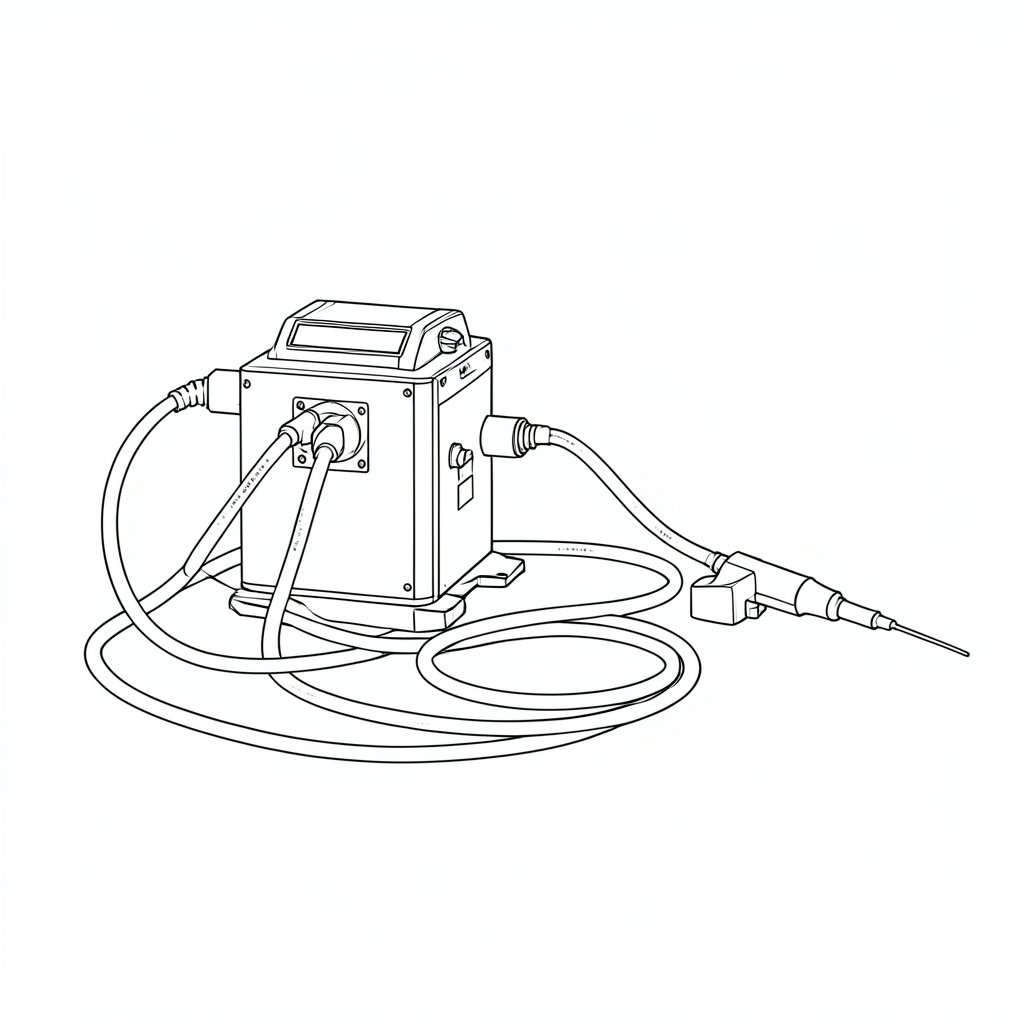
Arc welding equipment operates at currents high enough to melt metal, and while the working voltage during an actual weld is generally low, the open-circuit voltage present between welds — while the electrode holder is live but not arcing — is where most electrical shock incidents during welding actually occur.
Open-circuit voltage and when it is actually present
Open-circuit voltage (OCV) is present at the electrode holder whenever the welding power source is switched on, whether or not an arc is currently being struck, and it is easy to treat the equipment as only “live” during the moment of welding itself when in fact the shock risk exists throughout the whole time the machine is powered up. Handling the electrode holder and cables with the same care between welds as during active welding, rather than relaxing once the arc stops, reflects where this risk actually sits.
Conditions of increased electrical hazard
Wet conditions, confined metallic spaces, and situations where the welder’s body is in extended contact with a conductive structure all increase shock risk substantially compared to dry, open, well-insulated working conditions, because moisture and metal-to-metal contact reduce the body’s resistance to current flow. Welding equipment and procedures suited to these higher-risk conditions — including equipment specifically designed to limit OCV in such settings — should be assessed separately from a general risk assessment written for ordinary dry workshop conditions.
Cable and holder condition
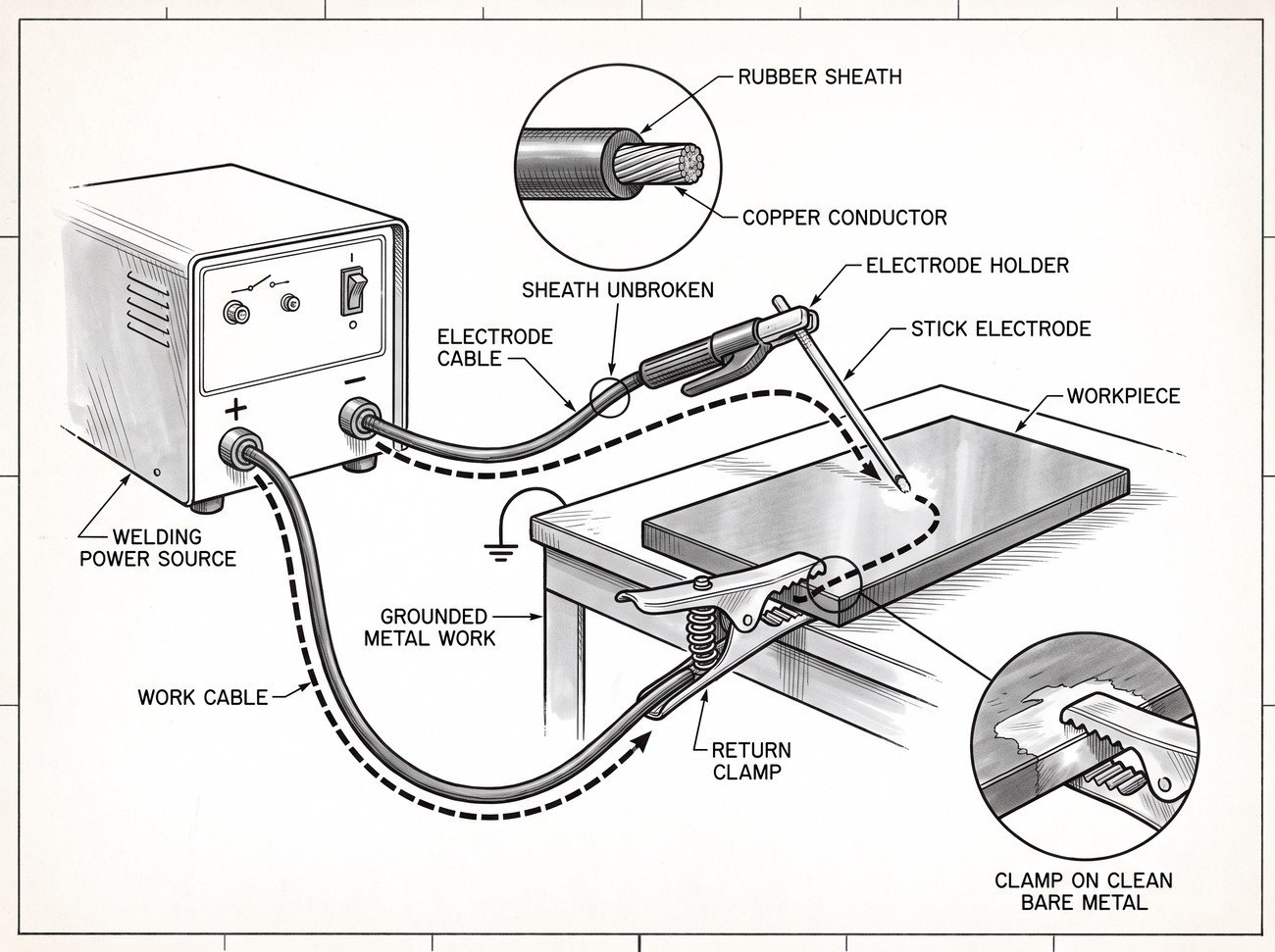
Damaged insulation on welding cables or a cracked electrode holder exposes live conductors at exactly the points the welder’s hands are in constant contact with, and this kind of damage accumulates gradually from routine wear rather than appearing suddenly, which makes a pre-use visual check easy to skip out of habit. Cables and holders with damaged insulation should be tagged out of service and repaired or replaced before further use, not worked around with tape as a temporary fix that becomes permanent.
Return clamp placement
The work return clamp should be attached directly to the workpiece or a clean, conductive point close to the weld, not to a structure some distance away that the current would then need to pass through on its way back to the machine, since an unintended return path through structural steel, machinery, or other equipment can create shock or arcing risks in places far from the weld itself. Checking that the return path is direct and does not pass through anything a person might be touching elsewhere is a specific check worth making, not just confirming the clamp is attached to something metallic.
Equipment earthing versus the welding return circuit
The welding return circuit (via the work clamp) and the equipment’s own protective earth connection serve different purposes and should not be treated as interchangeable — the protective earth exists to prevent the machine’s casing itself from becoming live in the event of an internal fault, independent of how the welding current is routed through the work return clamp. Confirming both are correctly connected, rather than assuming one covers the other, is part of a proper pre-use equipment check.
For the additional electrical considerations that apply when welding inside a confined metallic space, see confined space hot work.
Related standards
The standards below set the test methods and performance levels behind the equipment referenced in this note.
- EN 60903 — Insulating gloves for electrical work
- EN ISO 11612 — Heat and flame protective clothing
- EN 407 — Thermal risk gloves
Common errors
1Treating the electrode holder as only live during active arc welding rather than whenever the machine is powered on.
2Using standard equipment and procedures in wet or confined conditions without adjusting for the increased electrical hazard.
3Continuing to use cables or holders with damaged insulation, taped over as a temporary fix.
4Attaching the return clamp to a distant structure rather than directly to the workpiece or a clean point close to the weld.
Frequently asked questions
When is open-circuit voltage actually present at the electrode holder?
Whenever the welding power source is switched on, whether or not an arc is currently being struck, which is why the electrode holder needs to be handled carefully between welds, not just during active welding.
Why do wet or confined metallic conditions increase electrical shock risk during welding?
Moisture and metal-to-metal contact reduce the body's resistance to current flow, so equipment and procedures suited to ordinary dry conditions may not be adequate, and equipment designed to limit open-circuit voltage in these settings should be considered.
Why does damaged cable or electrode holder insulation matter so much?
It exposes live conductors at exactly the points the welder's hands are in constant contact with, and this damage typically accumulates gradually, which makes it easy to overlook without a deliberate pre-use check.
Why should the work return clamp be attached close to the weld rather than to a distant structure?
An unintended return path through structural steel or other equipment can create shock or arcing risks in places far from the weld itself, so the return path should be direct and not pass through anything a person might be touching elsewhere.
Are the welding return circuit and the equipment's protective earth the same thing?
No, they serve different purposes — the protective earth prevents the machine's casing from becoming live during an internal fault, independent of how welding current is routed through the work return clamp, so both need to be checked separately.
Need this as a document you can issue? The template library gives you the risk assessments, permits and inspection logs in editable form — and employer plans cover a whole team with completion records.