Safety / Tips and Tricks / Welding and hot work
Activity 05 · Welding
Grinding and Cutting Wheel Safety
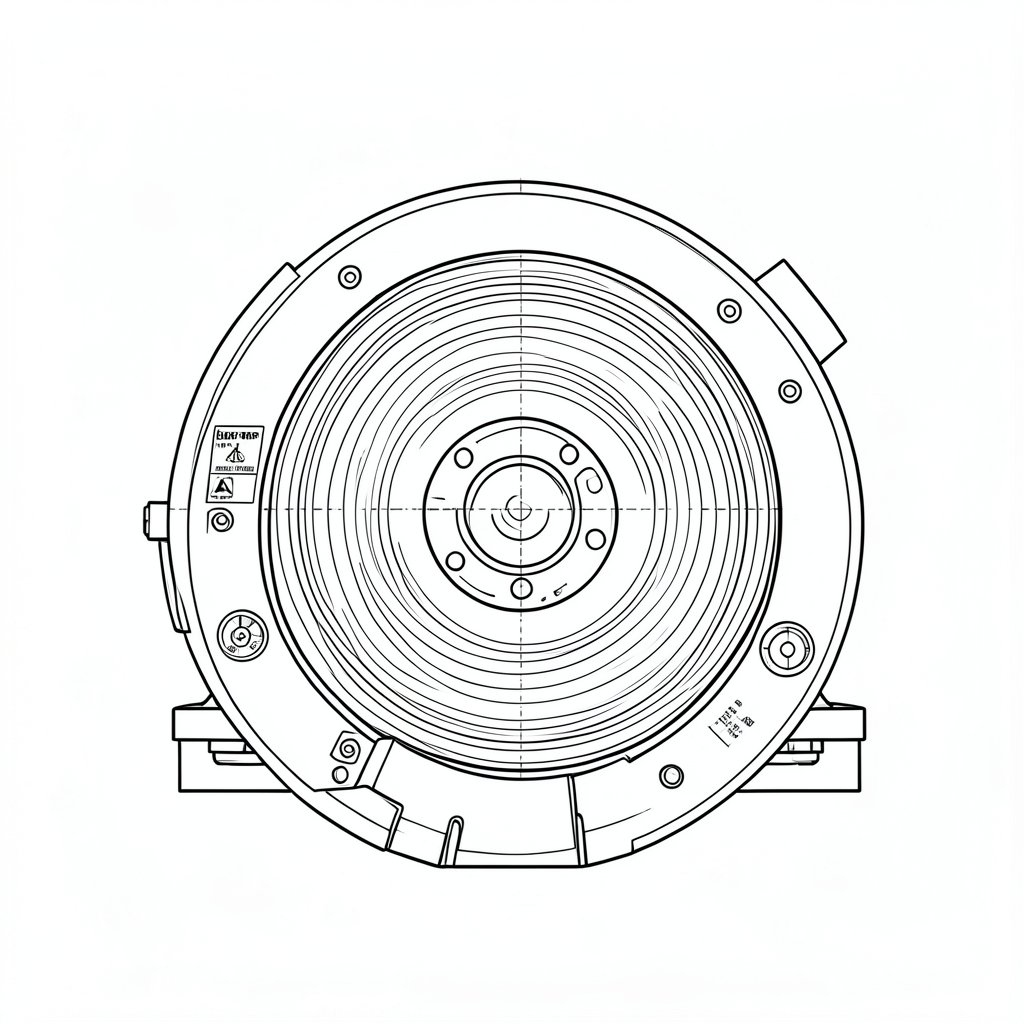
An abrasive wheel spinning at several thousand RPM stores meaningful rotational energy, and the guard, wheel rating and mounting hardware around it exist specifically to manage what happens if that energy is released suddenly through a wheel failure rather than through controlled material removal.
Matching wheel rating to tool speed
Every abrasive wheel is rated for a maximum safe RPM, and mounting a wheel on a tool that spins faster than that rating risks the wheel disintegrating under the resulting centrifugal force, throwing fragments at high speed in an uncontrolled pattern. Checking the wheel’s rated maximum RPM against the specific tool’s actual speed before mounting it — not assuming any wheel that physically fits the spindle is rated for that tool — is the single check that prevents this failure mode.
Inspecting wheels before mounting
A wheel with a hairline crack can fail suddenly under load even though it looks intact, and a simple ring test — suspending the wheel and tapping it gently, listening for a clear ring rather than a dull thud — catches internal damage that a purely visual inspection can miss. Wheels that have been dropped, even without visible damage, should be ring-tested before use rather than assumed sound because no crack is visible.
Guards and why they should not be removed
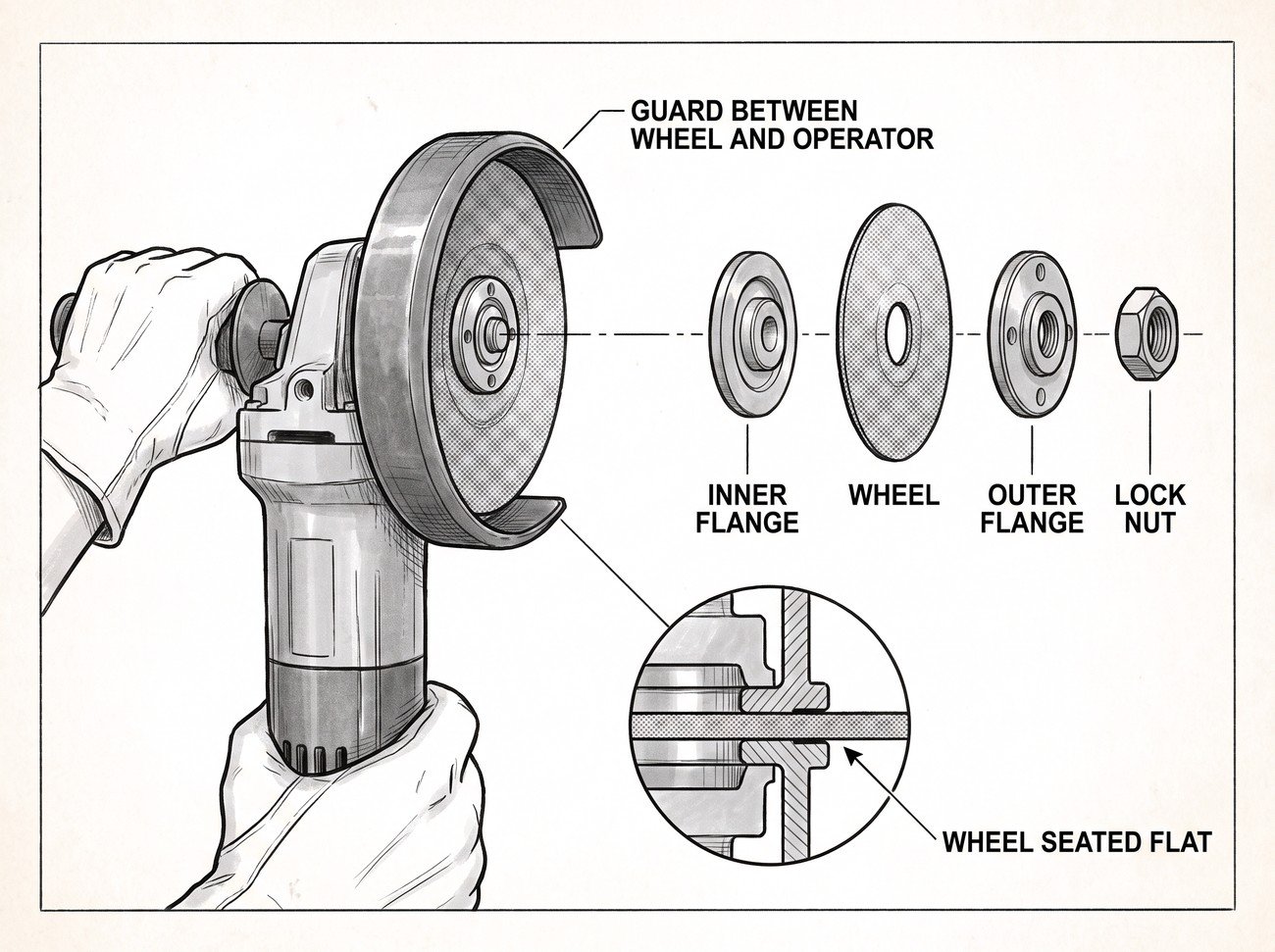
Following the same machine-guarding principles set out in ISO 12100, a grinding wheel guard is positioned specifically to contain fragments in the direction they are statistically most likely to travel if the wheel fails, and removing the guard for better access to a workpiece — a common shortcut on awkward jobs — removes exactly the control designed for the moment it would matter most. A task that genuinely cannot be done with the guard fitted needs a different tool or approach, not a guard removed for the duration of that task.
Mounting and flange condition
Correct mounting flange size and condition, and tightening to the torque the manufacturer specifies rather than simply as tight as the tool allows, keeps the wheel properly seated and able to handle the loads it is rated for. Damaged, worn, or mismatched flanges change how load is distributed across the wheel in ways that a wheel’s own rating does not account for, effectively invalidating that rating even though the wheel itself is undamaged.
Positioning during startup and use
Standing to the side of the wheel’s plane of rotation, rather than directly in line with it, during startup and for the first few seconds of use specifically accounts for the small but real chance of an undetected fault causing failure at the moment of spin-up, when stresses on the wheel are changing fastest. Using a wheel for a task it is not rated for — side grinding with a wheel designed only for straight cutting, for example — applies loads the wheel was never tested against.
For the eye and face protection worn during grinding, see eye and face protection.
Related standards
The standards below set the test methods and performance levels behind the equipment referenced in this note.
- ISO 12100 — Safety of machinery
- EN 166 — Eye protection
- EN 388 — Gloves against mechanical risks
- EN 352 — Hearing protectors
Common errors
1Mounting a wheel on a tool without checking its rated maximum RPM against the tool's actual speed.
2Skipping a ring test on a wheel that has been dropped but shows no visible damage.
3Removing the wheel guard for better access rather than using a different tool or approach for the task.
4Using a wheel for a type of grinding or cutting it was not designed and rated for.
Frequently asked questions
What happens if an abrasive wheel is mounted on a tool that spins faster than its rating?
The wheel can disintegrate under the resulting centrifugal force, throwing fragments at high speed in an uncontrolled pattern, which is why the wheel's rated maximum RPM must be checked against the tool's actual speed before mounting.
What is a ring test and why does it matter?
Suspending the wheel and tapping it gently to listen for a clear ring rather than a dull thud, which can catch internal cracks or damage that a purely visual inspection would miss, especially on a wheel that has been dropped.
Why shouldn't a grinding wheel guard be removed for better access?
The guard is positioned specifically to contain fragments in the direction they are statistically most likely to travel if the wheel fails, so removing it removes exactly the control designed for the moment it would matter most.
Why does mounting flange condition affect wheel safety even if the wheel itself is undamaged?
Damaged, worn, or mismatched flanges change how load is distributed across the wheel in ways the wheel's own rating does not account for, effectively invalidating that rating.
Why stand to the side rather than in line with the wheel during startup?
It accounts for the small but real chance of an undetected fault causing failure at the moment of spin-up, when stresses on the wheel are changing fastest.
Need this as a document you can issue? The template library gives you the risk assessments, permits and inspection logs in editable form — and employer plans cover a whole team with completion records.