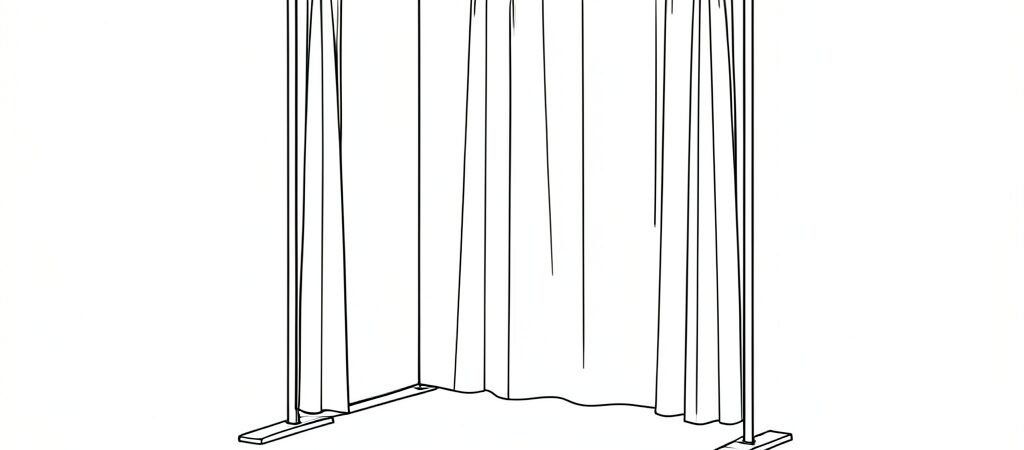
Safety / Tips and Tricks / Welding and hot work
Activity 05 · Welding
Welding Screens and Curtains for Bystander Protection
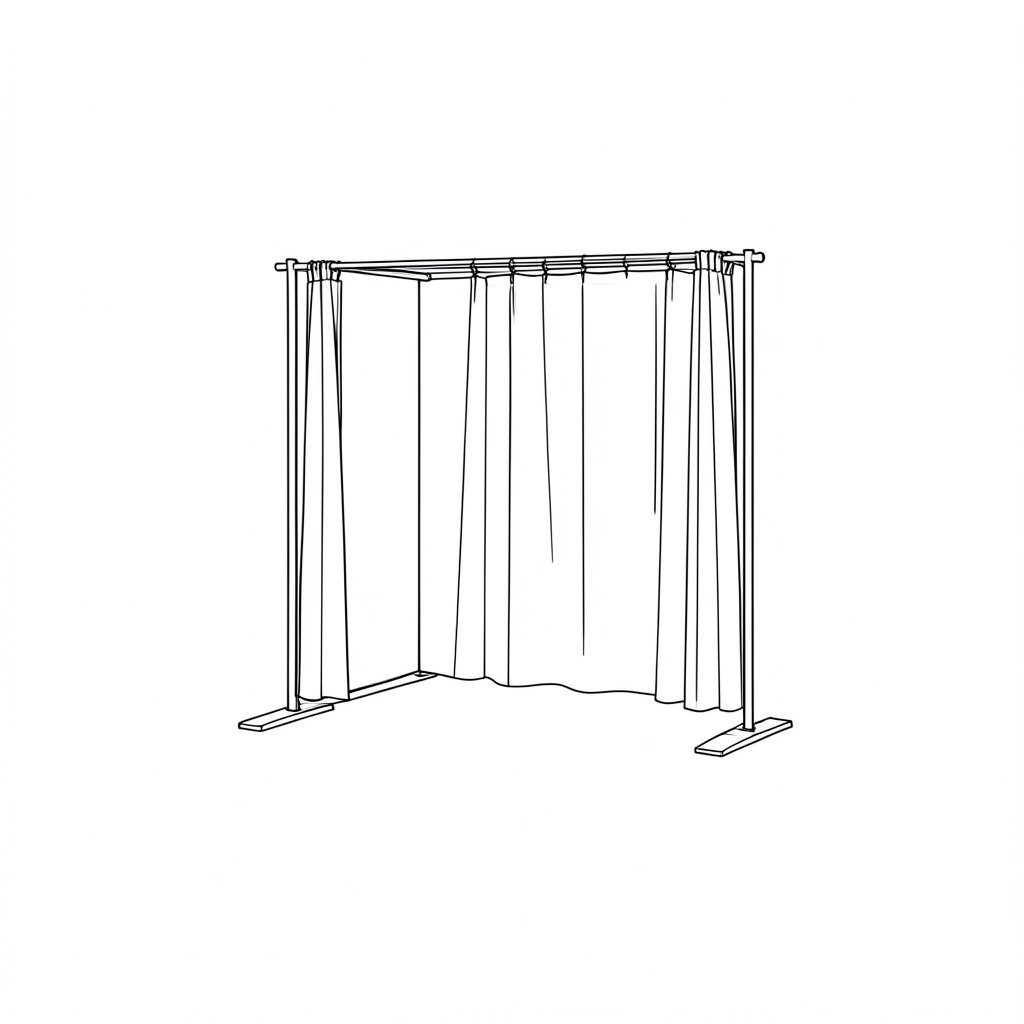
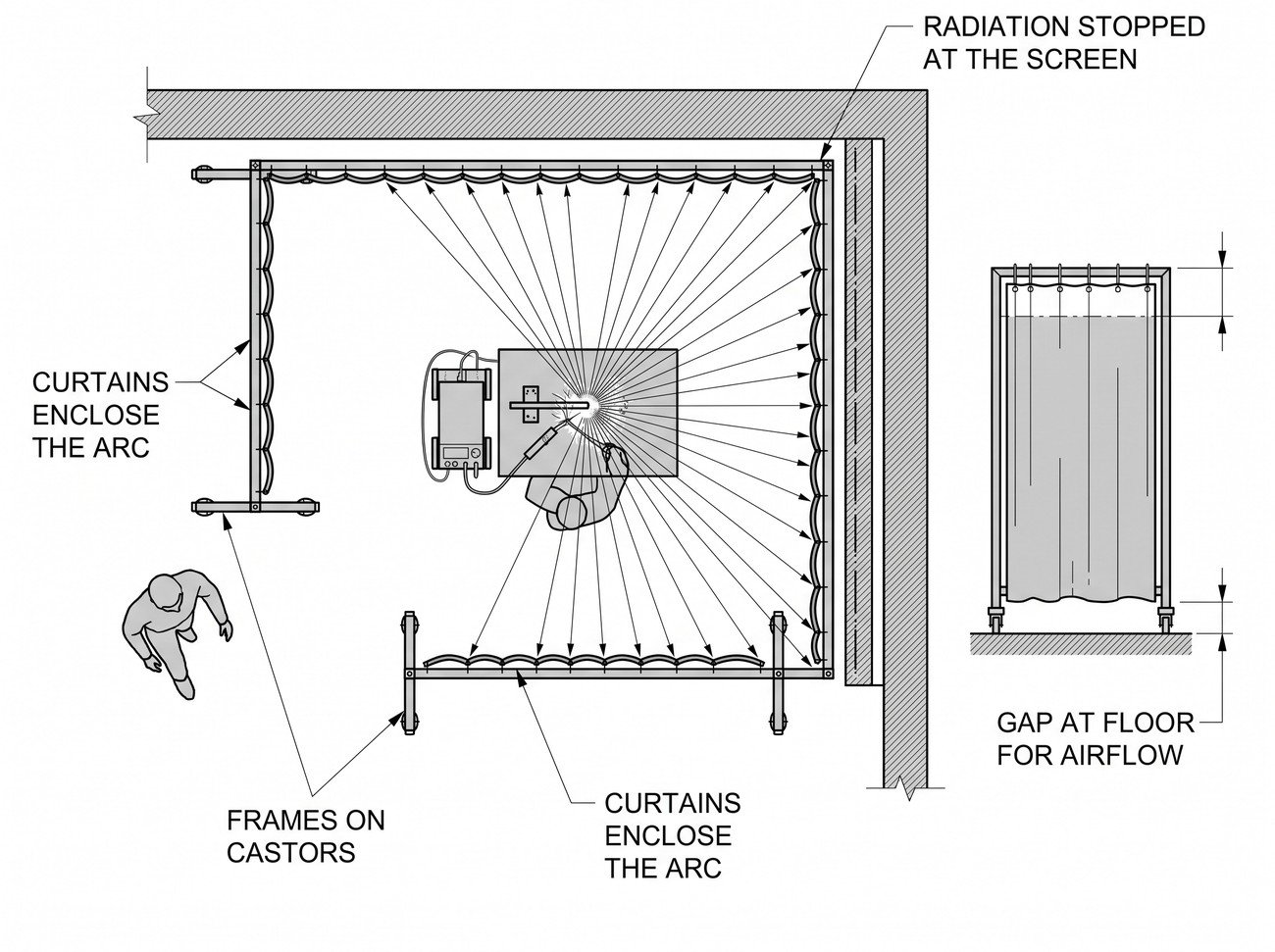
A welding screen has two separate jobs: blocking line-of-sight to the arc so people outside it are not exposed to UV and IR radiation, and containing sparks so they do not travel out of the immediate work area — and a screen that does only one of these well is not doing its full job.
Why screen material matters
A welding curtain sits directly next to an ignition source for the duration of the work, so an ordinary opaque curtain or sheet is not an appropriate substitute — screening material needs to be flame-resistant in its own right, rated for the purpose rather than assumed adequate because it blocks light. A curtain that itself ignites from spark contact has failed at both of its jobs simultaneously, turning a containment control into a new fire source.
Blocking line-of-sight fully, not partially
A screen with gaps at the joins between panels, or one that does not extend high enough to block sightlines from someone standing at a different height or distance, still allows UV exposure through the gap even though it looks, from the welder’s own position, like the area is enclosed. Checking coverage from the perspective of people actually working or passing near the screened area, not just from directly in front of it, catches gaps a quick visual check from the work position would miss.
Floor-level gaps
Sparks and slag travel along the floor as readily as they fall from height, and a screen that stops short of the floor, or that is weighted or clipped in a way that leaves a gap underneath, gives both sparks and low-angle UV exposure a route out that the rest of the screen does not address. Extending screening material fully to the floor, and checking that gap specifically, closes an exposure route that is easy to overlook when attention is focused on the screen’s height and width instead.
Ventilation inside a fully enclosed screen
Enclosing a work area on all sides with screening improves containment but can also trap welding fume that would otherwise disperse, so a fully screened welding bay needs its ventilation reassessed against the enclosed volume rather than assuming the ventilation adequate for an open area still applies once screens go up. This is a genuine trade-off worth checking explicitly, not an automatic side effect that resolves itself.
Portable versus fixed screening
Portable screens on wheeled frames suit variable work locations and short-duration tasks, while a fixed welding bay with permanent screening and integrated extraction suits regular, repeated hot work in the same location, and choosing between them should reflect how consistently the same area is used for hot work rather than defaulting to whichever is already on hand. A portable screen used repeatedly in the same fixed location is often a sign that a permanent bay would serve the work better.
For the bystander eye protection worn alongside screening, see eye and face protection for bystanders and helpers.
Related standards
The standards below set the test methods and performance levels behind the equipment referenced in this note.
Common errors
1Using ordinary opaque sheeting instead of flame-resistant, rated screening material.
2Leaving gaps between screen panels or at floor level that still allow UV exposure or spark travel out of the area.
3Fully enclosing a work area with screens without reassessing whether ventilation is still adequate for the now-enclosed volume.
4Using a portable screen repeatedly in a fixed location where a permanent bay with integrated extraction would serve better.
Frequently asked questions
Why can't an ordinary opaque curtain be used as a welding screen?
It sits directly next to an ignition source, so it needs to be flame-resistant in its own right; an ordinary curtain that ignites from spark contact turns a containment control into a new fire source.
How should welding screen coverage be checked for gaps?
From the perspective of people actually working or passing near the screened area at their own height and distance, not just from directly in front of the screen, since gaps at panel joins or insufficient height allow UV exposure through.
Why does the gap at floor level under a welding screen matter?
Sparks and slag travel along the floor as readily as they fall from height, so a screen that stops short of the floor gives both sparks and low-angle UV exposure a route out.
Does fully screening a welding area create any new hazard?
It can trap welding fume that would otherwise disperse, so ventilation needs to be reassessed against the enclosed volume rather than assuming open-area ventilation still applies once screens go up.
When does a fixed welding bay make more sense than a portable screen?
When the same area is used repeatedly for hot work; a portable screen used over and over in the same fixed location is often a sign a permanent bay with integrated extraction would serve the work better.
Need this as a document you can issue? The template library gives you the risk assessments, permits and inspection logs in editable form — and employer plans cover a whole team with completion records.