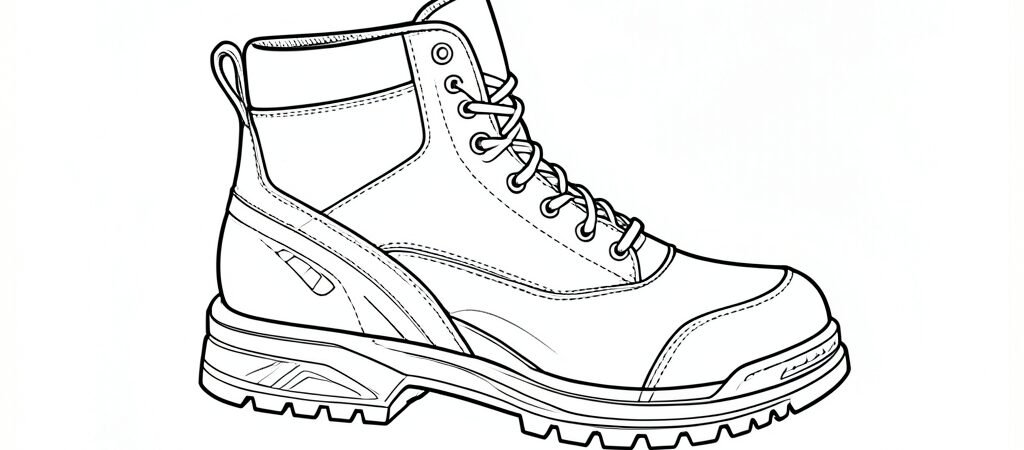
Safety / Tips and Tricks / Welding and hot work
Activity 05 · Welding
Safety Footwear for Welding and Hot Work
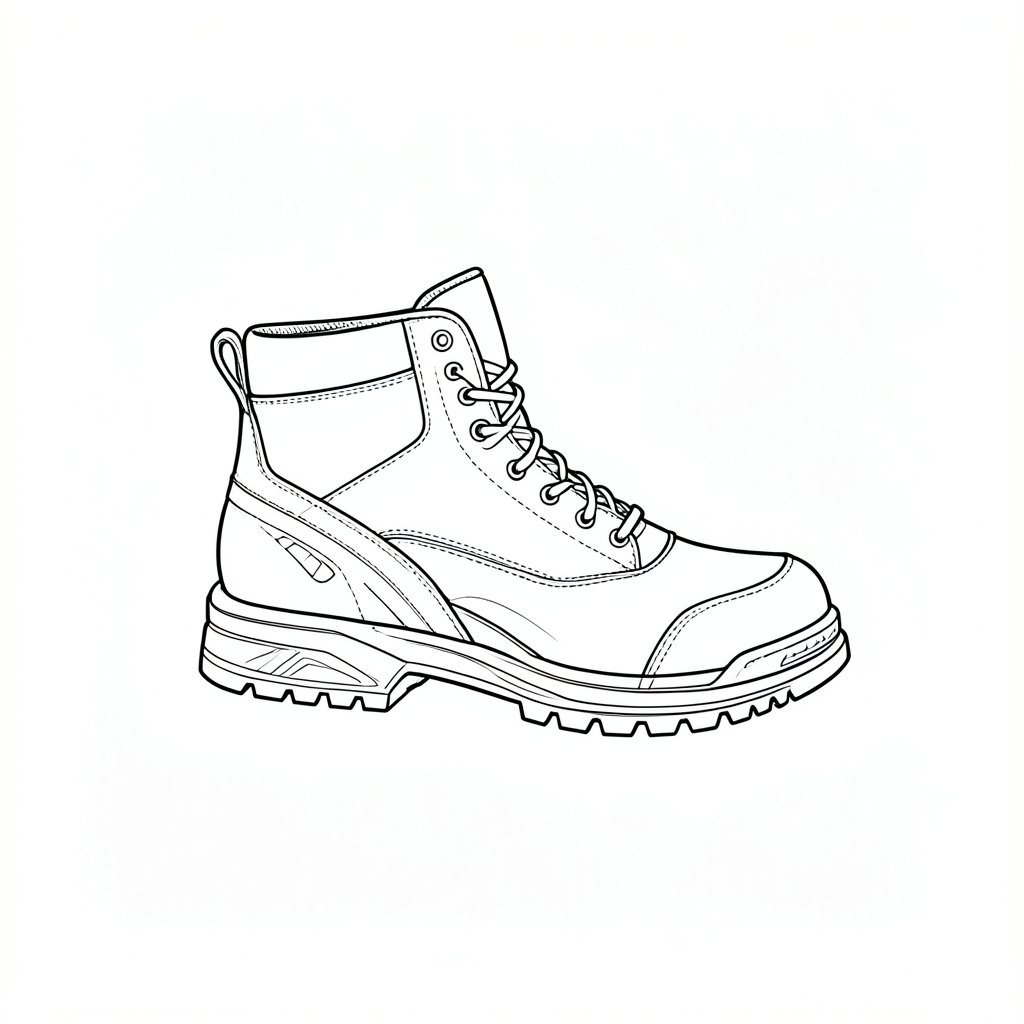
Standard safety footwear protects against impact and puncture, but welding and hot work add a hazard ordinary boots are not designed around: hot slag and spatter that can land on the boot and, given the chance, work its way inside.
The EN ISO 20345 baseline
EN ISO 20345 sets the general safety footwear baseline — toecap impact and compression resistance, sole puncture resistance and slip resistance — that applies to welding work the same way it does to any other task involving dropped-object and underfoot hazards. This baseline is necessary but not sufficient on its own for hot work, since it does not specifically address molten metal contact with the boot’s upper or the risk of slag entering through an open lace pattern.
Why exposed laces and eyelets are a specific problem
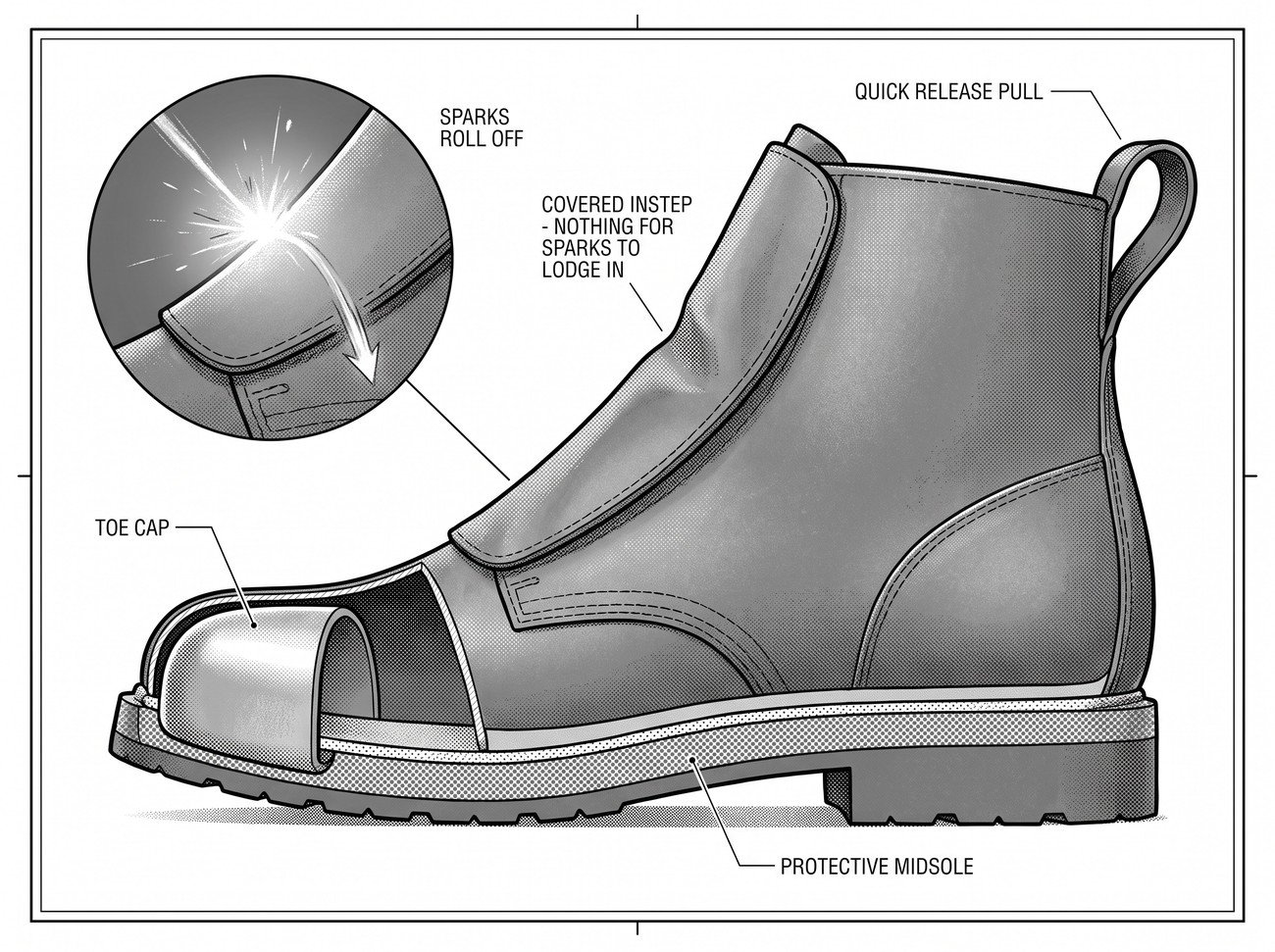
A boot with exposed laces and metal eyelets on the tongue gives hot slag a direct route to lodge against the boot and then work through the lacing into contact with the foot, a failure mode that has nothing to do with the boot’s toecap or sole rating. Boots designed for welding typically cover the lacing with a flap or use a pull-on design specifically to remove this route, and this detail is worth checking directly rather than assumed from a boot’s general safety rating.
Quick removal in an emergency
If molten metal does find its way inside a boot, the ability to remove it immediately matters more than almost any other design feature, since continued contact through clothing or a sock rapidly worsens a burn that could otherwise have been limited. Pull-on welding boots are specifically designed for fast removal for this reason, and even lace-up designs intended for hot work typically use a quick-release lacing system rather than a standard tie that takes time to undo under pressure.
Heat-resistant sole rating
Standing on or near hot surfaces, slag, or recently cut metal exposes the sole to contact heat that a standard sole compound is not rated for, and footwear intended for hot work carries a specific heat-resistant outsole rating (marked HRO under the safety footwear standard) confirming the sole has been tested against contact heat rather than assumed adequate. Checking for this specific marking, not just a general safety rating, matters directly for hot work.
Ankle coverage and metatarsal protection
Ankle-height boots close the same kind of gap at the ankle that a short glove cuff leaves at the wrist, and for heavy plate work involving dropped-object risk to the foot, metatarsal protection extending coverage across the top of the foot adds impact protection beyond the toecap alone. Matching this level of coverage to the actual task — light fabrication versus heavy structural welding — avoids both under-protection and unnecessary bulk.
For the gloves and clothing worn alongside this footwear, see selecting welding gloves and flame-resistant welding clothing.
Related standards
The standards below set the test methods and performance levels behind the equipment referenced in this note.
- EN ISO 20345 — Safety footwear
- EN ISO 20346 — Protective footwear
- EN ISO 11612 — Heat and flame protective clothing
Common errors
1Wearing standard lace-up safety boots with exposed eyelets for hot work without a covered lace flap.
2Assuming a general EN ISO 20345 rating covers contact heat without checking for the specific HRO sole marking.
3Using slow standard laces on boots intended for tasks where a burn injury requires immediate boot removal.
4Choosing ankle-height footwear for heavy plate work where metatarsal protection would be more appropriate.
Frequently asked questions
Does standard EN ISO 20345 safety footwear cover hot work hazards?
It covers the baseline — toecap impact, sole puncture and slip resistance — but not specifically molten metal contact with the upper or slag entering through open lacing, so it is necessary but not sufficient on its own for hot work.
Why are exposed laces and eyelets a specific problem for welding boots?
Hot slag can lodge against exposed lacing and work through into contact with the foot, a failure mode unrelated to the boot's toecap or sole rating, which is why welding boots typically cover the lacing or use a pull-on design.
Why is quick removal a key design feature of welding boots?
If molten metal gets inside a boot, continued contact through clothing or a sock rapidly worsens the burn, so pull-on designs or quick-release lacing allow the boot to be removed immediately rather than fought with under pressure.
What does the HRO marking on safety footwear indicate?
It indicates the sole has been specifically tested and rated for contact heat resistance, which a general safety footwear rating does not confirm on its own.
When is metatarsal protection worth adding to welding footwear?
For heavy plate or structural welding work with a real dropped-object risk to the foot, where coverage across the top of the foot adds protection beyond the toecap alone.
Need this as a document you can issue? The template library gives you the risk assessments, permits and inspection logs in editable form — and employer plans cover a whole team with completion records.