Safety / Tips and Tricks / Welding and hot work
Activity 05 · Welding
Selecting Welding Gloves to EN 407
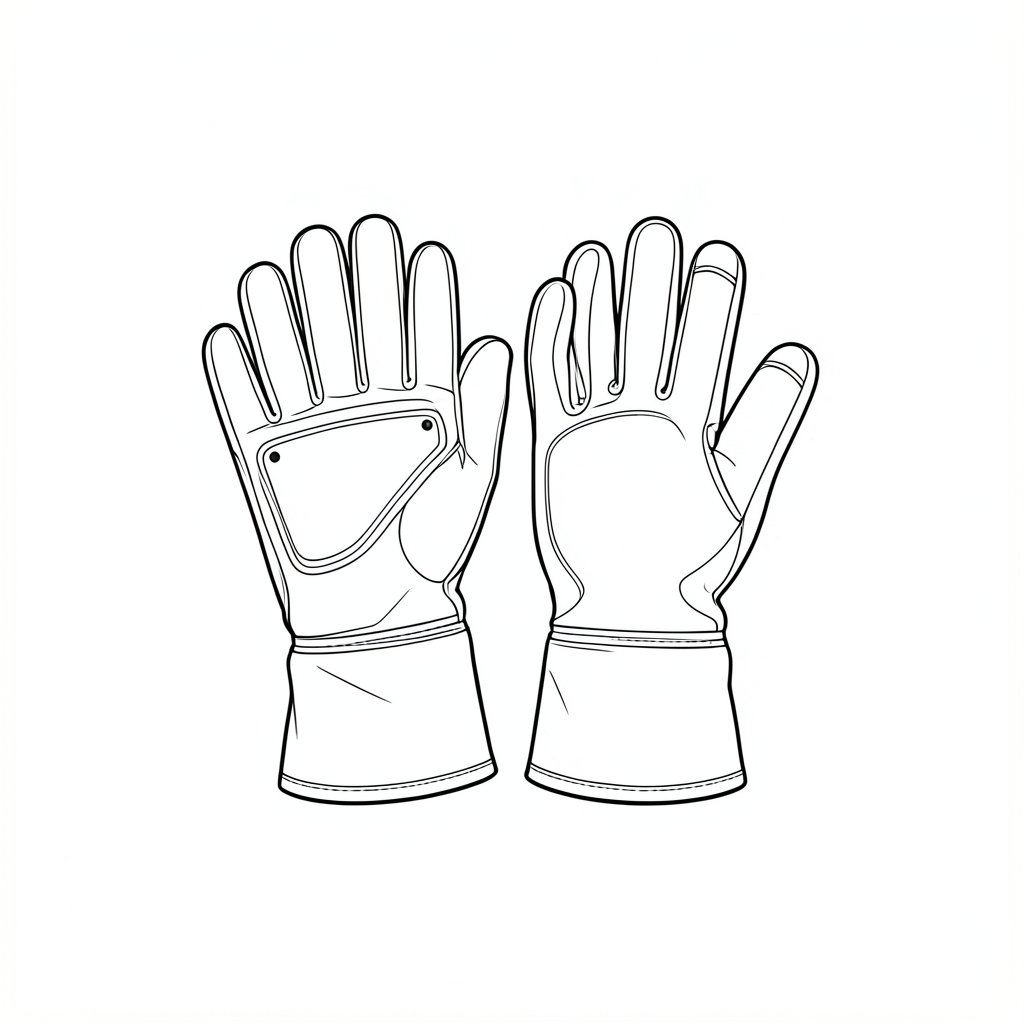
Welding gloves have to survive contact heat, radiant heat and occasional molten metal splash while still letting the welder feel and control the electrode or torch, and the balance between protection and dexterity differs sharply between welding processes.
Reading the EN 407 rating
EN 407 rates gloves against thermal risks across six performance categories: resistance to flammability, contact heat, convective heat, radiant heat, small splashes of molten metal, and large splashes of molten metal, each scored on its own numeric scale printed on the glove. A higher number in any category means better performance in that specific risk, so two gloves can both carry an EN 407 mark while performing very differently — checking the individual digits against the task’s actual heat and splash exposure matters more than the presence of the mark alone.
Matching glove type to welding process
TIG welding rewards a thinner, more supple glove that preserves the fine control needed for filler-rod feeding and close torch positioning, accepting a lower heat-contact rating in exchange for dexterity on a process that generates comparatively little spatter. Stick (MMA) and MIG welding, by contrast, produce more spatter and radiant heat, and a bulkier gauntlet-style glove with a higher EN 407 contact-heat and molten-metal-splash rating is the more appropriate trade-off there, even though it sacrifices some fine control.
Cuff length and coverage
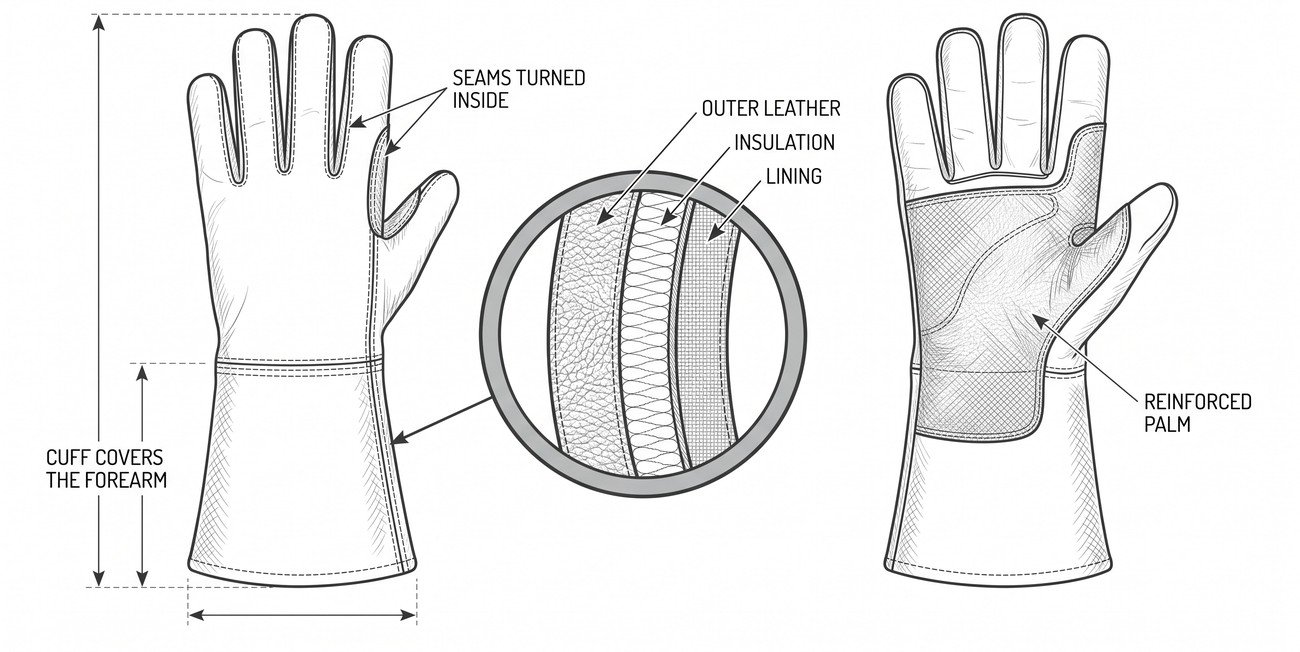
Overhead and out-of-position welding throws spatter and sparks toward the wrist and forearm in a way that flat downhand welding does not, and a short-cuffed glove that is adequate for one position can leave a real gap in the other. Matching cuff length to the actual working position, and overlapping the cuff with the jacket sleeve rather than leaving a gap of exposed skin or thin fabric at the wrist, closes a commonly overlooked exposure point.
Leather type and construction
Chrome-tanned and combination-tanned leathers behave differently under heat, and the stitching thread itself matters — cotton thread can burn through under sustained heat exposure where the surrounding leather does not, leaving seams that fail before the glove material itself does. Kevlar or similar heat-resistant stitching thread on the seams most exposed to spatter is a detail worth checking rather than assuming from the glove’s outer leather rating alone.
Condition and replacement
Hardened, cracked or heavily contaminated leather loses much of its insulating capacity even where no hole is visible, and a glove that has been directly struck by significant molten metal splash should be inspected closely rather than assumed to still perform at its rated level. Damp gloves also perform differently under heat than dry ones, so wet gloves should be dried and inspected before returning to hot work rather than used as-is.
For the flame-resistant clothing and helmet these gloves are worn alongside, see flame-resistant welding clothing and welding helmets and auto-darkening filters.
Related standards
The standards below set the test methods and performance levels behind the equipment referenced in this note.
- EN 407 — Thermal risk gloves
- EN 388 — Gloves against mechanical risks
- EN ISO 11612 — Heat and flame protective clothing
Common errors
1Using a single glove style across TIG, MIG and stick welding without adjusting for each process's actual spatter and heat profile.
2Choosing cuff length for downhand work and then using the same gloves for overhead or out-of-position welding.
3Ignoring stitching-thread material, which can fail under heat before the leather itself does.
4Continuing to use gloves with hardened or heavily contaminated leather that no longer insulates as rated.
Frequently asked questions
What does the EN 407 rating on a welding glove actually mean?
It rates the glove across six separate thermal-risk categories — flammability, contact heat, convective heat, radiant heat, and small and large molten-metal splash — each with its own numeric score, so the individual digits matter more than the mark alone.
Why would a welder use a different glove for TIG than for stick welding?
TIG rewards a thinner, more supple glove for fine control on a process with comparatively little spatter, while stick and MIG welding produce more spatter and radiant heat, favoring a bulkier gauntlet with higher heat and splash ratings.
Why does cuff length matter for welding gloves?
Overhead and out-of-position welding throws spatter and sparks toward the wrist and forearm, and a short cuff adequate for downhand work can leave a real gap in that position.
Why does stitching thread material matter on a welding glove?
Cotton thread can burn through under sustained heat exposure even where the surrounding leather does not, so seams can fail before the glove material itself does.
Should a welding glove be inspected after significant molten metal splash?
Yes, hardened, cracked or heavily contaminated leather loses much of its insulating capacity even without a visible hole, so a glove struck by significant splash should be inspected rather than assumed to still perform at its rated level.
Need this as a document you can issue? The template library gives you the risk assessments, permits and inspection logs in editable form — and employer plans cover a whole team with completion records.