Safety / Tips and Tricks / Welding and hot work
Activity 05 · Welding
Flame-Resistant Welding Clothing: EN ISO 11612
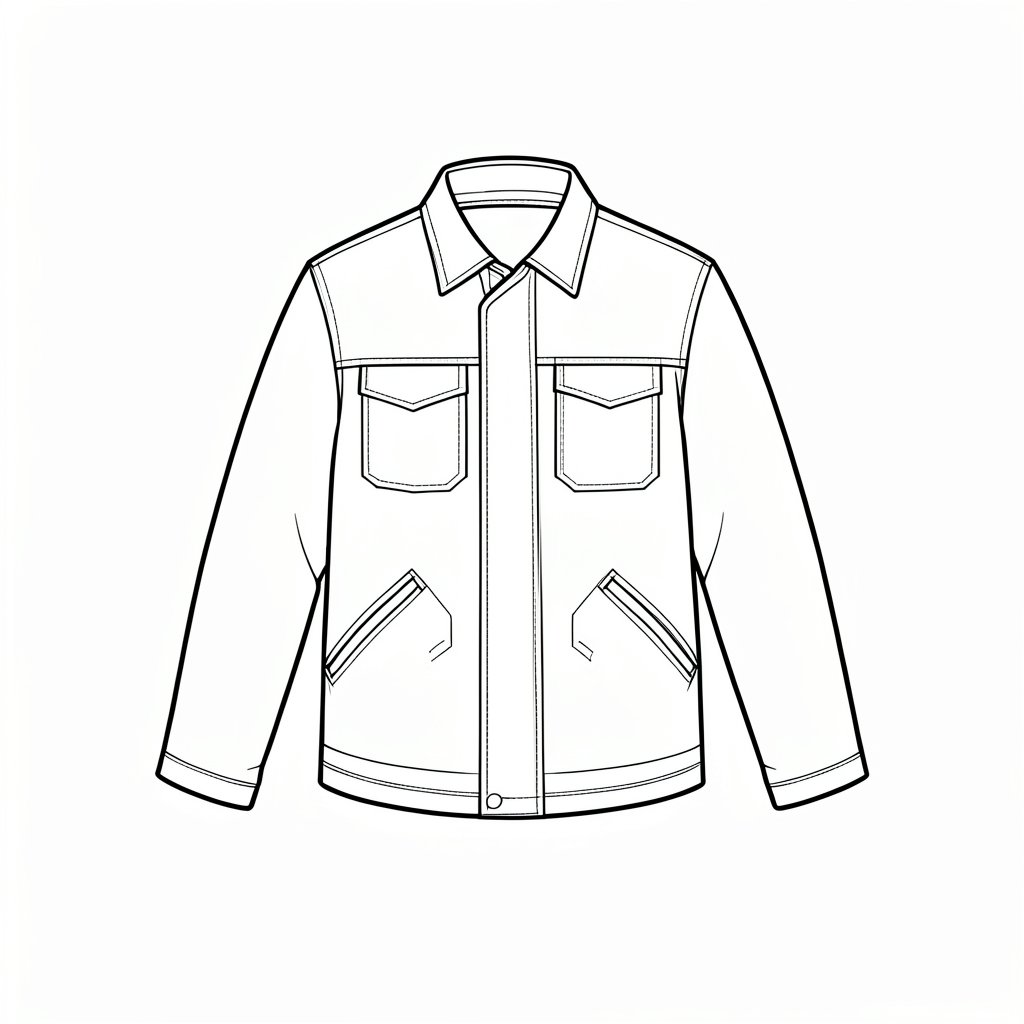
A welding jacket has to do more than resist catching fire — it needs to limit how much heat reaches the skin through the fabric during sustained exposure, resist molten metal splash sticking to the surface, and stay predictable in the way it fails if it is ever directly ignited.
Reading the EN ISO 11612 letter codes
EN ISO 11612 rates protective clothing against heat and flame using a letter-and-number code covering several distinct hazards: limited flame spread, convective heat, radiant heat, and, where relevant, molten aluminium and molten iron splash resistance, and contact heat. A garment’s full code lists every hazard it has been tested against and the level achieved for each, so two jackets both meeting EN ISO 11612 can still differ meaningfully depending on which specific letters and levels appear on the label — checking the actual code against the task’s dominant hazard matters more than the standard number alone.
Fiber choice: why melting matters more than burning
Untreated synthetic fibers such as ordinary polyester can melt and stick to the skin under heat exposure even where they resist igniting outright, and a molten-plastic burn from melted clothing is typically worse than a burn from fabric that simply chars. Flame-resistant welding garments use natural fibers such as treated cotton or leather, or purpose-engineered flame-resistant synthetics that are specifically formulated not to melt, and a garment’s fiber content is worth checking directly rather than assumed safe because it feels heavy or looks like typical workwear.
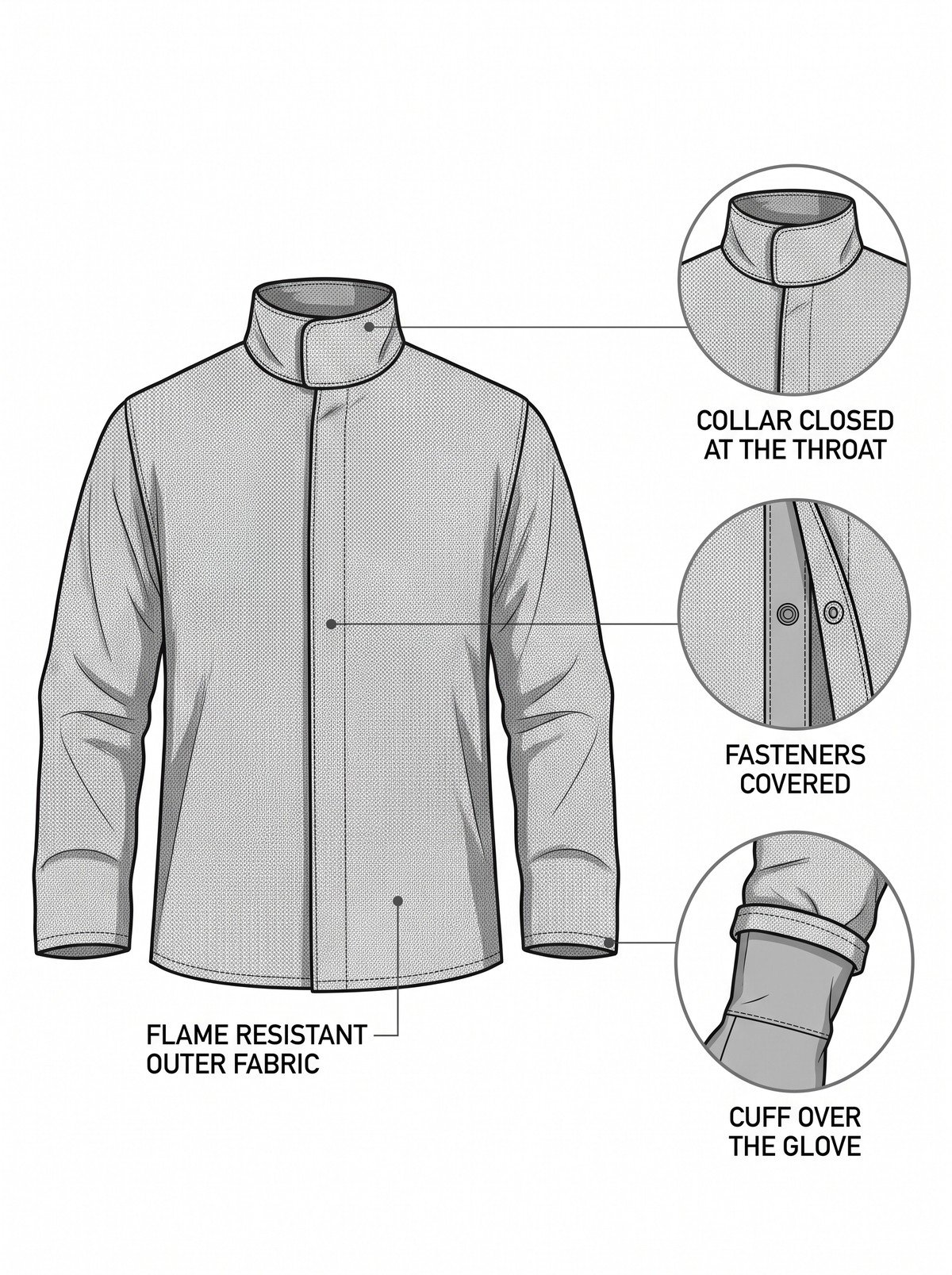
Garment design details
A stand-up collar closes the gap at the neck where spatter otherwise falls directly onto skin, and covered or flapped pockets stop hot slag from lodging in an open pocket and burning through from the inside, a genuinely common cause of burns that has nothing to do with the fabric’s own rating. Cuffs that fit snugly against a glove’s gauntlet, rather than leaving a loose gap, close the same kind of exposure point at the wrist that mismatched glove cuff length creates from the other side.
Layering and coverage
A full jacket, or a jacket plus a separate flame-resistant apron for the torso and lap for seated or low-position welding, extends coverage beyond what a bib apron alone provides, and sleeves specifically matter for any welding position where the arms cross above waist height into the spatter zone. Layering flame-resistant clothing over ordinary synthetic base layers still carries the melting risk described above if spatter reaches through to that inner layer, so base layers worn underneath welding clothing should also avoid untreated synthetics.
Condition and replacement
Oil or grease contamination on flame-resistant fabric can compromise its flame resistance regardless of the garment’s original rating, and holes or thinning from repeated spatter strikes in the same area reduce protection at exactly the point most likely to be struck again. Washing according to the manufacturer’s instructions, rather than with general workwear detergents that can leave a flammable residue, keeps the garment performing as tested.
For the gloves and helmet worn alongside this clothing, see selecting welding gloves and welding helmets and auto-darkening filters.
Related standards
The standards below set the test methods and performance levels behind the equipment referenced in this note.
- EN ISO 11612 — Heat and flame protective clothing
- EN ISO 13688 — General requirements for protective clothing
- EN 407 — Thermal risk gloves
Common errors
1Wearing untreated synthetic base layers underneath flame-resistant outerwear.
2Using welding clothing with open or unflapped pockets that can catch and hold hot slag.
3Continuing to use a jacket with oil or grease contamination that compromises its flame resistance.
4Assuming any EN ISO 11612 mark is equivalent without checking the specific hazard codes and levels on the label.
Frequently asked questions
What does the EN ISO 11612 letter-and-number code actually describe?
It lists every specific heat and flame hazard the garment has been tested against — such as limited flame spread, convective heat, radiant heat, or molten metal splash — and the level achieved for each, so the full code matters more than the standard number alone.
Why is melting a bigger concern than burning for welding clothing fibers?
Untreated synthetic fibers can melt and stick to the skin even if they resist igniting outright, and a molten-plastic burn from melted clothing is typically worse than a burn from fabric that simply chars.
Why do welding jackets have a stand-up collar and covered pockets?
A stand-up collar closes the gap at the neck where spatter would otherwise fall onto skin, and covered pockets stop hot slag from lodging inside and burning through, a common cause of burns unrelated to the fabric's own rating.
Can ordinary synthetic base layers be worn under flame-resistant welding clothing?
Not safely if spatter can reach through to them, since untreated synthetics still carry a melting risk even when worn as an inner layer under flame-resistant outerwear.
Why does washing method matter for flame-resistant welding clothing?
General workwear detergents can leave a flammable residue on the fabric, so manufacturer-specified washing instructions should be followed to keep the garment performing as tested.
Need this as a document you can issue? The template library gives you the risk assessments, permits and inspection logs in editable form — and employer plans cover a whole team with completion records.