Safety / Tips and Tricks / Construction and demolition
Activity 09 · Construction
Controlling Silica Dust When Cutting, Chasing and Drilling
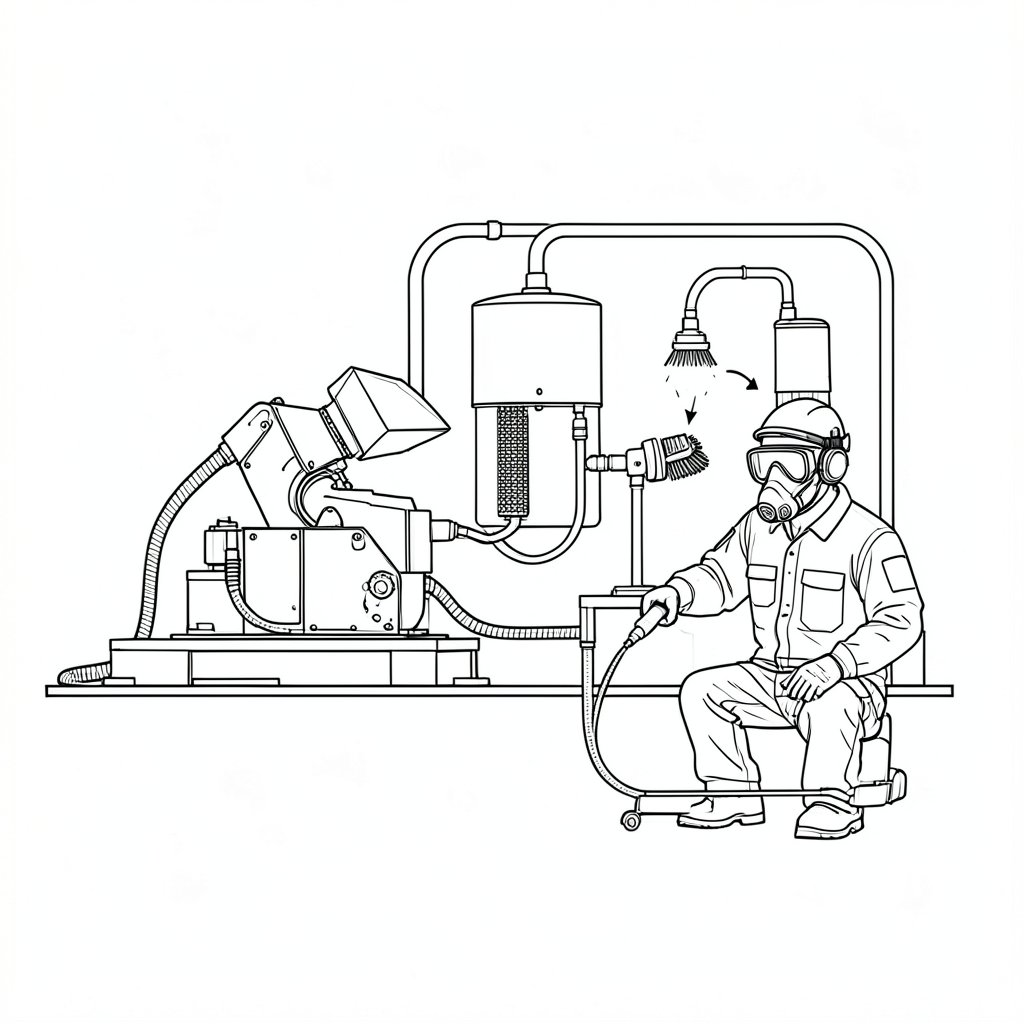
Every control that stops dust becoming airborne protects everyone on the floor; every control that filters it afterwards protects only the person wearing the equipment. That difference is the whole argument for dealing with silica at the point it is created.
Water suppression: cheap, effective, and easy to get wrong
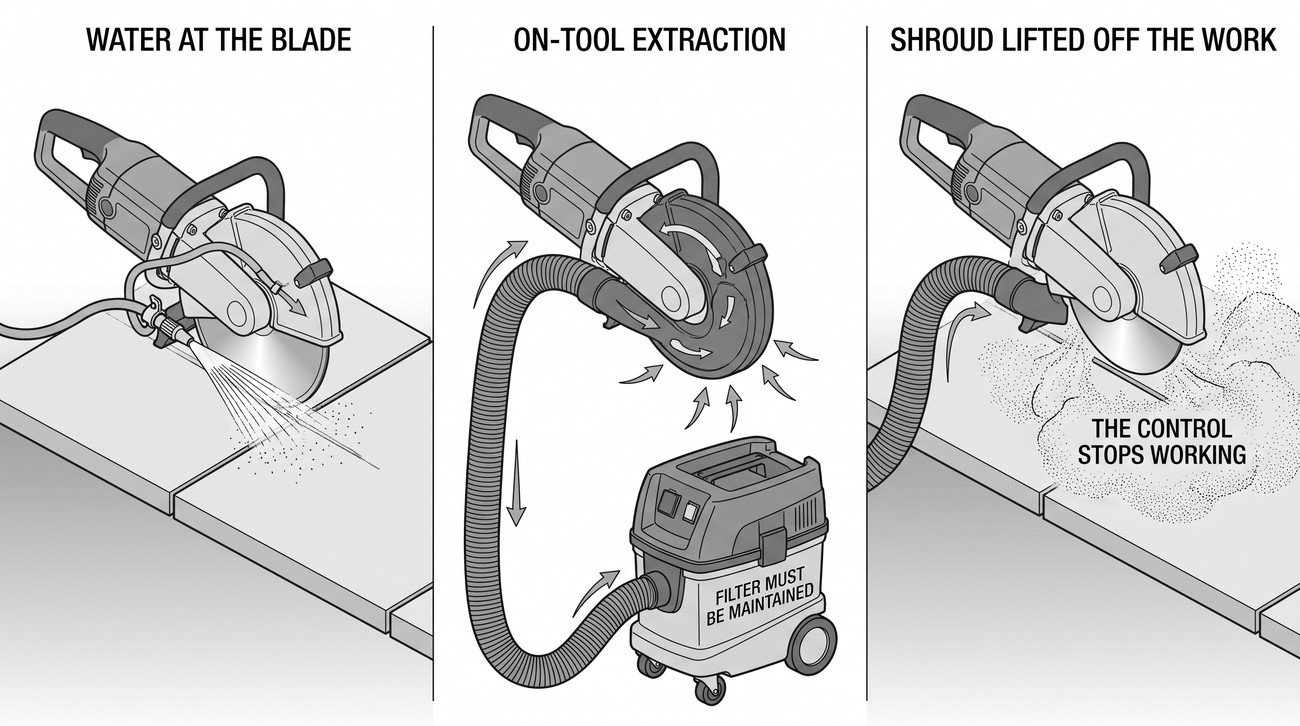
Water works by wetting the particles as they are formed so they are too heavy to stay airborne. It requires a genuine continuous feed at the blade or bit, not a hose played over the work afterwards, because once the fine fraction is airborne water does very little about it. A trickle that runs out halfway through a cut gives protection for the first half and none for the second, which is why an integrated supply with enough capacity for the whole task matters more than the presence of water in principle.
On-tool extraction and why the shroud is the whole system
Extraction captures dust at the cutting point and pulls it into a filtered unit before it can disperse. Its effectiveness depends almost entirely on the shroud staying close to the work: a shroud held off the surface, cut away to see the line, or missing a brush seal, leaks at exactly the moment the dust is generated. The extractor itself has to be matched to the tool and maintained, because a clogged filter drops the airflow long before any warning appears, and reduced airflow means the capture stops working while the tool sounds entirely normal.
Changing the method instead of controlling the dust
The most reliable control is not producing the dust at all. Ordering material cut to size before it arrives, using a block splitter instead of a saw, drilling with a core rather than chasing, and designing out chases in favour of surface trunking each remove the exposure completely rather than reducing it. These decisions are made before anyone is on site, which is why dust control that starts on the day of the work has already lost most of its options.
Enclosed spaces change the arithmetic
Cutting outdoors in moving air is a very different exposure from the same cut inside a room, a basement, or a partly demolished structure where the dust has nowhere to go. In an enclosed space the concentration keeps rising for as long as the work continues, and it stays high afterwards. Any dust-generating work in an enclosed space needs the controls specified for that condition, not the ones that were adequate outside, and it needs a plan for who else is in the building.
Housekeeping, and the way dust gets a second chance
Settled dust is not finished with. Sweeping with a broom, blowing down with compressed air, or simply walking through it puts the respirable fraction straight back into the air, often at a higher concentration than the original work produced. Vacuum equipment rated for fine dust, or wet cleaning, is the only way to remove it without re-suspending it, and clearing up should be treated as part of the dusty work rather than as tidying afterwards.
For the mask that handles what the controls leave behind, see respiratory protection for silica and construction dust. For the same principle applied to combustible dust, see housekeeping and combustible dust control.
Related standards
The standards below set the test methods and performance levels behind the protective equipment used for this work.
Common errors
1Playing a hose over the work after cutting instead of feeding water at the blade during it.
2Running out of water mid-cut and continuing dry.
3Holding the extraction shroud off the surface or cutting it away to see the line.
4Continuing to use an extractor with a clogged filter, which loses airflow with no audible change.
5Sweeping or blowing down settled dust, which re-suspends the fraction that matters.
Frequently asked questions
Why is water fed at the blade rather than sprayed afterwards?
Water works by wetting particles as they form so they are too heavy to stay airborne. Once the fine fraction is airborne, water does very little, so a hose played over the work afterwards is largely ineffective.
What makes on-tool extraction fail?
The shroud lifting off the work, being cut away to see the line, or losing its brush seal. A clogged extractor filter also drops airflow with no audible change in the tool.
What is the most reliable dust control?
Not creating the dust: ordering material cut to size, splitting blocks instead of sawing, coring instead of chasing, or designing out chases in favour of surface trunking.
Why is dusty work indoors treated differently?
In an enclosed space the concentration keeps rising for as long as work continues and stays high afterwards, unlike outdoor work in moving air, so controls adequate outside are not adequate inside.
Why should settled dust never be swept or blown down?
Both put the respirable fraction back into the air, often at a higher concentration than the original work. Vacuum equipment rated for fine dust, or wet cleaning, removes it without re-suspending it.
Need this as a document you can issue? The template library gives you the risk assessments, permits and inspection logs in editable form — and employer plans cover a whole team with completion records.