Safety / Tips and Tricks / Construction and demolition
Activity 09 · Construction
Hand-Arm Vibration From Construction Tools: Managing Daily Exposure
Vibration damage is cumulative, painless while it is happening, and permanent once established, which is a combination that makes it uniquely easy to ignore until the damage is done.
What is actually being damaged
Sustained vibration transmitted through the hands damages the small blood vessels, the nerves and the joints of the fingers and hands. The early signs are tingling and numbness that come and go, and blanching of the fingertips in the cold. Because the earliest stages disappear when the tool is put down, they are routinely dismissed as an ordinary consequence of a hard day. By the time grip strength and fine dexterity are affected, the change does not reverse.
Exposure is magnitude multiplied by time
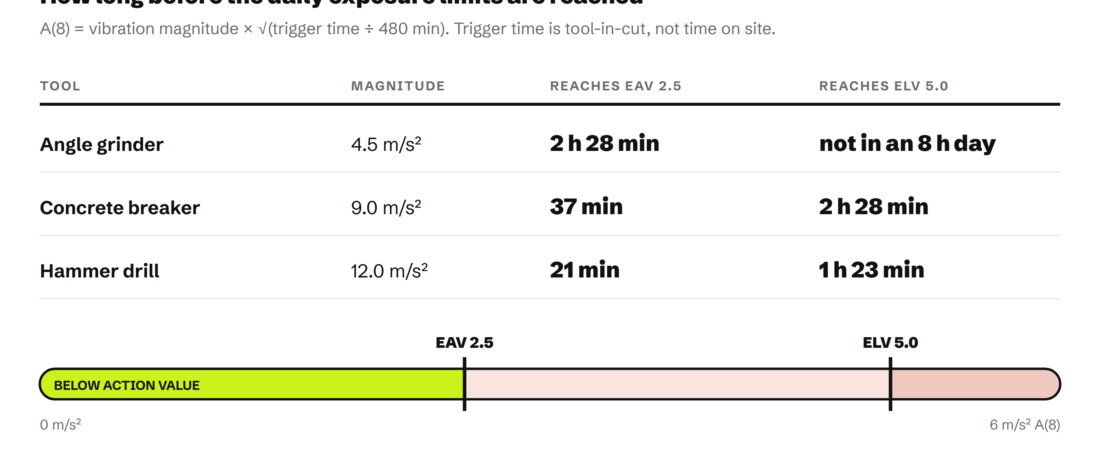
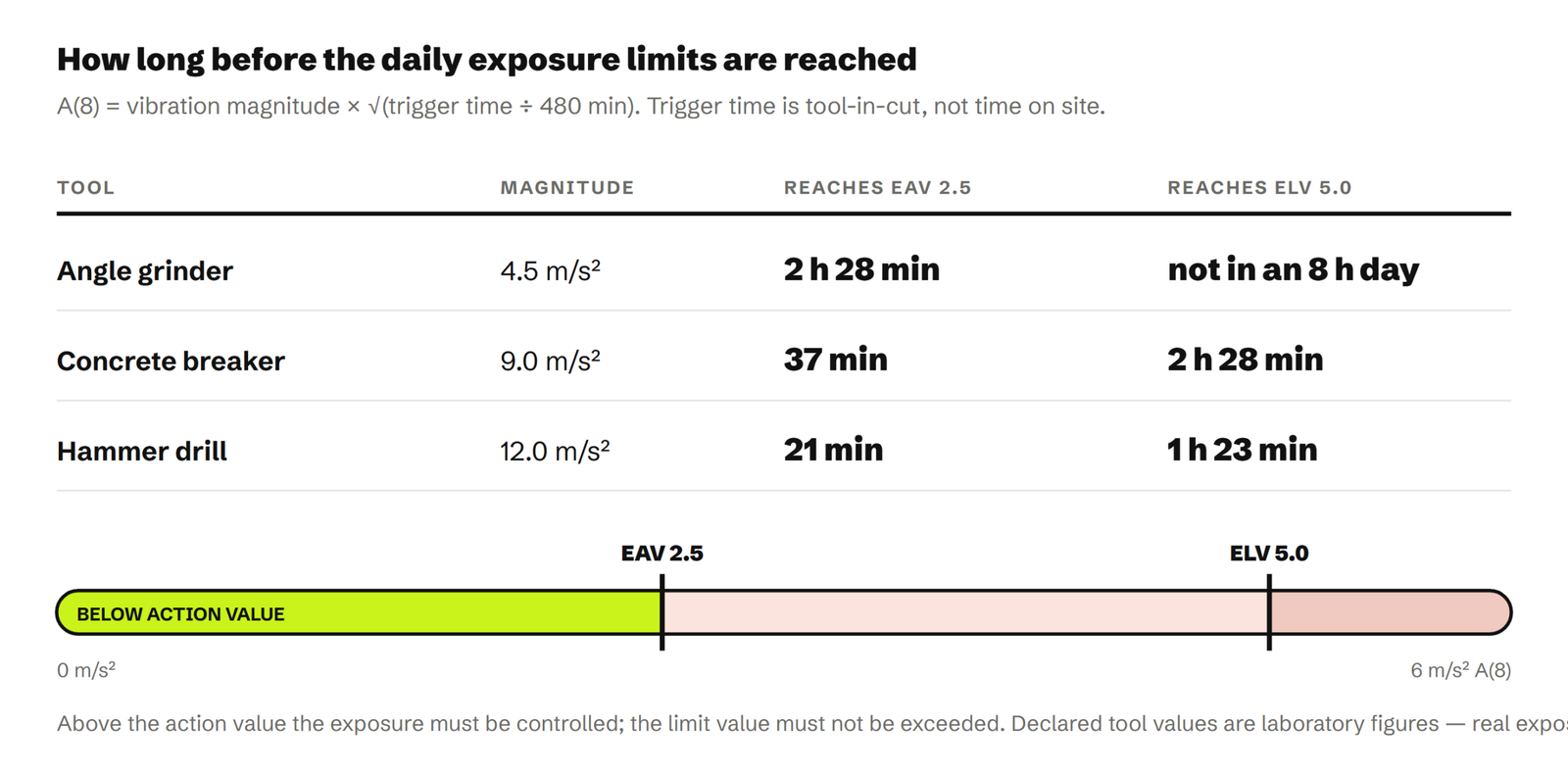
Daily exposure depends on how much vibration the tool produces and how long the hands are actually on it, and both halves matter. A low-vibration tool used all day can produce a higher exposure than an aggressive tool used briefly. The time that counts is trigger time — the time the tool is running in the hands — not the length of the shift, which is why estimating from the working day massively overstates exposure and estimating from memory usually understates it.
The manufacturer’s figure and the site reality
Declared vibration values come from a standardised test on a specific operation, and real use frequently produces higher values — a blunt bit, a worn chisel, an unsuitable consumable, or forcing the tool all raise the vibration transmitted to the hand well above the declared figure. The declared value is a basis for comparing tools against each other, and a poor basis for calculating an individual’s actual exposure without allowing for site conditions.
What actually reduces exposure
Choosing a lower-vibration tool and keeping consumables sharp are the two largest levers, because a sharp bit does the work quickly and a blunt one converts the extra time into more vibration. After that, rotating the task between people, breaking exposure into shorter periods rather than one long run, and letting the tool take the weight rather than forcing it all reduce the dose. Anti-vibration gloves are the weakest control and can increase exposure, because the padding encourages a harder grip and grip force is itself a major factor in transmission.
Keeping a record that is worth keeping
An exposure record only earns its keep if it captures trigger time rather than shift length, tool by tool, and if it is filled in near the time rather than reconstructed at the end of the week. What makes it valuable is the pattern it reveals: one person consistently accumulating most of the exposure, a particular tool appearing in every high day, or the same task always overrunning. Those are actionable, and none of them are visible from a single day’s entry.
Record it on the vibration and HAVS exposure log, and use the HAVS exposure calculator to work the daily figure. Background is in the hand-arm vibration lecture.
Related standards
The standards below set the test methods and performance levels behind the protective equipment used for this work.
- EN 388 — Protective Gloves Against Mechanical Risks
- EN 352 — Hearing Protectors
- EN 458 — Hearing Protector Selection and Use Guidance
Common errors
1Dismissing tingling and numbness that pass overnight as an ordinary consequence of a hard day.
2Estimating exposure from the length of the shift instead of trigger time.
3Using the manufacturer's declared value as an exposure figure without allowing for blunt consumables and forcing.
4Relying on anti-vibration gloves, which encourage a harder grip and can raise transmission.
5Reconstructing the exposure log at the end of the week, which loses the detail that makes it useful.
Frequently asked questions
What are the earliest signs of hand-arm vibration damage?
Tingling and numbness in the fingers that come and go, and blanching of the fingertips in the cold. Because these pass when the tool is put down they are often dismissed as ordinary tiredness.
Does exposure depend on the tool or the time?
Both, multiplied together. A low-vibration tool used all day can exceed an aggressive tool used briefly, and the time that counts is trigger time rather than shift length.
Can the manufacturer's declared vibration value be used as exposure?
It is a basis for comparing tools, not for calculating real exposure. Blunt bits, worn chisels, unsuitable consumables and forcing the tool all push actual values above the declared figure.
Do anti-vibration gloves help?
They are the weakest control and can make things worse, because the padding encourages a harder grip and grip force is itself a major factor in how much vibration is transmitted.
What makes an exposure log actually useful?
Recording trigger time tool by tool, near the time rather than at the end of the week, so patterns become visible: one person taking most of the exposure, or the same tool appearing in every high day.
Need this as a document you can issue? The template library gives you the risk assessments, permits and inspection logs in editable form — and employer plans cover a whole team with completion records.