Safety / Tips and Tricks / Construction and demolition
Activity 09 · Construction
Gloves for Construction Handling: Matching EN 388 to the Task
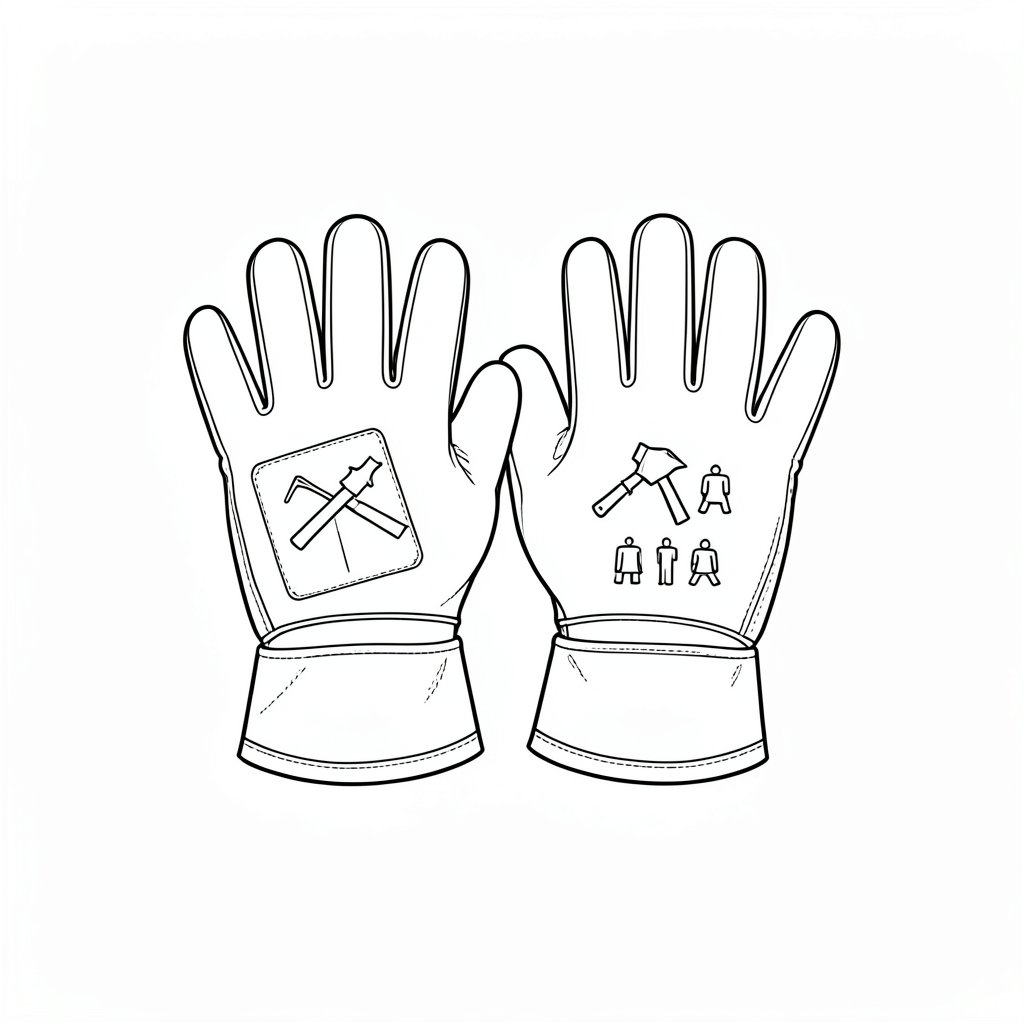
The four or six characters marked beside the hammer-and-anvil pictogram on a work glove are not a quality score, and choosing the glove with the highest-looking numbers is the most common way to end up with the wrong glove for the job in hand.
Four separate tests, four separate answers
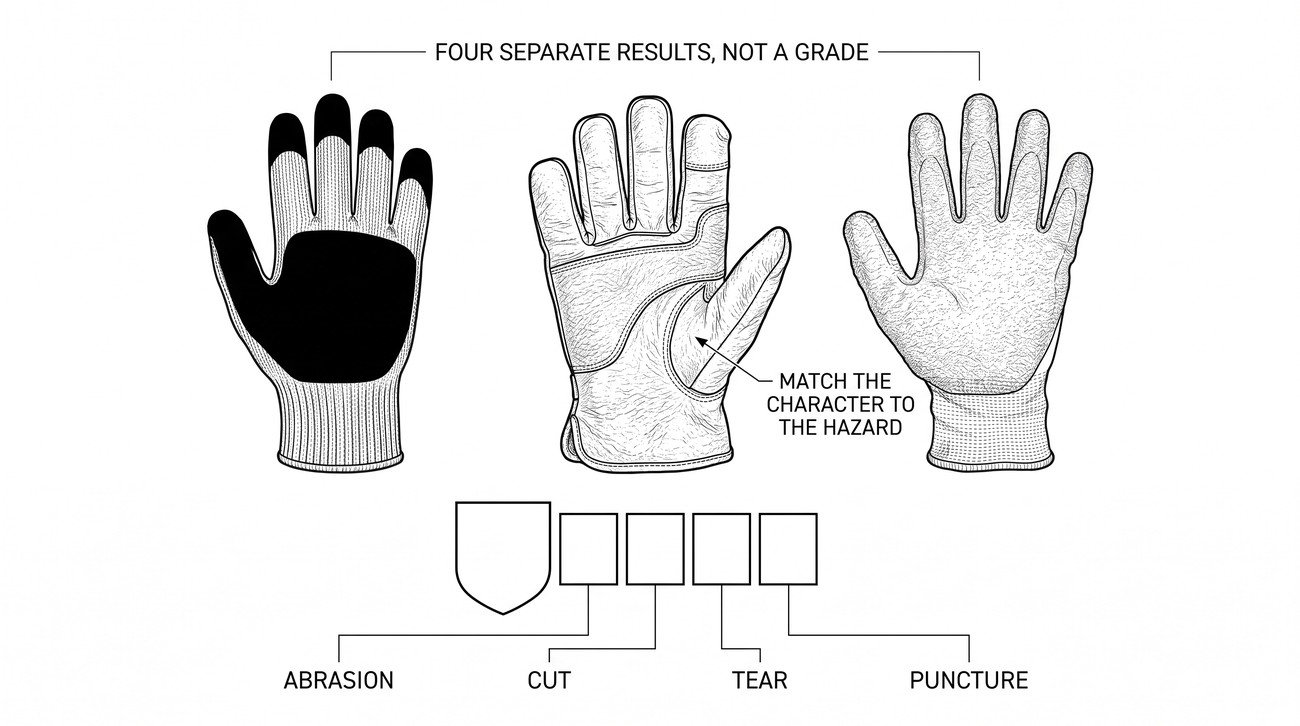
The marking reports abrasion, cut, tear and puncture as independent results. A glove can be excellent against abrasion and mediocre against cut, and that combination is exactly right for handling scaffold tube and block, where the hazard is surface wear rather than a blade. Reading the string as a single grade discards the information it exists to carry.
Why the cut figure changed
Cut resistance is now reported by a test that pushes a straight blade across the sample under increasing load, because the older rotating-blade method was blunted by the very high-performance yarns it was meant to measure — producing unreliable readings on precisely the gloves where the answer mattered most. A glove marked with the letter scale has been assessed by the newer method, and a letter and a number from the two systems are not directly interchangeable.
Matching the glove to the actual material
Blockwork, brick and concrete are abrasive and take the coating off a palm quickly, so the abrasion result is the one to read. Cut-off saw blades, sheet metal edges, glass and banding strap are cutting hazards, so the cut result governs. Reinforcement bar ties, nails and mesh are puncture hazards, and the puncture result is measured with a relatively blunt probe, so it under-represents fine, sharp points such as a wire tie end. Where fine punctures dominate, the glove has to be selected on construction rather than on that number alone.
Grip, coating and the trade nobody mentions
A coated palm gives grip, keeps the hand dry and protects the yarn, but it also reduces breathability and dexterity, and a glove that makes a fiddly task slow is a glove that comes off. That is not a minor comfort point: the protection value of a glove that is removed for the awkward part of the job is zero for exactly the part of the job where the hands are most exposed. Two pairs, chosen for two phases of the task, usually beats one compromise pair.
What disqualifies a glove mid-shift
A glove that is soaked with water, cement slurry, oil or solvent no longer behaves as tested, because the fluid changes both grip and the mechanical behaviour of the yarn. Cement in particular is strongly alkaline and will burn skin held against it for a long period, so a wet, cement-loaded glove is worse than no glove at all. Any cut through the palm, any pulled or snagged yarn, and any hardened, stiffened area is a reason to change gloves rather than finish the shift.
For cut protection in a picking and handling context, see manual handling gloves and cut protection. Where chemicals rather than mechanical risk dominate, see selecting chemical-resistant gloves.
Related standards
The standards below set the test methods and performance levels behind the protective equipment used for this work.
- EN 388 — Protective Gloves Against Mechanical Risks
- EN 511 — Cold Protection Gloves
- EN ISO 13688 — General Requirements for Protective Clothing
Common errors
1Reading the performance string as a single quality grade and picking the highest numbers.
2Comparing a letter-scale cut result directly against a number from the older method.
3Relying on the puncture figure for fine sharp points such as wire tie ends.
4Choosing one glove for a whole task, then removing it for the awkward part.
5Continuing in gloves soaked with cement slurry, which burns skin held against it.
Frequently asked questions
Is a higher EN 388 string a better glove?
No. The characters report abrasion, cut, tear and puncture as four independent tests, so the right glove is the one whose relevant character matches the hazard, not the one with the highest figures overall.
Why did the cut resistance test method change?
The older rotating-blade method was blunted by high-performance yarns, producing unreliable readings on exactly the gloves where accuracy mattered most. A straight blade drawn under increasing load replaced it.
Which result matters for blockwork and concrete?
Abrasion. Masonry materials take the coating off a palm quickly, and the cut result is largely irrelevant to that failure mode.
Why is the puncture figure misleading for wire ties?
It is measured with a relatively blunt probe, so it under-represents fine sharp points such as a cut wire tie end. Gloves for that hazard have to be chosen on construction, not on that number.
Why is a cement-soaked glove worse than no glove?
Wet cement is strongly alkaline and holding it against the skin inside a glove for a long period causes chemical burns, while the soaked yarn no longer performs as tested.
Need this as a document you can issue? The template library gives you the risk assessments, permits and inspection logs in editable form — and employer plans cover a whole team with completion records.