Safety / Tips and Tricks / Road and highway works
Activity 11 · Road
Emergency Response and Evacuation From a Live Carriageway
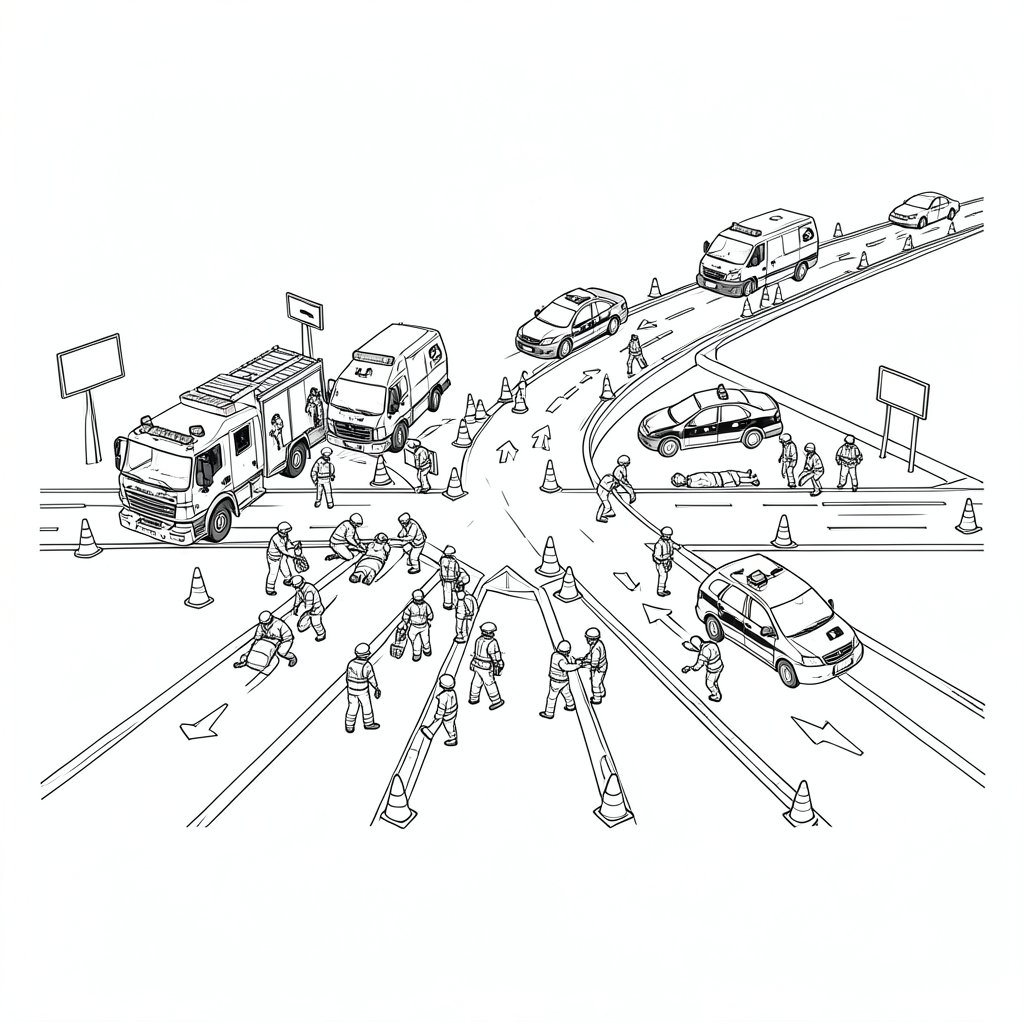
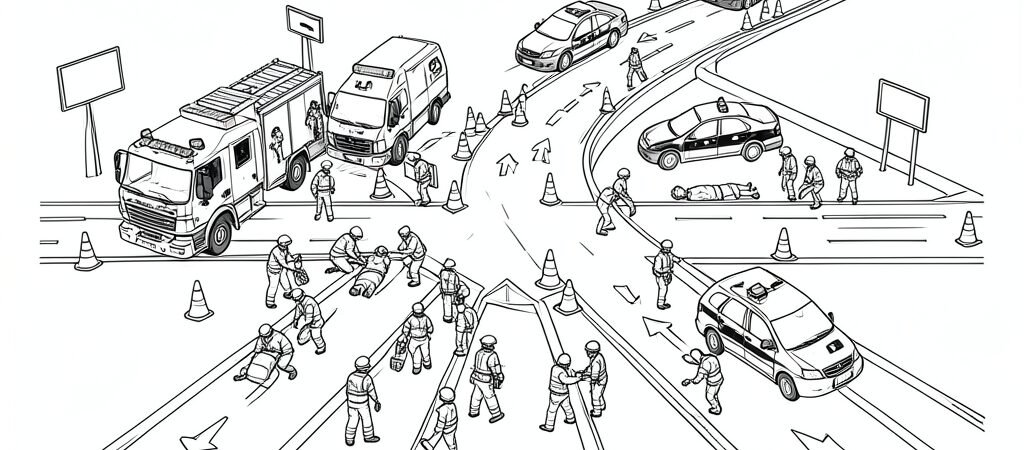
An emergency on a live carriageway has a feature no other workplace shares: the hazard that caused it is still arriving, at speed, every few seconds, for as long as the incident lasts.
The traffic does not stop by itself
In most workplaces the first response is to attend to the casualty. On a live road, doing that without dealing with the traffic puts the responders in the position that just injured someone, and secondary collisions into an incident scene are a well-established pattern. Making the scene safe means getting traffic stopped or diverted before people gather, which usually means the emergency services rather than the crew.
Move away from the road, not along it
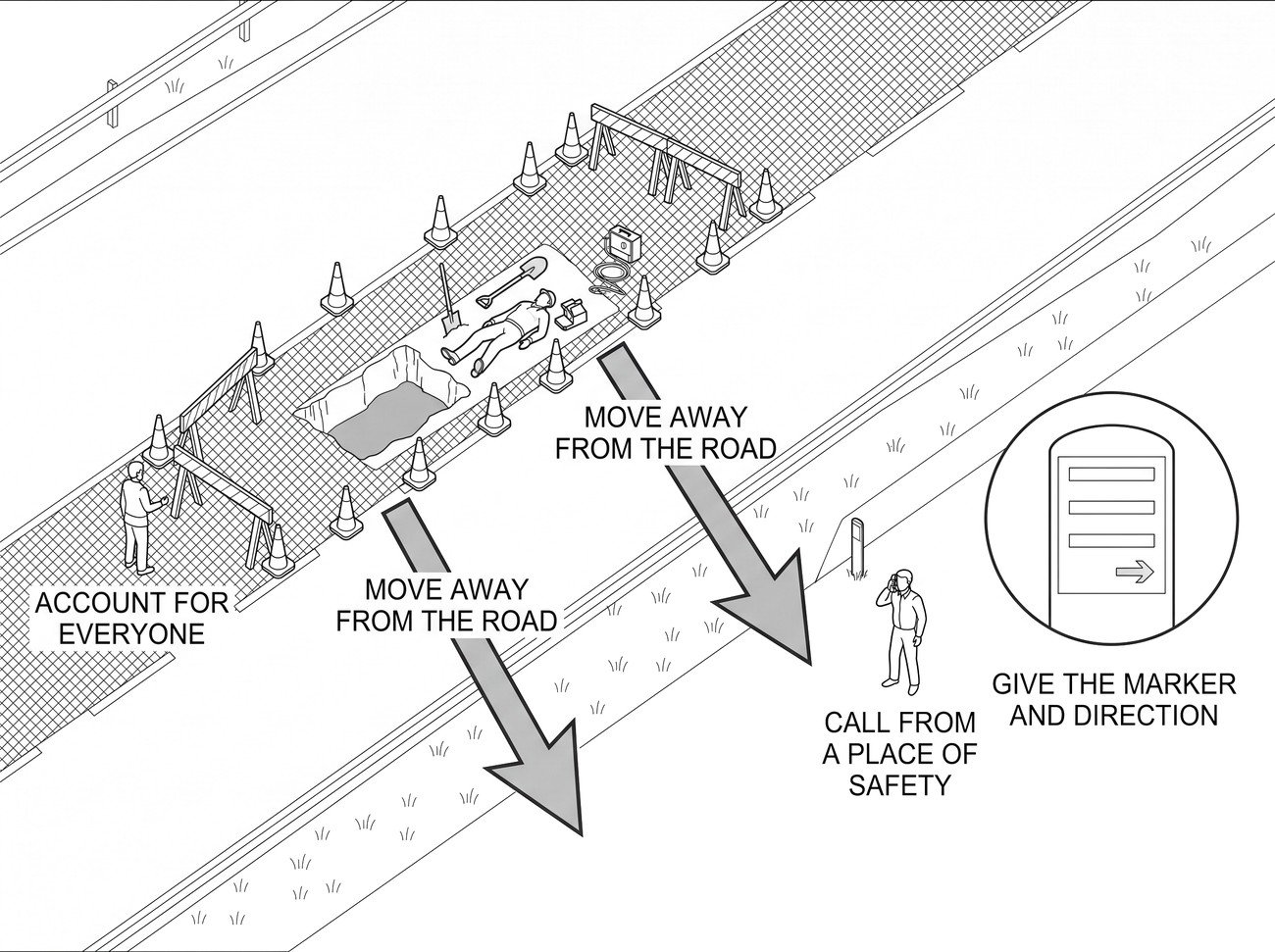
The instinct when something happens is to move toward the incident and along the carriageway. The correct direction is away from it: behind a barrier, onto a verge, up a bank, over a fence. That is the same escape route identified before work started, and its value is that it does not require anyone to make a decision in the moment. Rehearsing it briefly at the start of a shift costs a minute and removes the hesitation.
Location is the thing that delays help
A roadside location is genuinely hard to describe. Direction of travel matters as much as the road name, junction numbers and marker posts are precise where descriptions are not, and a caller who says only the road name has sent help to somewhere between two junctions. Establishing the exact location reference at the start of the shift, and having it written where anyone can read it out, saves minutes at the point they are most valuable.
Account for everyone before anything else
A linear works spreads people over a long distance, often out of sight of each other and behind plant noise. Knowing who is on site, and having a way to account for them that does not depend on shouting, is what tells you whether anyone is unaccounted for in the carriageway. That question has to be answerable quickly, because the answer determines whether traffic has to be stopped immediately.
Getting the casualty away from the traffic
Where someone is injured in a position still exposed to traffic, the judgement is between the harm of moving them and the harm of leaving them in the path of the next vehicle. On a live carriageway that balance usually favours moving them clear, which is the opposite of the normal advice. Making that decision in advance, as part of the plan, is better than making it while standing over someone.
For the routes this depends on, see planning for vehicle incursion. For the lone-worker version of the same problem, see lone working and roadside patrols.
Related standards
The standards below set the classification, testing and performance requirements behind the equipment used for this work.
- EN ISO 20471 — High-Visibility Clothing
- EN 397 — Industrial Safety Helmets
- EN 352 — Hearing Protectors
Common errors
1Attending the casualty before anything has been done about the traffic.
2Moving along the carriageway toward the incident rather than away from the road.
3Calling for help with a road name but no direction of travel or marker reference.
4Having no way to account for a crew spread along a linear works.
5Leaving an injured person in the traffic path because moving casualties is normally avoided.
Frequently asked questions
What comes first in a roadside emergency?
Dealing with the traffic. Attending the casualty without doing so puts responders in the position that just caused the injury, and secondary collisions into incident scenes are a well-established pattern.
Which direction should people move?
Away from the carriageway, not along it: behind a barrier, onto a verge, up a bank or over a fence. That is the escape route identified before work started.
Why is location the thing that delays help?
Because roadside locations are hard to describe. Direction of travel matters as much as the road name, and marker posts or junction numbers are precise where a description is not.
Why does accounting for people matter so much?
A linear works spreads people over a long distance, often out of sight and behind plant noise. Whether anyone is unaccounted for in the carriageway determines whether traffic must be stopped immediately.
Should an injured person be moved?
On a live carriageway the balance usually favours moving them clear of traffic, which is the opposite of normal advice. That decision is better made in advance as part of the plan.
Need this as a document you can issue? The template library gives you the risk assessments, permits and inspection logs in editable form — and employer plans cover a whole team with completion records.