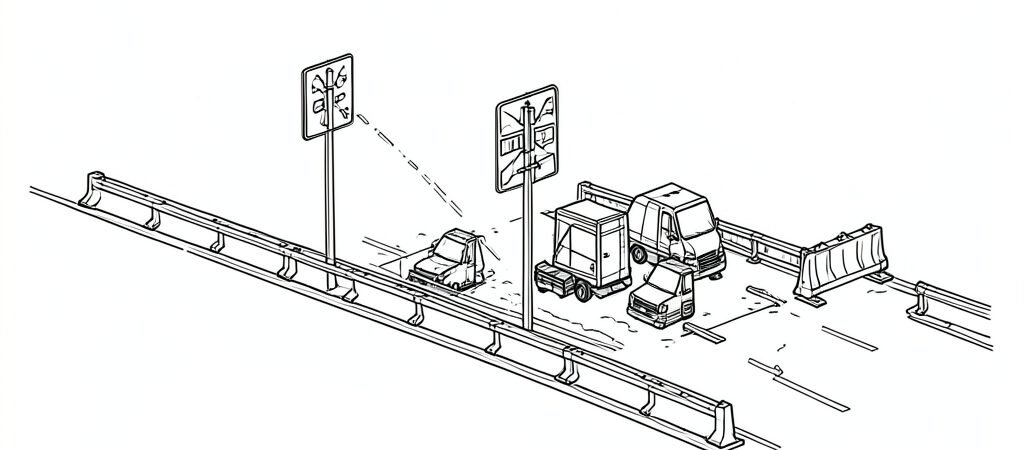
Safety / Tips and Tricks / Road and highway works
Activity 11 · Road
Weather on the Roadside: Wind, Rain, Fog and Standing Water
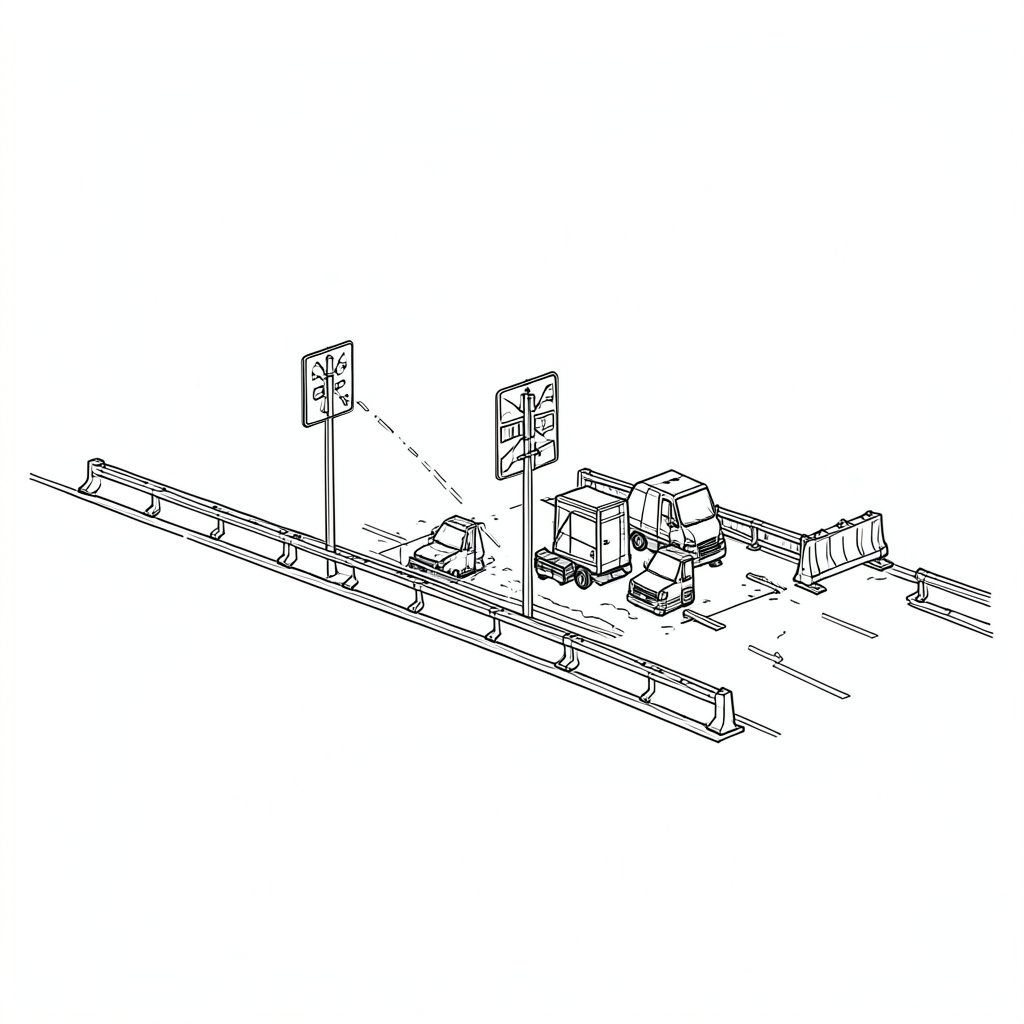
Weather does not simply make roadside work unpleasant. It removes the assumptions the layout was designed on — that drivers can see it, that they can stop, and that it will stay where it was put.
Wind moves the layout
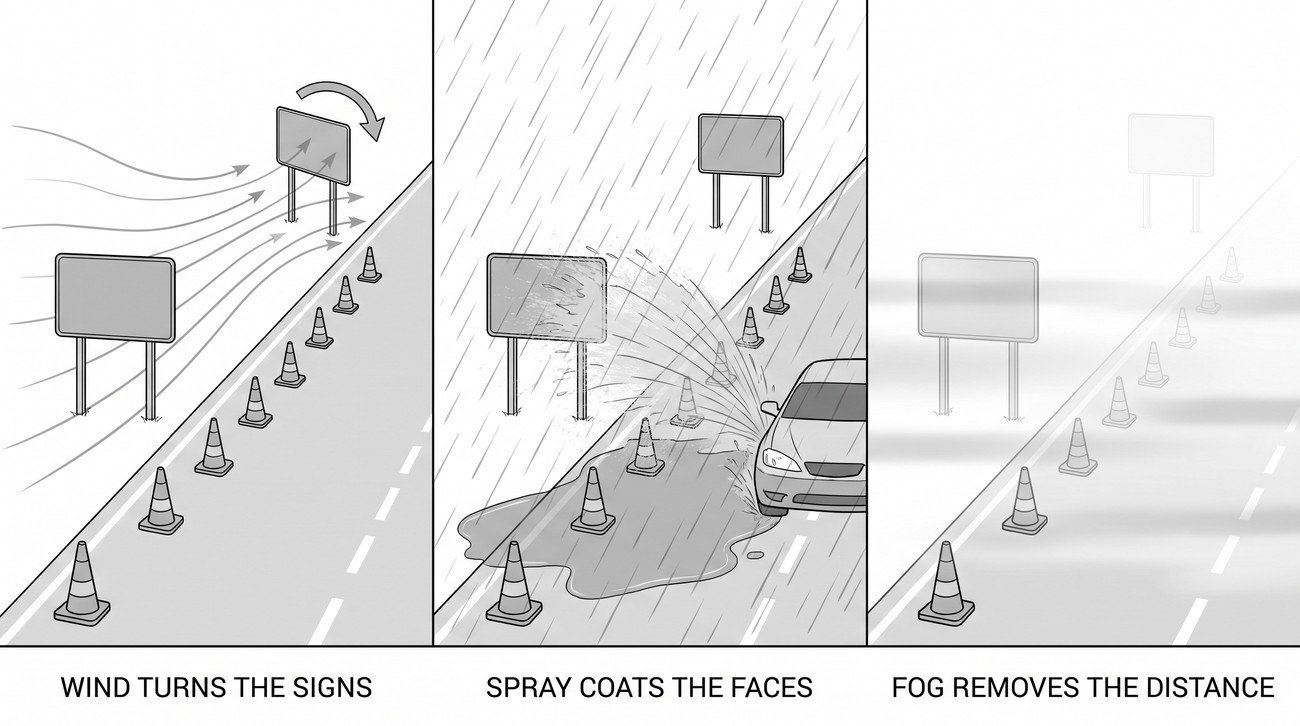
Signs, barriers and cones are flat objects presented to moving air, and passing vehicles generate as much of it as the weather. A layout set out in still conditions and left overnight in wind can be substantially rearranged by morning, with signs turned away from traffic and cones walked out of line. Ballast belongs low and at the feet, and a layout in windy conditions needs checking during the shift rather than being trusted to hold.
Rain attacks visibility from three directions
Spray from vehicles coats retroreflective faces on signs and clothing, reducing them exactly when they are most needed. Water on a windscreen scatters light and reduces what a driver can resolve. Surface water reflects headlights and lights confusingly, which makes a lit layout harder to interpret rather than easier. All three happen together, and their combined effect is far greater than any one of them suggests.
Standing water is a hazard in itself
A vehicle hitting standing water at speed can lose steering control entirely, which puts it wherever it happens to be pointing — possibly into a closure. Standing water also hides potholes, ironwork and excavation edges from workers on foot, and it conducts across the site if any electrical equipment is in use. Where a layout has created a pond by blocking drainage, the layout has created a hazard that was not there before.
Fog removes the distances the layout relies on
Every dimension in a traffic management layout is a distance: how far ahead the signs are, how long the taper runs, how deep the safety zone is. Fog shortens sight distance below all of them at once, so a driver may meet the taper before ever seeing the advance warning. Lit devices become the only thing detectable at range, and there comes a point at which no layout is adequate and the work stops.
Cold, ice and the crew
Ice affects a driver’s ability to stop, which lengthens every distance the layout assumes. It also affects the crew: cold hands are clumsy hands, thick gloves reduce dexterity, and the temptation to shelter in a vehicle reduces the attention being paid to the approach. Planning for warmth and rotation is part of maintaining the vigilance the layout depends on, not a comfort measure.
For the lit devices that survive poor conditions, see lamps, beacons and warning lights. For the same wind problem at height, see weather limits for roof work.
Related standards
The standards below set the classification, testing and performance requirements behind the equipment used for this work.
- EN 13422 — Portable Warning Devices and Delineators
- EN 12899 — Fixed Vertical Road Traffic Signs
- EN 12352 — Warning and Safety Light Devices
Common errors
1Setting a layout in still conditions and not re-checking it after wind.
2Assuming retroreflective signs and clothing work normally in heavy spray.
3Creating standing water by blocking drainage with the layout itself.
4Continuing in fog when sight distance is shorter than the advance signing.
5Treating crew warmth as comfort rather than as a condition for staying alert.
Frequently asked questions
How does wind affect a layout?
Signs, barriers and cones are flat objects in moving air, and passing vehicles generate as much of it as the weather. A layout left overnight in wind can be substantially rearranged by morning.
Why is rain worse than it appears?
It coats retroreflective faces with spray, scatters light on windscreens, and creates surface reflections that make a lit layout harder to interpret. All three happen together.
What makes standing water dangerous?
A vehicle hitting it at speed can lose steering control entirely. It also hides potholes, ironwork and excavation edges from workers, and conducts across the site where electrical equipment is in use.
Why is fog so damaging to a layout?
Every dimension in a layout is a distance, and fog shortens sight distance below all of them at once, so a driver can meet the taper before ever seeing the advance warning.
Is crew warmth a safety issue?
Yes. Cold hands are clumsy, thick gloves reduce dexterity, and sheltering in a vehicle reduces the attention paid to the approach, which is what the layout depends on.
Need this as a document you can issue? The template library gives you the risk assessments, permits and inspection logs in editable form — and employer plans cover a whole team with completion records.