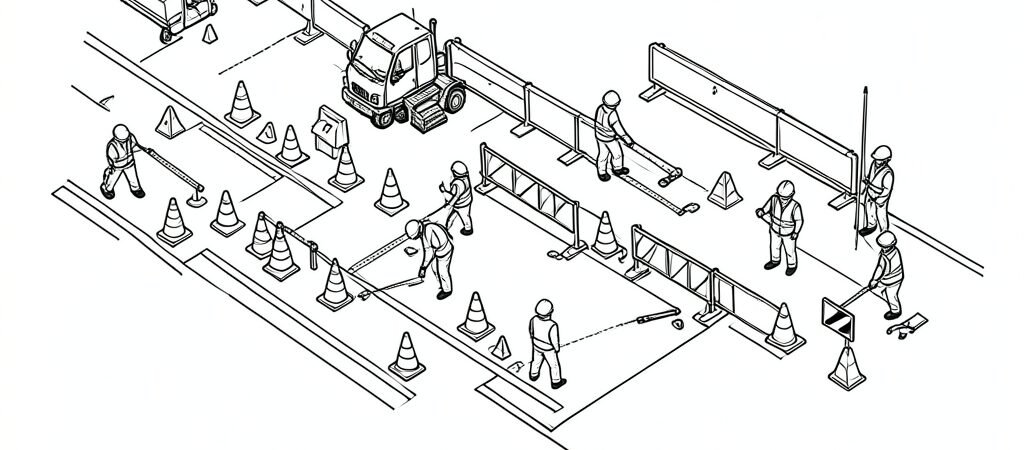
Safety / Tips and Tricks / Road and highway works
Activity 11 · Road
Setting Out and Taking Down a Traffic Management Layout
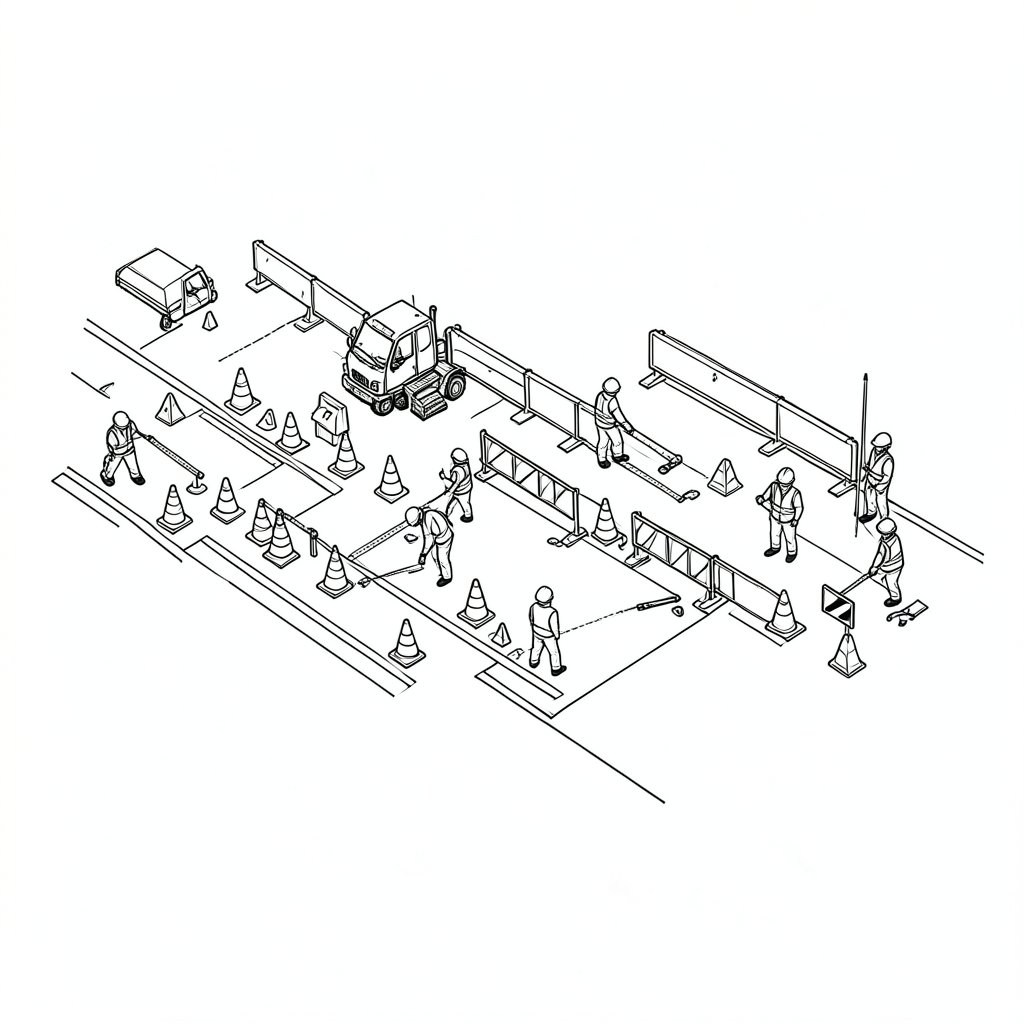
The layout protects people once it exists. Setting it out and taking it down are the two periods when it does not, and they are consistently the most dangerous parts of a roadworks job.
Why these are the exposed phases
During set-out there is no closure, no safety zone and no advance warning — there is a vehicle and some people in a live lane doing something drivers do not expect. During removal the protection is being dismantled while traffic is still flowing, and the people doing it are working progressively closer to live lanes as the equipment comes in. Both phases put workers outside the arrangement that exists to keep them safe.
Set out in the direction of travel
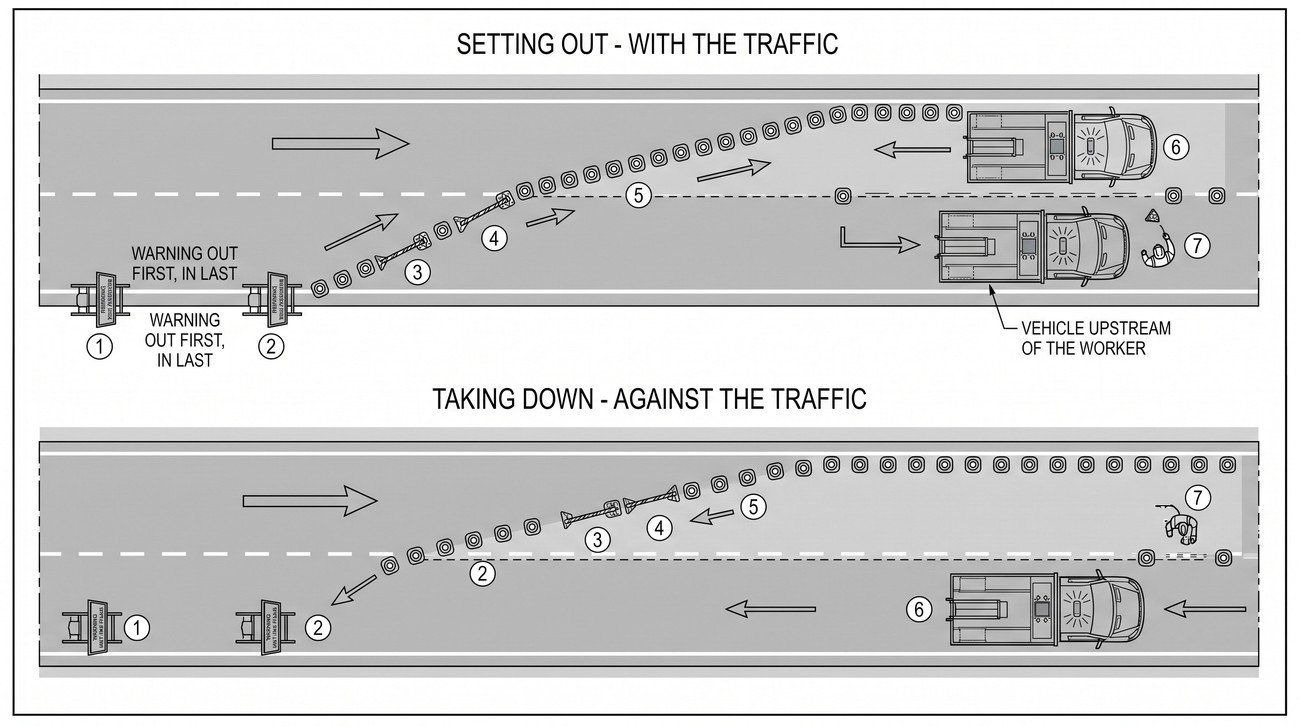
Signs and cones go out in the order a driver meets them, with advance warning placed before the taper and the taper before the works. That way each new item is protected by the ones already in place, and traffic has been warned before anyone is working in the space the warning refers to. Setting out against the flow, or starting at the works and working backwards, means placing the last cones with nothing upstream telling drivers anything.
Take down in reverse
Removal runs the other way: the works area is cleared first and the advance warning comes out last, so drivers are still being warned right up until the point there is nothing left to warn them about. Pulling the signs first because the vehicle is already at that end leaves people collecting cones from a live lane with no upstream warning at all — which is the same exposure as set-out, but with a crew that is tired and thinking about going home.
The vehicle is the protection
During both phases the works vehicle is doing more than carrying cones. Positioned correctly, with its beacons and arrow board displaying, it is the physical and visual buffer between traffic and the person on foot. That means it belongs upstream of the person, offset into the lane being closed, and moving with them — not parked ahead where it is convenient to reach the next cone from.
Nobody works from the offside
Cones are placed and collected from the side away from live traffic, with the worker between the vehicle and the closure rather than between the vehicle and the traffic. It sounds obvious and it is routinely reversed on the return leg, when the layout is on the other side of the vehicle and the easy reach is towards the live lane. A route that requires reaching into traffic is the wrong route regardless of how few cones are left.
For the arrangement being built, see the anatomy of a layout. For works that never become static, see mobile and short-duration works.
Related standards
The standards below set the classification, testing and performance requirements behind the equipment used for this work.
- EN 13422 — Portable Warning Devices and Delineators
- EN ISO 20471 — High-Visibility Clothing
- EN 12352 — Warning and Safety Light Devices
Common errors
1Setting out against the direction of travel, so cones go down with no warning upstream.
2Removing the advance signs first because the vehicle is already at that end.
3Parking the works vehicle ahead of the worker instead of upstream as a buffer.
4Collecting cones from the traffic side of the vehicle on the return leg.
5Treating take-down as a lower-risk task than set-out.
Frequently asked questions
Why are set-out and take-down the most dangerous phases?
Because during both there is no complete layout protecting anyone. Set-out happens before the closure exists; take-down dismantles it while traffic still flows, with people working progressively closer to live lanes.
In which order should a layout be set out?
In the direction of travel: advance warning first, then the taper, then the works. Each new item is then protected by the ones already placed and drivers are warned before anyone works in the space.
In which order should it be removed?
The reverse. The works area is cleared first and the advance warning comes out last, so drivers are warned right up until there is nothing left to warn them about.
Where should the works vehicle be during these phases?
Upstream of the person on foot and offset into the lane being closed, with beacons and arrow board displaying, moving with them. It is the physical and visual buffer, not just transport for the cones.
Which side should cones be handled from?
The side away from live traffic, with the worker between the vehicle and the closure. This is most often reversed on the return leg, when reaching towards the live lane is the easier movement.
Need this as a document you can issue? The template library gives you the risk assessments, permits and inspection logs in editable form — and employer plans cover a whole team with completion records.