Safety / Tips and Tricks / Road and highway works
Activity 11 · Road
Temporary Signs: Placement, Legibility and Stability
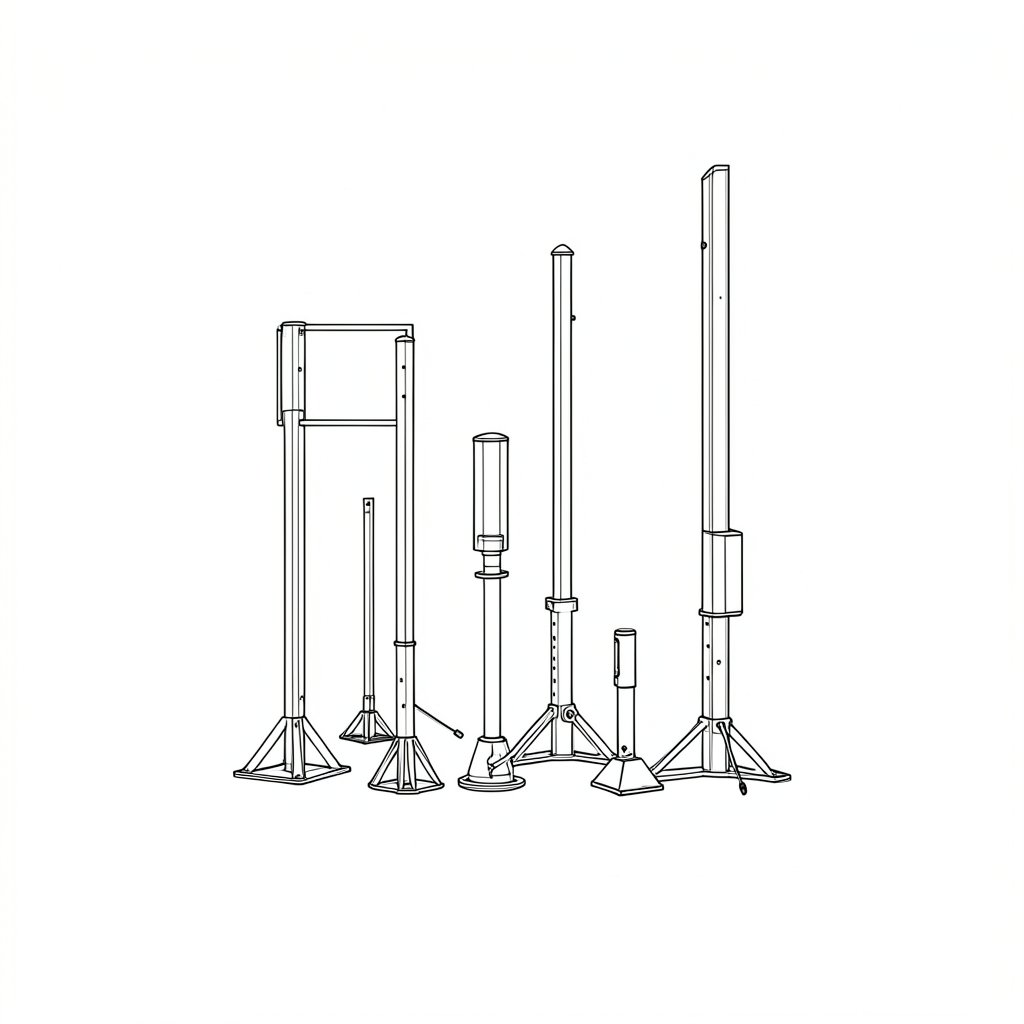
A temporary sign has three jobs and fails at any one of them independently: it has to be seen in time, read and understood, and still be standing when the next driver arrives.
Seen in time means distance, not just visibility
A driver needs enough distance to read the sign, decide what it means for them, and act on it before reaching whatever it warns about. That distance grows with approach speed, and it grows faster than people expect because reading time is roughly constant while the vehicle keeps covering ground. A sign placed close to the hazard is visible and useless. Signs also have to be sequenced so a driver meets one message at a time rather than a wall of them at once.
Legibility is destroyed by ordinary things
Road spray, a low sun behind the sign, a sign turned slightly away from the traffic, a faded face, a bush that has grown since the survey, and another sign in front of it all remove legibility while leaving the sign apparently in place. Retroreflective faces need to be clean for the same reason retroreflective clothing does, and a sign that has been leaning against a hedge collecting dirt all week is transmitting far less than it was on Monday.
Stability is about wind, not weight alone
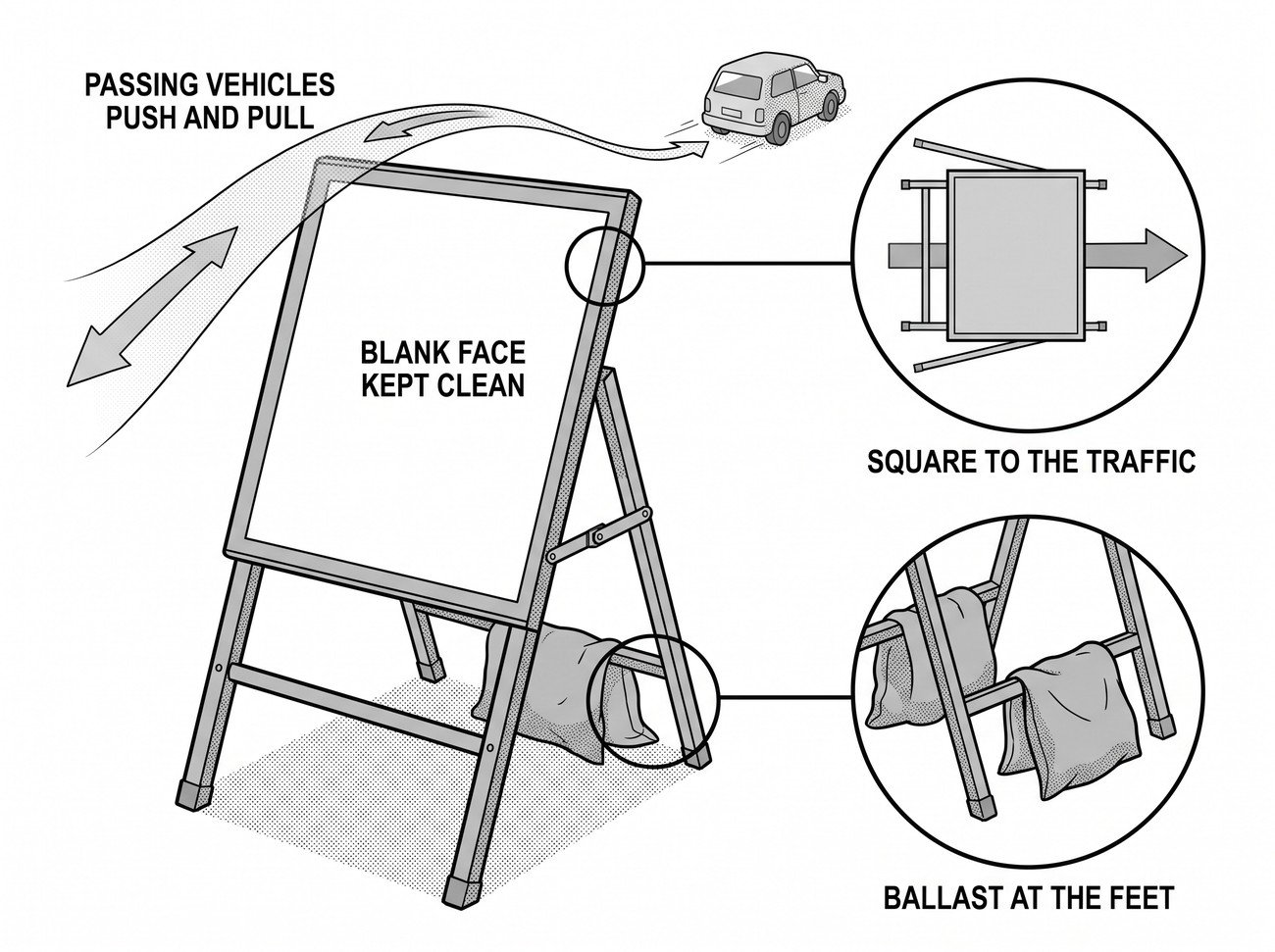
A sign is a flat panel presented to the airflow, and passing vehicles produce that airflow as reliably as the weather does. Every heavy goods vehicle passing at speed delivers a pressure pulse followed by a suction, and a sign that survives a steady wind can be walked out of position by repeated pulses. Ballast belongs at the feet, low down, where it resists overturning; ballast placed on top of the sign raises the centre of gravity and makes it easier to blow over, not harder.
A fallen sign is worse than no sign
A sign lying in the carriageway is an obstruction, and a sign that has rotated to face the verge has removed a warning the layout depends on while appearing intact from a distance. This is the argument for checking the layout during the shift rather than only at set-out: signs are the part most likely to have changed since you put them there, and the change is usually caused by the traffic the sign exists to manage.
Take them down when they stop being true
A sign warning of works that have finished, a speed restriction on a lane that is now open, or a diversion that no longer applies all teach drivers that the signs on this road can be ignored. That lesson carries to the next set of signs, which may be protecting people. Removing signs promptly, and covering rather than leaving them when works are paused, is part of making the next warning credible.
For the requirements behind fixed and portable signing, see EN 12899 and EN 13422. For where signs sit in the layout, see the anatomy of a layout.
Related standards
The standards below set the classification, testing and performance requirements behind the equipment used for this work.
Common errors
1Placing signs where they are visible but too close for a driver to act.
2Presenting several messages at once instead of sequencing them.
3Leaving a sign turned slightly away from the traffic it is meant to warn.
4Ballasting on top of the panel rather than at the feet.
5Leaving signs displayed when they are no longer true.
Frequently asked questions
How far ahead should a temporary sign be placed?
Far enough that a driver can read it, decide what it means and act before reaching the hazard. That distance grows with approach speed, because reading time is roughly constant while the vehicle keeps covering ground.
What removes legibility without removing the sign?
Road spray, a low sun behind it, the sign turned slightly away from traffic, a faded face, vegetation that has grown since the survey, and another sign in front of it.
Why do passing vehicles knock signs over?
Each heavy vehicle at speed delivers a pressure pulse followed by a suction. A sign that survives steady wind can be walked out of position by repeated pulses from the traffic itself.
Where should ballast go?
At the feet, low down, where it resists overturning. Ballast placed on top of the sign raises the centre of gravity and makes it easier to blow over.
Why remove signs promptly when they no longer apply?
Because a sign that is not true teaches drivers that signs on this road can be ignored, and that lesson carries to the next set, which may be protecting people.
Need this as a document you can issue? The template library gives you the risk assessments, permits and inspection logs in editable form — and employer plans cover a whole team with completion records.