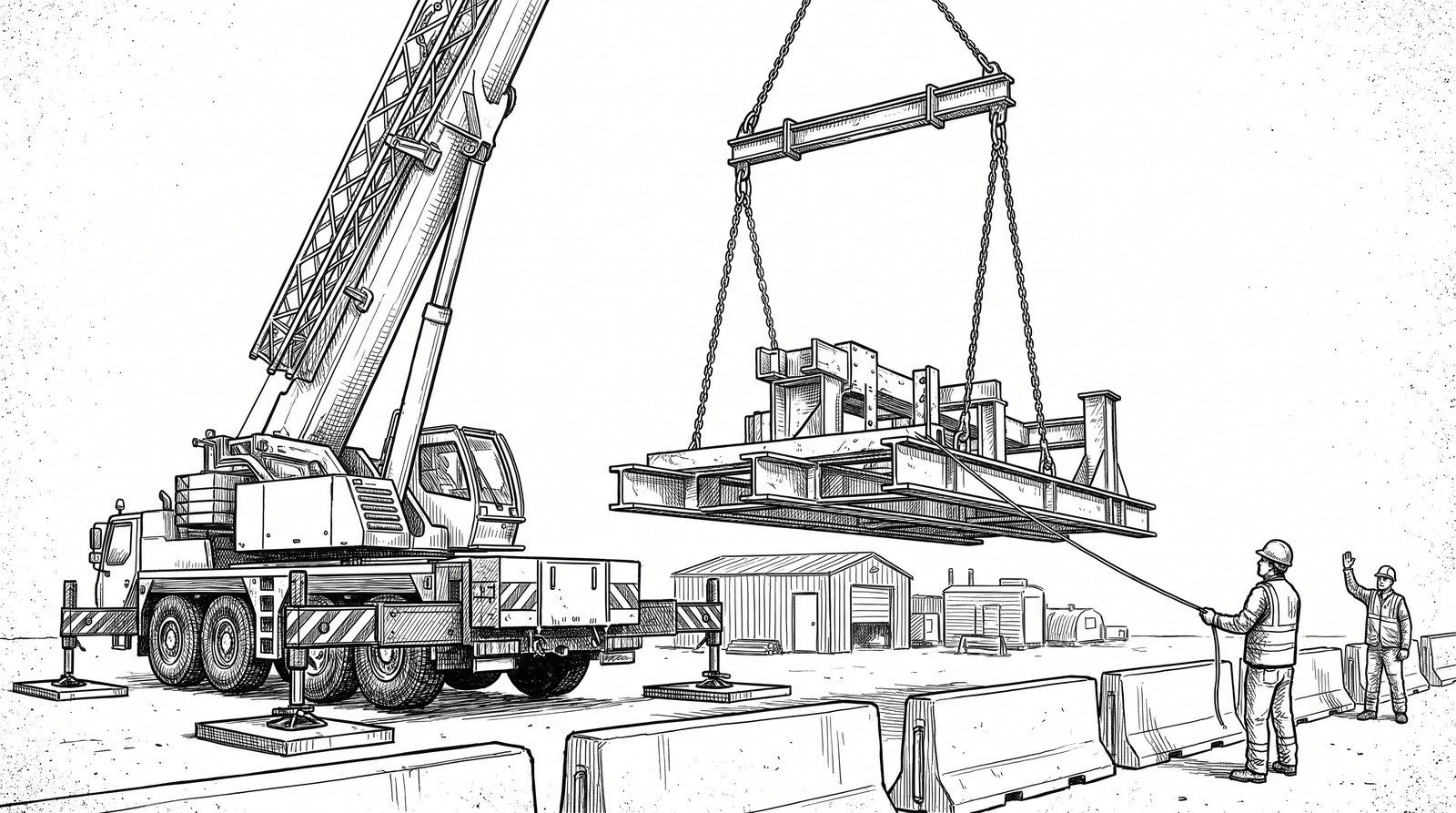
Every note on this page concerns lifting a load with a crane or other lifting appliance. Rigging used to control a person on rope belongs to Rope Access and Confined Space, and the two link to each other where they meet. The four sling and attachment standards behind this work — EN 13414, EN 1492, EN 818 and EN 13155 — were added to the standards library alongside these notes, so every rating claim here can be followed back to the document it comes from.
Frequently asked questions
Where does this activity stop and Rope Access begin?
This activity covers lifting a load with a crane or other lifting appliance: slings, shackles, lifting points, load control and the plan behind the operation. Lowering and hauling people, and rigging anchors to control a person on rope, are covered under Rope Access and Confined Space.
Does a sling have one working load limit or several?
Several. Capacity depends on the hitch used and, for a multi-leg sling, on the angle between the legs, so the label carries a figure for each configuration. The one that governs is the figure for the arrangement actually being used on this lift.
Why do so many of these notes come back to the sling angle?
Because it is the force created by the geometry rather than by the weight, and it is the one people consistently underestimate. It changes the tension in the legs, it squeezes the load inward, and at an eyebolt it converts tension into bending.
Which standards cover slings and lifting attachments?
Steel wire rope slings fall under EN 13414, textile webbing slings and roundslings under EN 1492, short link chain slings under EN 818, and non-fixed load lifting attachments such as beams, clamps and magnets under EN 13155. Each has its own page in the standards library.
What is the single control that matters most on a lift?
The exclusion zone. Every other control reduces the chance of a failure without eliminating it; standing clear is the only one that decides the outcome if the load does come down.
Where do the lifting documents live?
The lift plan and the lifting operations permit are both in the templates section, and the planning note links to each of them so the questions and the record sit together.