Safety / Tips and Tricks / Lifting operations and rigging
Activity 10 · Lifting operations
Emergency Response for a Suspended or Dropped Load
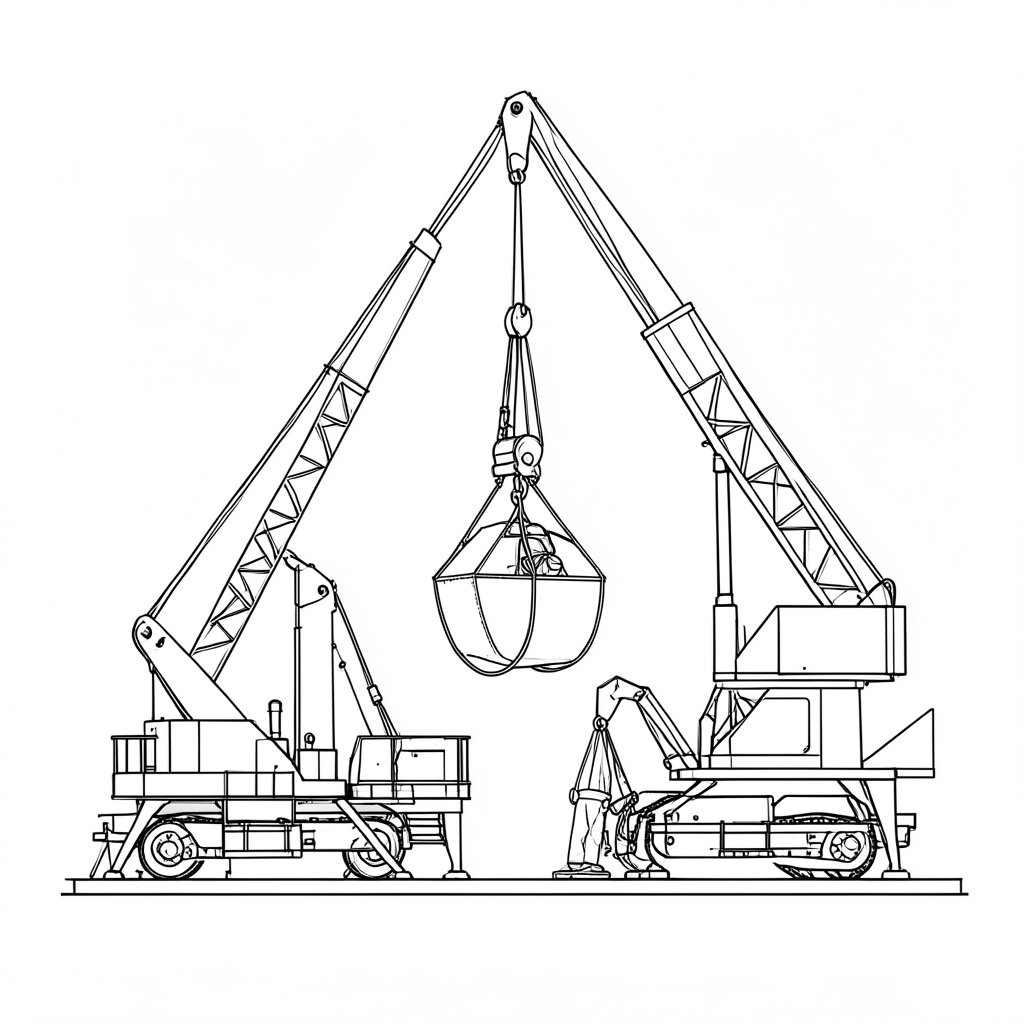
The dangerous moment in a lifting incident is usually not the failure. It is the ten minutes afterwards, when people move toward a load that is still suspended, still unstable, or still holding energy in the rigging.
A load stuck in the air stays in the air
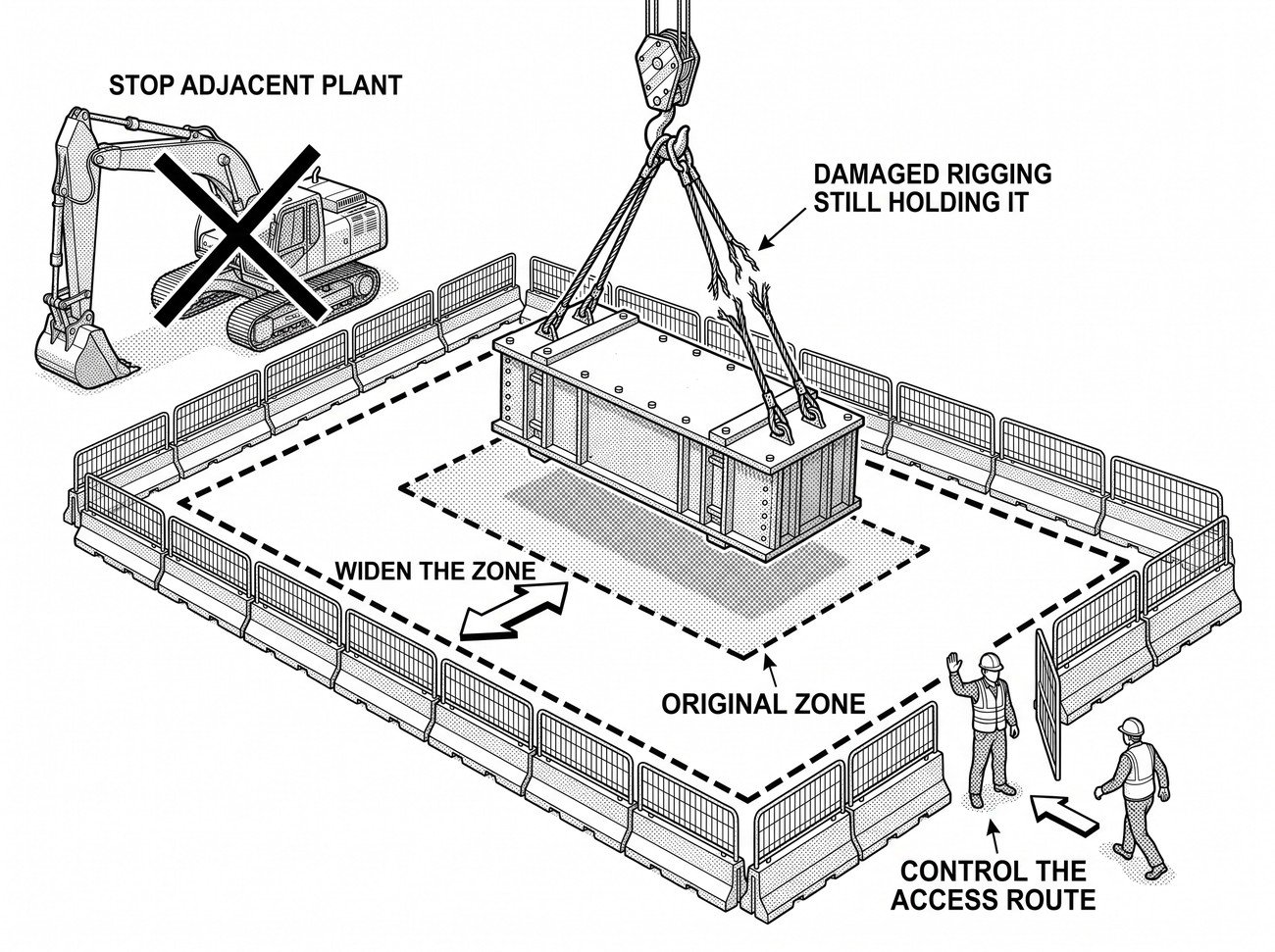
When a crane fails or a sling jams with the load suspended, the instinct is to get the load down. That instinct is wrong until someone competent has assessed why it stopped. A load held by damaged rigging is being held by something that has already partly failed, and cutting, jacking or shock-loading it to free it removes the little margin that is holding it up. The correct sequence is to secure the area beneath and around it, keep everyone out, and get the assessment before anything is touched.
Secure the ground before you look up
The first actions are all about who is where. Stop the lift, stop adjacent work that could vibrate or disturb the arrangement, extend the exclusion zone rather than maintaining the original one, and put someone on the access route to stop people walking in. A suspended failed load has a far larger footprint of consequence than the same load in a controlled lift, because nobody knows which way it will go.
A dropped load is not finished moving
Material that has fallen can still roll, topple or settle, and a stack that landed intact can collapse minutes later as it finds its own equilibrium. Slings under a dropped load may be in tension and will move when released. Approaching to assess damage or to recover equipment is the point at which a second incident happens, and it should wait until the arrangement has been made stable rather than merely observed to be still.
Casualty under load is a specialist job
If someone is trapped beneath a load, the site team’s role is to raise the alarm accurately, control the scene, stop anything making it worse, and hand over a clear picture: what the load is, roughly what it weighs, how it is currently supported, and what access exists. Lifting it off with the same equipment that just failed, or with whatever is nearest, risks dropping it again onto the person underneath. That is a decision for people with the equipment and training to stabilise before lifting.
Preserve what happened
Once the scene is safe, the failed rigging is evidence about why. Leaving slings, shackles and the hook arrangement as they are, rather than clearing them away as part of tidying up, is what allows the cause to be established. A cut sling that is thrown in a skip removes the only physical record of whether it was overloaded, cut on an edge, or already condemned before the lift.
For the zone this widens from, see exclusion zones under a load. For the comparable problem in a warehouse, see trapped or crushed worker rescue planning.
Related standards
The standards below set the safety requirements, marking and discard criteria behind the equipment used for this work.
- EN 397 — Industrial Safety Helmets
- EN ISO 20471 — High-Visibility Clothing
- EN ISO 20345 — Safety Footwear
Common errors
1Trying to bring down a suspended load before anyone competent has assessed why it stopped.
2Maintaining the original exclusion zone instead of widening it after a failure.
3Approaching a dropped load to assess damage before it has been made stable.
4Attempting to lift a load off a casualty with the equipment that has just failed.
5Clearing away the failed rigging before the cause has been established.
Frequently asked questions
Why not bring a stuck load down straight away?
Because it is being held by rigging that has already partly failed. Cutting, jacking or shock-loading it to free it removes the margin currently holding it up, and the reason it stopped is not yet known.
What are the first actions after a lifting failure?
Stop the lift and adjacent work that could vibrate the arrangement, widen the exclusion zone rather than maintaining it, and put someone on the access route to turn people back.
Is a load that has already fallen safe to approach?
No. Fallen material can still roll, topple or settle, a stack that landed intact can collapse minutes later, and slings underneath may be in tension and will move when released.
What is the site team's role if someone is trapped under a load?
Raise the alarm accurately, control the scene, stop anything making it worse, and hand over a clear picture: what the load is, what it weighs, how it is supported and what access exists.
Why leave the failed rigging in place?
Because it is the physical record of why the lift failed. A cut sling cleared into a skip removes the only evidence of whether it was overloaded, cut on an edge, or already condemned before the lift.
Need this as a document you can issue? The template library gives you the risk assessments, permits and inspection logs in editable form — and employer plans cover a whole team with completion records.