Safety / Tips and Tricks / Lifting operations and rigging
Activity 10 · Lifting operations
Lifting Near Overhead Lines and Structures
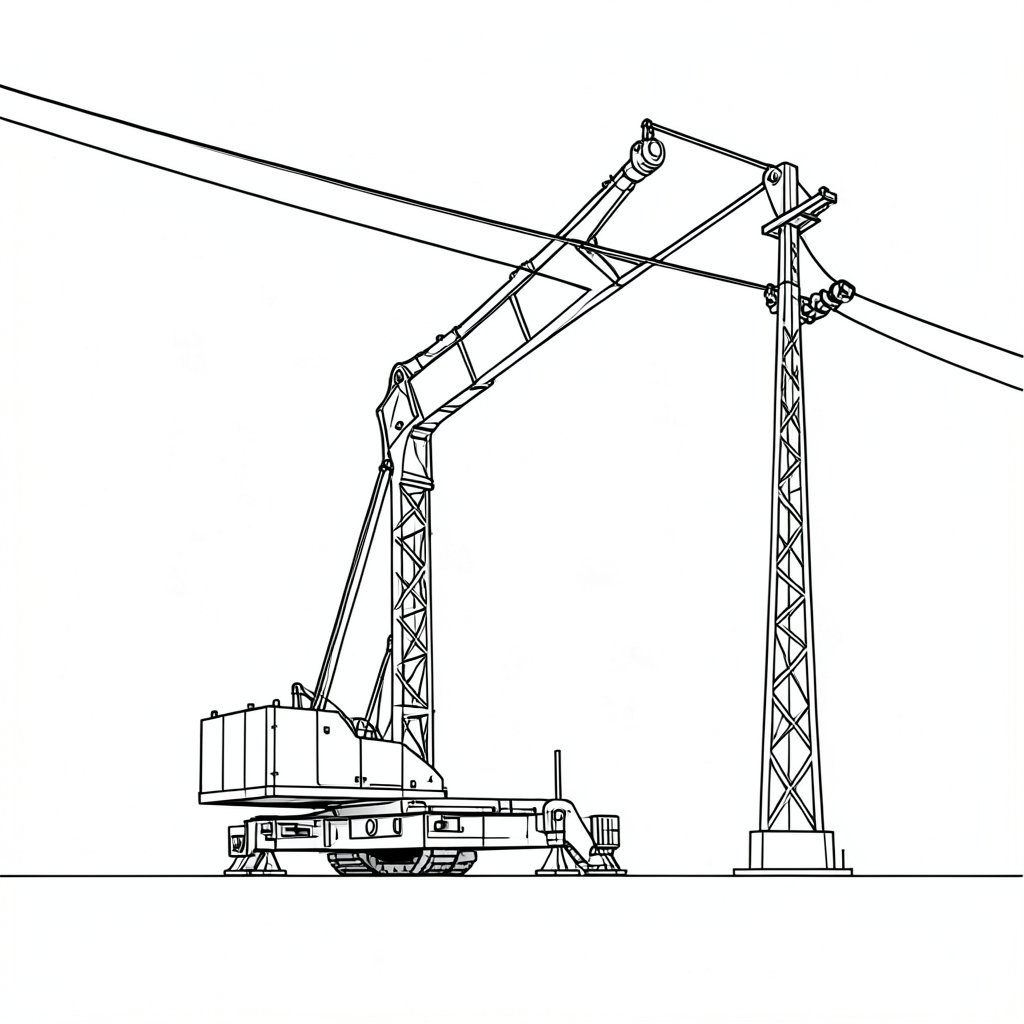
Electricity does not require contact. A crane boom brought close enough to a high voltage line can flash over through the air, and the first warning is the incident itself.
The boom is the hazard, not the load
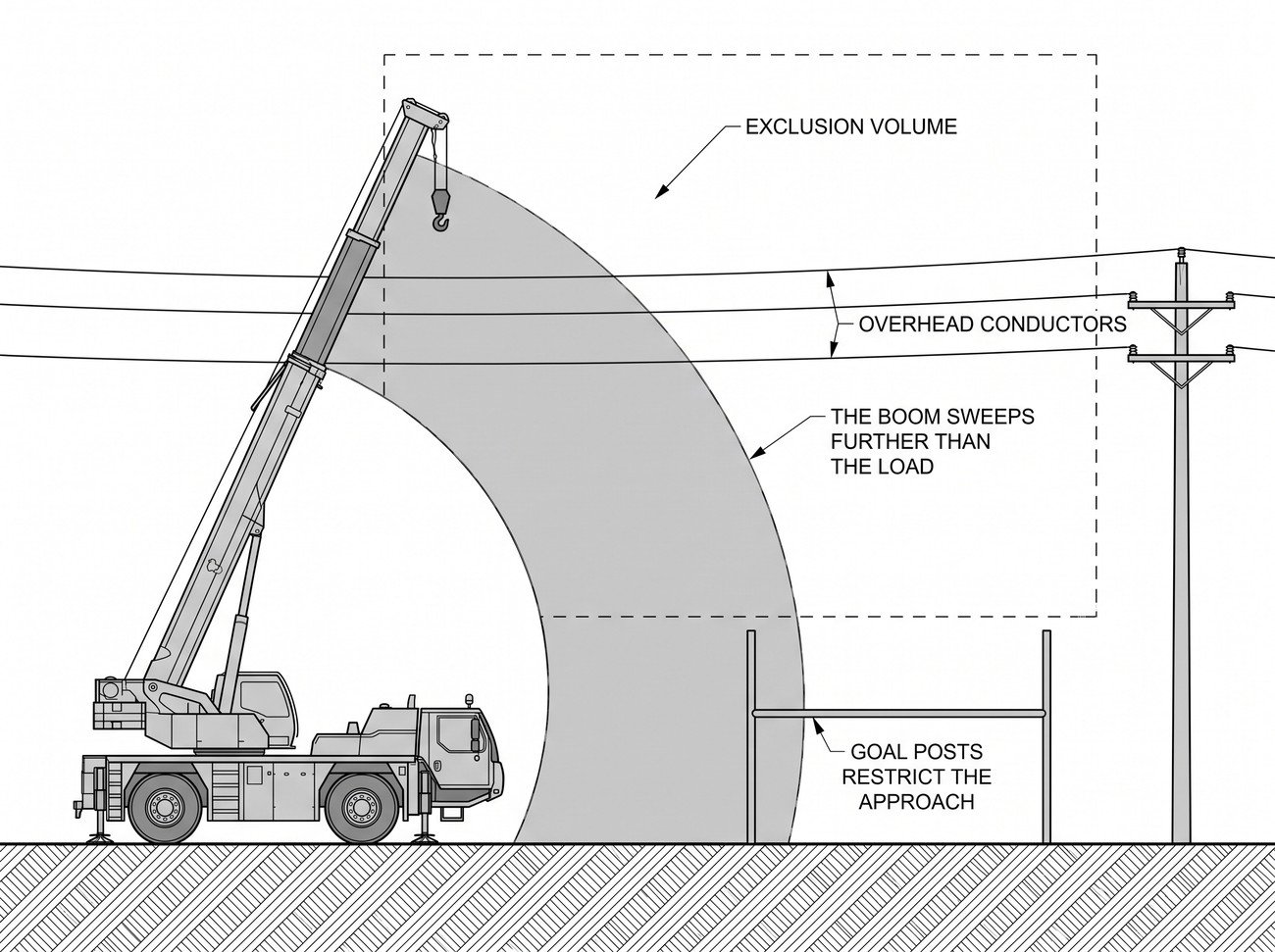
Most planning attention goes to where the load will be, but the boom sweeps a far larger volume and reaches higher than the load does. A jib that clears a line comfortably when the load is at the pick can be much closer to it once the crane slews or the boom is raised. The zone that matters is the one the whole machine can occupy, including the hook block, any hanging slings and a swinging load.
Exclusion first, competence second
The reliable control is keeping the machine out of the area entirely, by isolating the line, by physically preventing the crane from reaching it, or by choosing a position from which it cannot. Barriers, goal posts and travel restrictions do this. Relying on the operator judging the distance by eye does not, because distance to an overhead line is very hard to judge from a cab, particularly against a plain sky and particularly when the operator is concentrating on the load.
If contact happens
The safest place is inside the cab, and the operator stays there. The ground around a machine in contact with a live conductor is energised, with the voltage falling away with distance, so a person standing near it can have a large difference in potential between their feet. Anyone approaching to help completes a path. If leaving the machine is unavoidable because of fire, the method is to jump clear without touching the machine and the ground at the same time, then to shuffle away with the feet together rather than to run.
Structures do not conduct but they do surprise
Buildings, other cranes, scaffolds and lighting columns present a different failure: the boom or the load contacts them during a slew that looked clear at the pick. Where two cranes have overlapping radii, the arrangement needs a rule about who has priority and a physical or procedural limit, not an assumption that the two operators will see each other. A load swinging on a long fall has a far larger reach than its static position suggests.
Underground and overhead are the same question
A crane set up beside a trench, over a buried service, or on a basement slab is loading something that may not carry it. The imposed load through an outrigger is concentrated and much higher than the machine’s weight suggests, and it is the reason outrigger pads exist. Checking what is beneath the setup position belongs in the same conversation as checking what is above it.
For the tree-work equivalent of this clearance problem, see working near overhead lines during tree work. For what is buried under the setup, see locating and avoiding buried services.
Related standards
The standards below set the safety requirements, marking and discard criteria behind the equipment used for this work.
Common errors
1Planning clearance for the load position rather than for the full slew arc of the boom.
2Relying on the operator to judge distance to a conductor by eye from the cab.
3Leaving the cab after contact, or approaching a machine that is in contact to help.
4Assuming two operators with overlapping radii will see and avoid each other.
5Assessing what is above the crane and not what is beneath the outriggers.
Frequently asked questions
Does a crane have to touch a line to be dangerous?
No. At high voltage the electricity can flash over through the air once the boom is close enough, so contact is not required and there is no warning before it happens.
Why is the boom more of a hazard than the load?
It sweeps a much larger volume and reaches higher. A jib that clears a line at the pick can be far closer once the crane slews or the boom is raised, so the slew arc defines the hazard.
What should an operator do if the machine contacts a line?
Stay in the cab. The ground around the machine is energised with the voltage falling away with distance, so anyone approaching completes a path and a person standing nearby has a large difference between their feet.
How do you leave a machine that is in contact, if you must?
Jump clear without touching the machine and the ground at the same time, then shuffle away with the feet kept together rather than running.
What about two cranes working near each other?
Overlapping radii need an agreed priority and a physical or procedural limit. Assuming two operators will see and avoid each other is not a control, particularly with a load swinging on a long fall.
Need this as a document you can issue? The template library gives you the risk assessments, permits and inspection logs in editable form — and employer plans cover a whole team with completion records.