Safety / Tips and Tricks / Energy and networks
Activity 03 · Energy
Underground Cable Strikes: Locating and Avoiding Buried Services
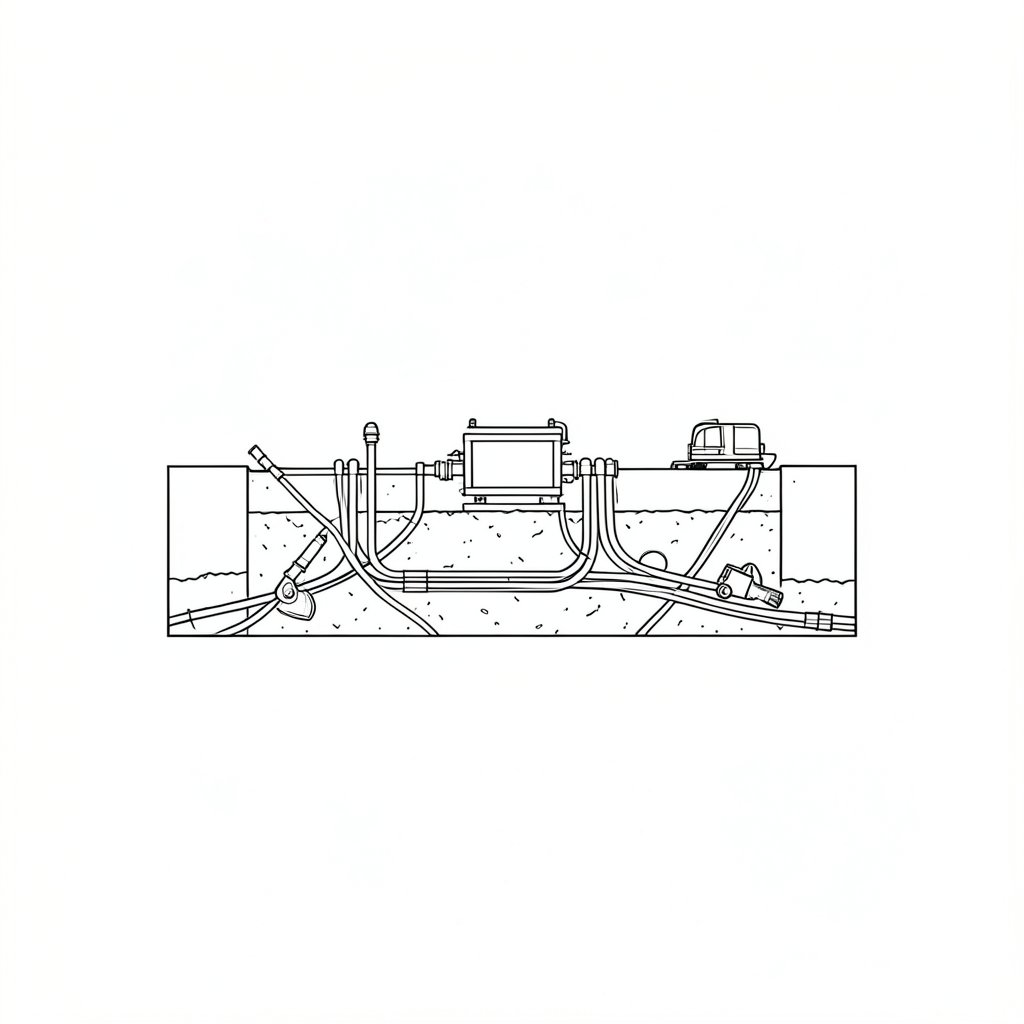
Underground cables give none of the visual warning an overhead line does, which is exactly why cable strikes remain a persistent cause of serious injury on excavation work despite being, in principle, entirely preventable with proper location and planning.
Why records alone are not enough
Utility record drawings show the intended or as-built position of buried services, but records can be outdated, inaccurate, or simply wrong about depth, since services shift over time due to ground movement, other excavation work, or repairs that were not accurately recorded afterward. Treating a records search as the final word on what is present, rather than the starting point for a physical survey, is a common and dangerous shortcut.
Locating services before digging
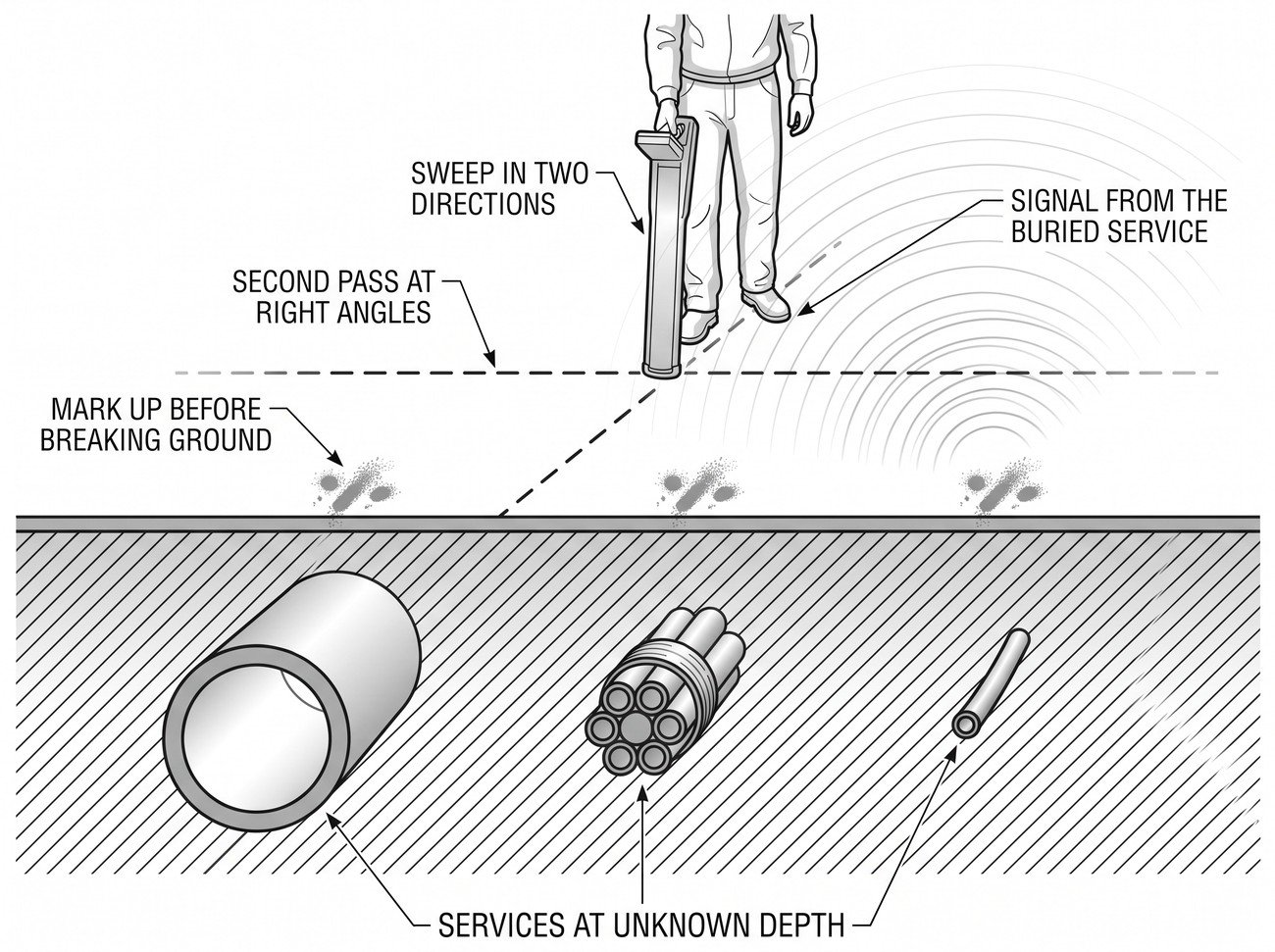
A cable avoidance tool or similar detection equipment should be used to physically survey the excavation area before work begins, tracing and marking the actual position of detected services on the ground, cross-referenced against the utility records rather than replacing them. Detection equipment has real limitations — some materials and some cable types are harder to detect than others — so a clear signal absence should not be read as a guarantee nothing is present, and known unlocatable services from the records still need to be assumed present and worked around.
Safe digging practice once marked
Even with services marked, mechanical excavation should stop at a safe distance from any marked or suspected service, with the final approach completed by hand digging to visually expose the service before mechanical methods resume nearby. Hand digging itself still carries a strike risk from tools, so care and a methodical approach — working along rather than across the suspected line of a service — reduces the chance of a spade or bar strike even during careful excavation.
What a cable strike actually risks
A live cable strike can cause immediate electrical injury to the person operating the tool, and depending on the cable and fault current, can also produce arc flash effects at the point of the strike. Gas and other utility strikes carry their own distinct hazards. The response to any suspected strike is to stop work immediately, withdraw to a safe distance, and treat the service as live or hazardous until the relevant utility confirms otherwise, rather than continuing to assess the damage at close range.
For the equivalent hazard above ground, see working near overhead power lines.
Common errors
1Relying on utility records alone without a physical detection survey before digging.
2Reading a clear detection signal as confirmation nothing is present, when known unlocatable services still need to be assumed present.
3Continuing mechanical excavation right up to a marked service rather than completing the final approach by hand.
4Approaching a struck service at close range to assess damage rather than withdrawing and treating it as live.
Frequently asked questions
Why aren't utility record drawings enough to safely locate buried cables?
Records can be outdated, inaccurate, or wrong about depth, since services shift over time due to ground movement, other excavation, or undocumented repairs, so records are a starting point rather than the final word.
What are the limitations of cable detection equipment?
Some materials and cable types are harder to detect than others, so a clear signal absence is not a guarantee nothing is present, and services already flagged in records as unlocatable still need to be assumed present.
How close can mechanical excavation get to a marked service?
Mechanical methods should stop at a safe distance from any marked or suspected service, with the final approach completed by careful hand digging to visually expose it before mechanical excavation resumes nearby.
Is hand digging near a buried service completely risk-free?
No, hand digging still carries a strike risk from tools, so working along rather than across the suspected line of a service, with a methodical approach, reduces the chance of a spade or bar strike.
What should happen immediately after a suspected cable strike?
Stop work immediately, withdraw to a safe distance, and treat the service as live or hazardous until the relevant utility confirms otherwise, rather than approaching to assess the damage at close range.
Need this as a document you can issue? The template library gives you the risk assessments, permits and inspection logs in editable form — and employer plans cover a whole team with completion records.