Safety / Tips and Tricks / Energy and networks
Activity 03 · Energy
Working Near Overhead Power Lines: Safe Approach Distances
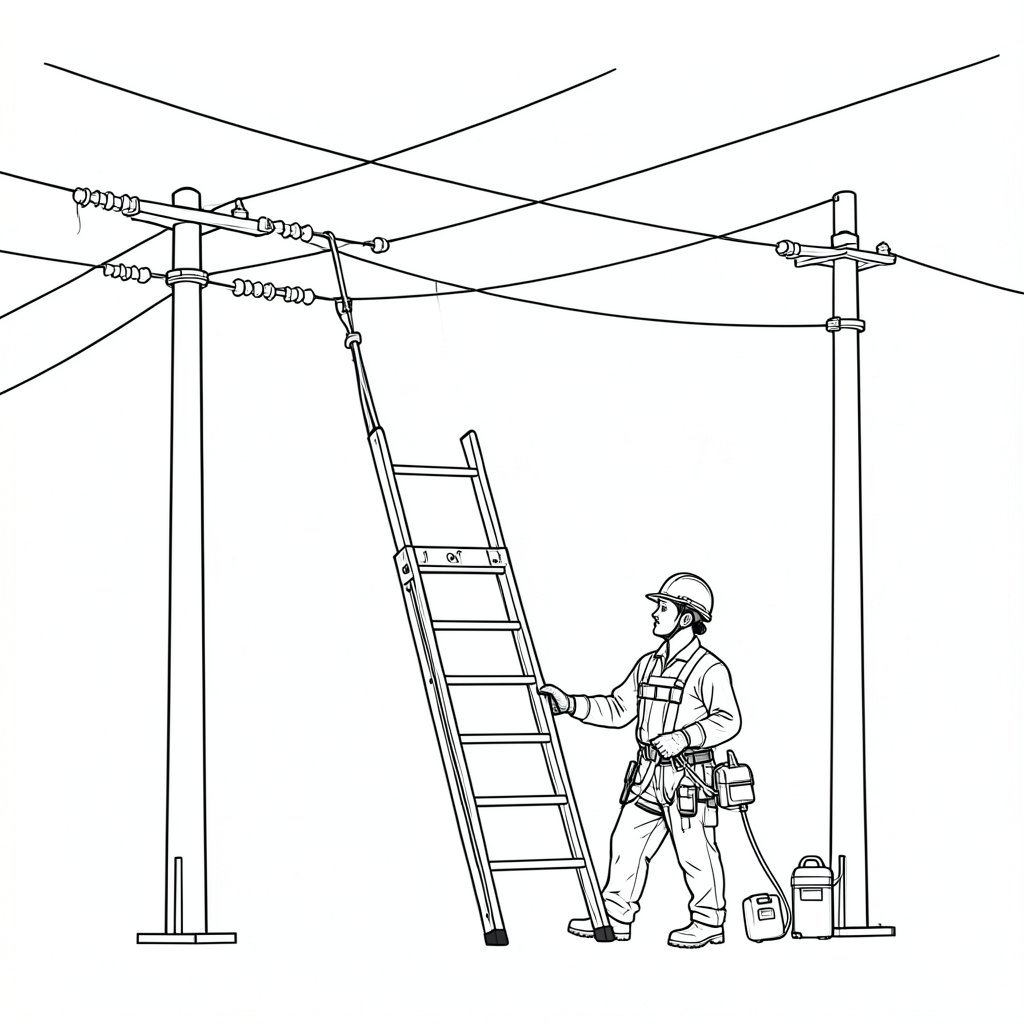
Overhead power lines are frequently underestimated as a hazard precisely because they are visible, static and familiar, yet contact or even close approach without contact can be fatal, and the margin for error shrinks fast once any conductive object — a ladder, a crane boom, a scaffold pole — enters the picture.
Why proximity alone is dangerous
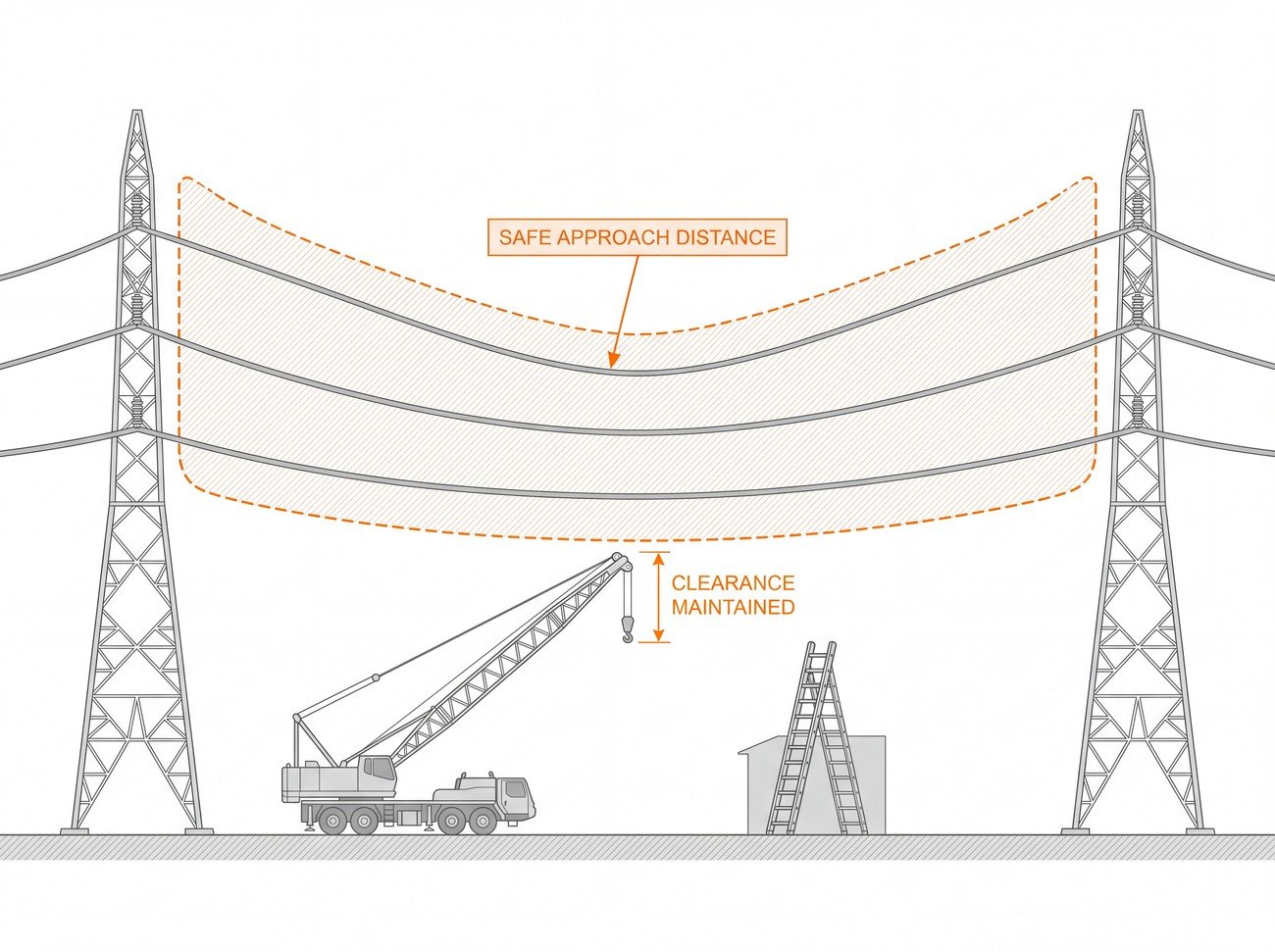
At higher voltages, electricity can arc across an air gap without physical contact, meaning a conductive object does not need to touch the line to complete a circuit to earth through it. This is why safe approach distances for overhead lines are not simply “do not touch” — they specify a minimum clearance that accounts for this arcing risk, and the required distance increases with the voltage of the line.
Identifying the voltage and getting the right distance
The safe approach distance depends on the actual voltage of the specific line, which is not always obvious from the ground. Where the voltage is not confirmed, treating the line as the highest voltage plausible for that type of structure, and contacting the network operator to confirm before work proceeds nearby, is the safer default than guessing based on appearance.
Plant, equipment and material handling near lines
Cranes, MEWPs, tipper trucks and long-handled tools all extend a worker’s effective reach toward the line well beyond arm’s length, and the approach distance needs to account for the full extended reach of whatever equipment is in use, not just the operator’s own position. A goalpost barrier or physical marker at ground level, set back from the line by the required clearance, gives operators a visible reference rather than relying on judgement alone during the task.
Planning the task before it starts
Where a task’s normal working area brings equipment within the approach distance of an overhead line, the preferred control is to have the line made dead or diverted by the network operator before work begins, or to reroute the task to avoid the proximity entirely. Where neither is possible, a documented safe system of work specific to that line and task, including a banksman dedicated to watching clearance during equipment movement, is the minimum control.
If contact does occur
If plant or equipment does contact an overhead line, the standard advice is not to touch the equipment or attempt to move it, and for anyone inside a vehicle in contact with the line to stay inside unless there is an immediate fire risk, since stepping out can create a path to earth through the body. The area should be treated as live and kept clear until the network operator confirms it is safe.
For the parallel hazard of buried services, see underground cable strikes.
Common errors
1Judging a line's voltage, and therefore the required clearance, by its appearance rather than confirming it.
2Accounting for the operator's reach but not the full extended reach of a crane, MEWP or long-handled tool.
3Proceeding with work near a line without a banksman dedicated to watching clearance.
4Approaching or touching plant that has made contact with a line, rather than treating the area as live.
Frequently asked questions
Why is a safe approach distance needed even without touching an overhead line?
At higher voltages, electricity can arc across an air gap without physical contact, so a conductive object completing a circuit to earth does not need to actually touch the line – the safe distance accounts for this arcing risk.
What should be done if the voltage of an overhead line is not confirmed?
Treat it as the highest voltage plausible for that type of structure and contact the network operator to confirm before work proceeds nearby, rather than guessing based on appearance.
Why does equipment like cranes and MEWPs need special consideration near power lines?
They extend a worker's effective reach toward the line well beyond arm's length, so the approach distance needs to account for the full extended reach of the equipment, not just the operator's position.
What is the preferred control when a task's working area brings equipment near an overhead line?
Having the line made dead or diverted by the network operator before work begins, or rerouting the task to avoid the proximity entirely, rather than relying solely on approach-distance discipline during the task.
What should someone do if their vehicle makes contact with an overhead line?
Stay inside the vehicle unless there is an immediate fire risk, since stepping out can create a path to earth through the body, and treat the area as live until the network operator confirms it is safe.
Need this as a document you can issue? The template library gives you the risk assessments, permits and inspection logs in editable form — and employer plans cover a whole team with completion records.