Safety / Tips and Tricks / Energy and networks
Activity 03 · Energy
Testing for Absence of Voltage: The Sequence and the Equipment
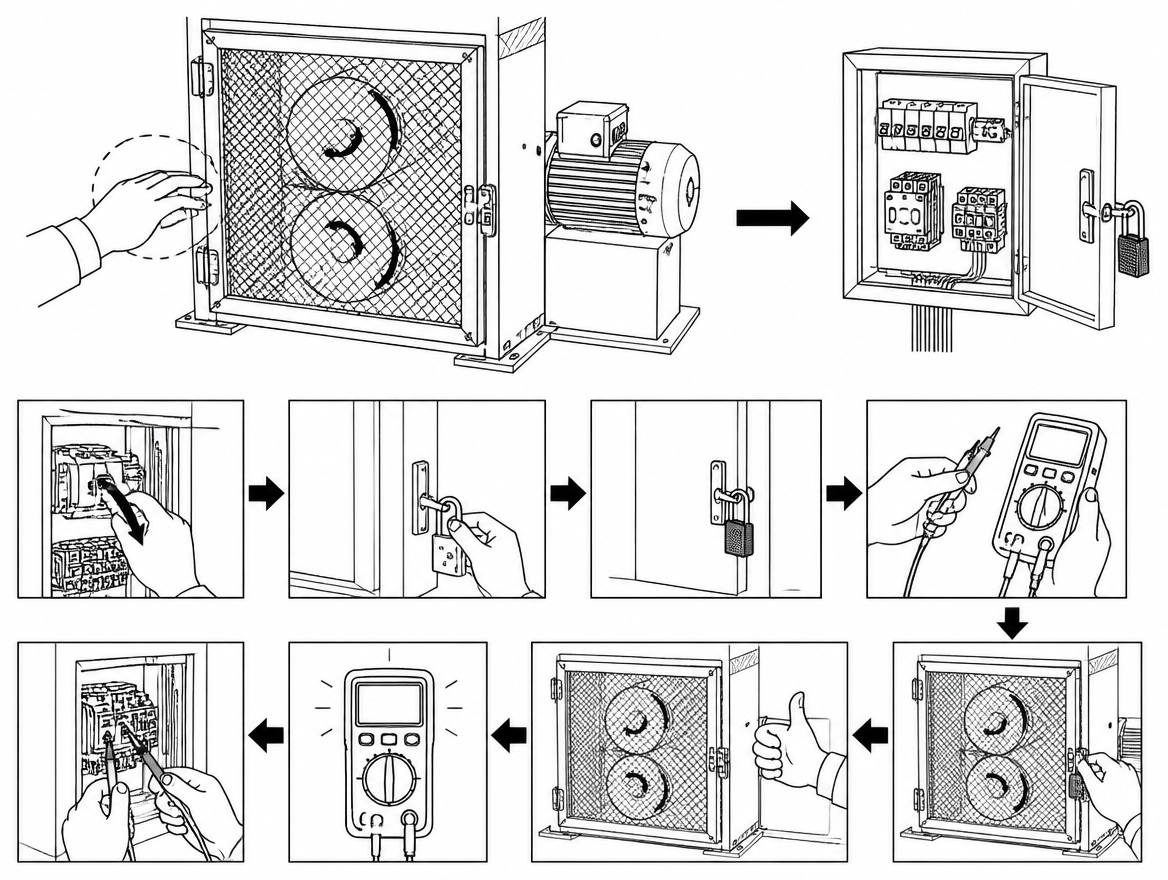
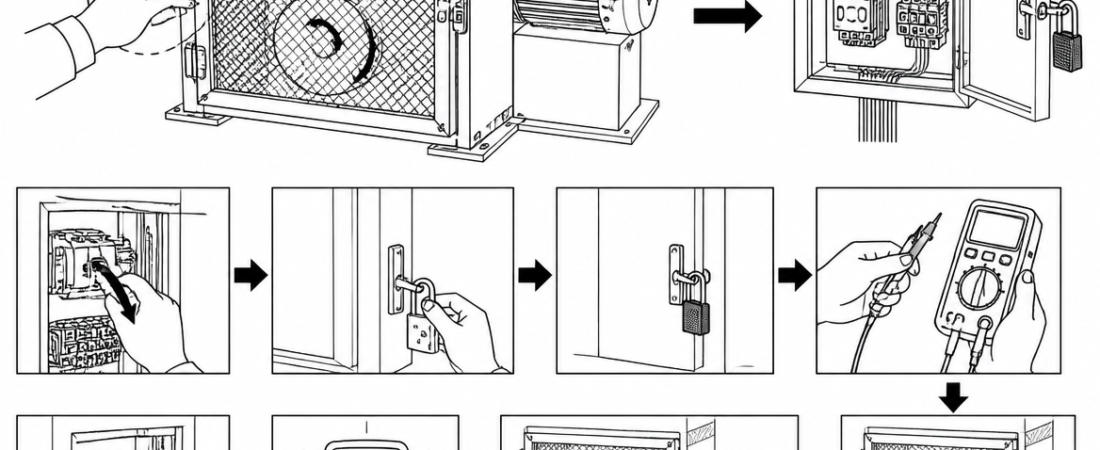
Testing for absence of voltage is the step that converts an assumed isolation into a proven one, and the sequence matters as much as the test itself — skipping or reordering steps can produce a false sense of confirmation.
Why the sequence has a specific order
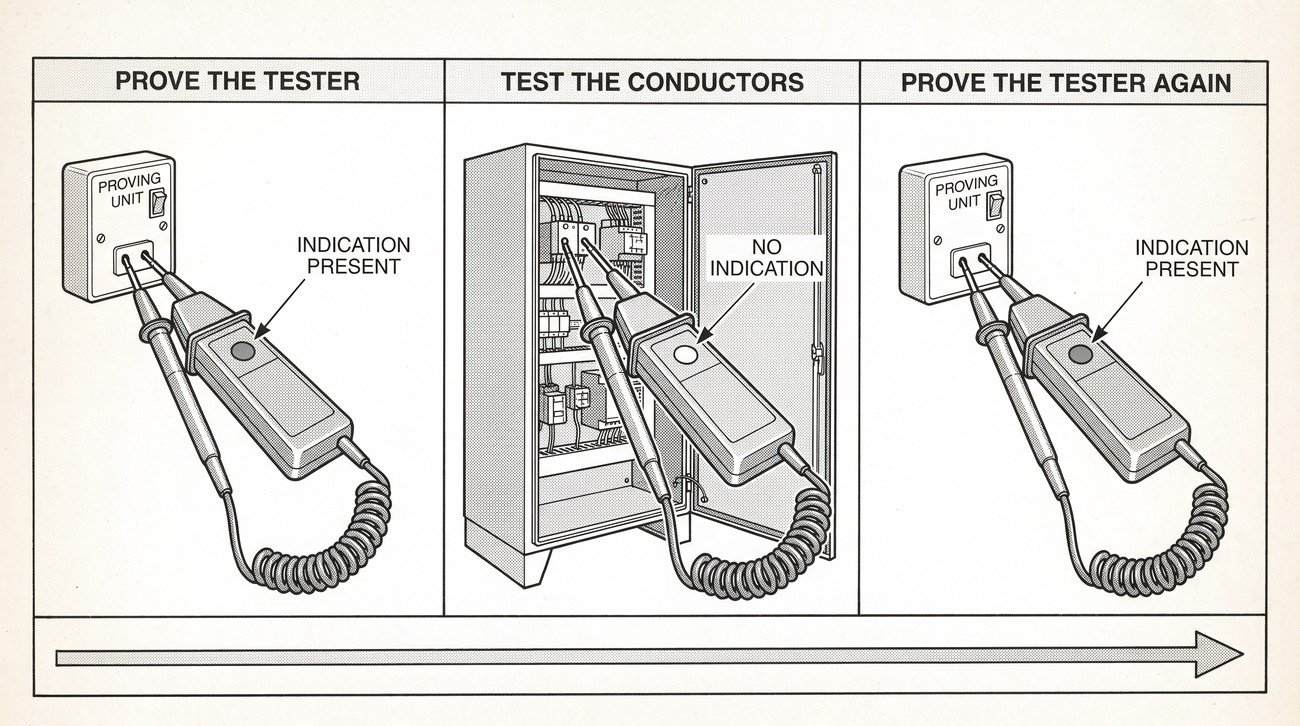
The standard sequence is: test the voltage detector on a known live source to confirm it works, test the circuit that is meant to be isolated, then test the detector again on the known live source to confirm it still works. Testing the circuit alone, without proving the detector before and after, leaves open the possibility that the detector had already failed and simply displayed a false “no voltage” reading throughout — a failure mode that a single test on the target circuit cannot catch.
Selecting the right equipment
The voltage detector needs to be rated for the voltage and category of the system being tested, and used within its rated range — a detector rated for a lower voltage or category than the system presents may not respond correctly, or may be damaged by the test itself. Detector selection should be based on the actual system voltage, not the voltage the worker expects to find after isolation.
Testing all phases and conductors
A multi-phase or multi-conductor system needs each phase and conductor tested individually, both phase-to-phase and phase-to-earth where applicable, since one phase being dead does not confirm the others are. A test that only checks one point on a multi-conductor system can miss a live conductor entirely.
What to do if the test does not confirm dead
If the test shows voltage present where it was expected to be absent, the circuit is not isolated and work must not proceed. The isolation needs to be re-traced to find where the assumption broke down — a wrong isolation point, an unaccounted backfeed source, or a mislabelled circuit are all real possibilities that a positive voltage reading has just correctly caught.
This test is the step that follows locking and tagging — see lockout-tagout for electrical isolation for the full sequence, and grounding and earthing for what typically follows a confirmed-dead result.
Common errors
1Testing the circuit without proving the detector on a known live source both before and after.
2Using a detector rated for the wrong voltage or category for the system being tested.
3Testing only one phase or conductor on a multi-conductor system and assuming the rest are also dead.
4Proceeding with work after a voltage reading that was dismissed as a false positive without investigation.
Frequently asked questions
What is the correct sequence for testing absence of voltage?
Test the voltage detector on a known live source to confirm it works, test the circuit meant to be isolated, then test the detector again on the known live source to confirm it still works – both before and after, not just once.
Why is testing the target circuit alone, without proving the detector, not sufficient?
It leaves open the possibility the detector had already failed and displayed a false 'no voltage' reading throughout, a failure mode a single test on the target circuit cannot catch on its own.
Why does the voltage detector need to be rated for the specific system being tested?
A detector rated for a lower voltage or category than the system presents may not respond correctly, or may be damaged by the test, so selection should be based on the actual system voltage, not the voltage expected after isolation.
Does testing one phase confirm a multi-phase system is dead?
No, each phase and conductor needs testing individually, phase-to-phase and phase-to-earth where applicable, since one dead phase does not confirm the others are also isolated.
What should happen if the test detects voltage where none was expected?
Work must not proceed, and the isolation needs to be re-traced to find where the assumption broke down, such as a wrong isolation point, an unaccounted backfeed source, or a mislabelled circuit.
Need this as a document you can issue? The template library gives you the risk assessments, permits and inspection logs in editable form — and employer plans cover a whole team with completion records.