Safety / Tips and Tricks / Energy and networks
Activity 03 · Energy
Lockout-Tagout for Electrical Isolation: Proving Dead Before Work Begins
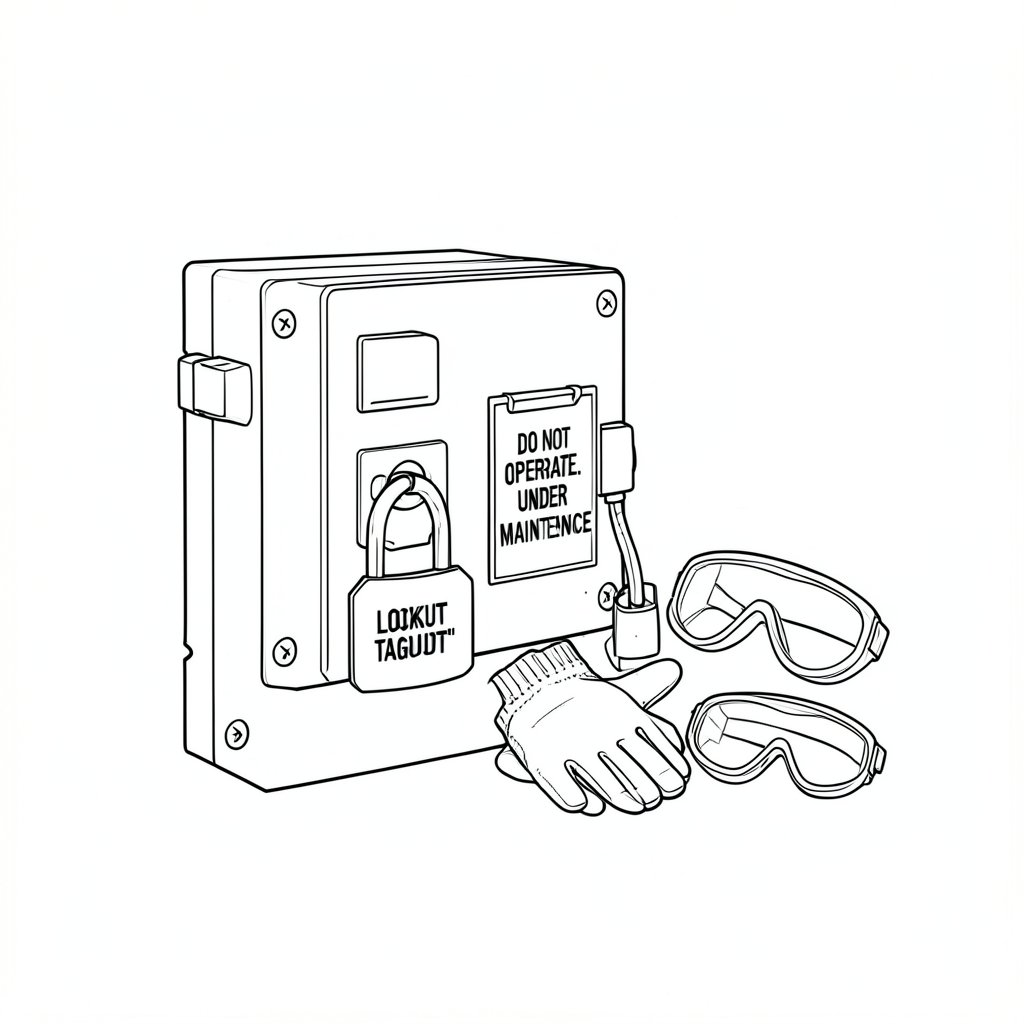
Lockout-tagout exists to close the gap between believing a circuit is isolated and knowing it is, and the difference between those two states is exactly where fatal electrical incidents happen. An assumed isolation is not an isolation at all until it has been locked, tagged and proven.
Why each step exists
Isolating the supply removes the source of energy. Locking it prevents anyone — including the person who isolated it — from re-energising the circuit while work is in progress, since a lock physically blocks the switch or breaker regardless of who else might operate it without knowing work is underway. Tagging identifies who applied the lock and why, so anyone finding it knows not to remove it. None of the three steps substitutes for the others: a tag without a lock can be ignored, and a lock without a tag leaves the next person unable to tell who to contact before removing it.
Proving dead is a separate, final step
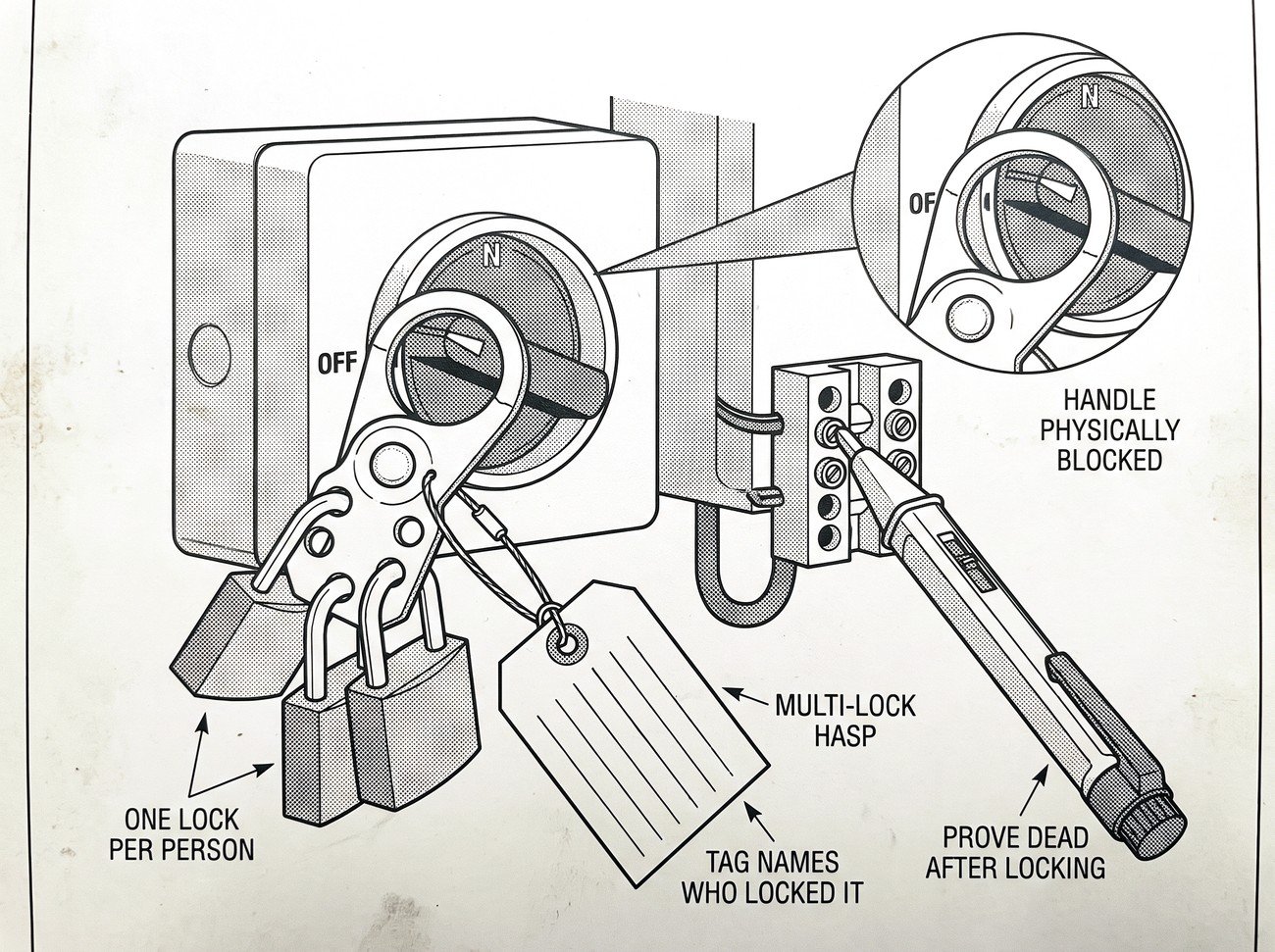
Locking and tagging isolate the supply; they do not by themselves confirm the circuit is actually de-energised, since an isolation point can be wrong, mislabelled, or bypassed by a source no one accounted for, such as backfeed from another supply or stored energy in a capacitor. The circuit must be tested with a voltage detector proven to work immediately before and after the test, confirming the detector itself has not failed silently. Only after this test shows zero voltage should the circuit be treated as dead.
Multiple workers and group locks
Where more than one person is working on the same isolated circuit, each individual should apply their own personal lock, not rely on a single lock applied by whoever isolated the circuit first. A group lockout device or hasp allows multiple personal locks to be applied to a single isolation point, so the circuit cannot be re-energised until every individual has removed their own lock, meaning no one person’s premature departure can put someone else at risk.
Restoring supply at the end of the task
Before removing locks and restoring supply, the work area needs checking to confirm all tools, temporary grounds and personnel are clear, and everyone who applied a personal lock needs to be accounted for before their lock is removed. Restoring supply while any of these checks is incomplete reintroduces exactly the hazard the isolation was put in place to control.
For the testing step itself in detail, see testing for absence of voltage, and for temporary grounding once dead is confirmed, see grounding and earthing for temporary electrical safety.
Common errors
1Treating a locked and tagged isolation as proven dead without a separate voltage test.
2Not testing the voltage detector itself immediately before and after use.
3Multiple workers relying on a single shared lock rather than each applying their own.
4Restoring supply before confirming all personnel, tools and temporary grounds are clear.
Frequently asked questions
Why isn't locking and tagging a circuit enough to start work?
Locking and tagging isolate the supply, but they do not by themselves confirm the circuit is actually de-energised – the isolation point could be wrong, mislabelled, or bypassed by a source such as backfeed, so a separate voltage test is required.
Why does a lock matter more than a tag alone?
A lock physically prevents anyone from re-energising the circuit, while a tag alone can be ignored or removed by someone who is unaware work is underway – the two serve different, non-substitutable purposes.
What does proving a circuit dead actually require?
Testing it with a voltage detector proven to work immediately before and after the test, confirming the detector itself has not failed silently, before treating the circuit as de-energised.
Why should each worker apply their own personal lock on a shared isolation?
So the circuit cannot be re-energised until every individual has removed their own lock, meaning no single person's premature departure or assumption can put someone else at risk.
What must be confirmed before restoring supply at the end of a task?
That all tools, temporary grounds and personnel are clear of the work area, and that everyone who applied a personal lock has been accounted for before their lock is removed.
Need this as a document you can issue? The template library gives you the risk assessments, permits and inspection logs in editable form — and employer plans cover a whole team with completion records.