Safety / Tips and Tricks / Energy and networks
Activity 03 · Energy
Live Working vs Dead Working: When Each Is Justified
Working on electrical equipment while it is still energised is sometimes treated as a shortcut, but it is properly understood as an exception that needs specific justification, not a default approach chosen for convenience.
Dead working is the default
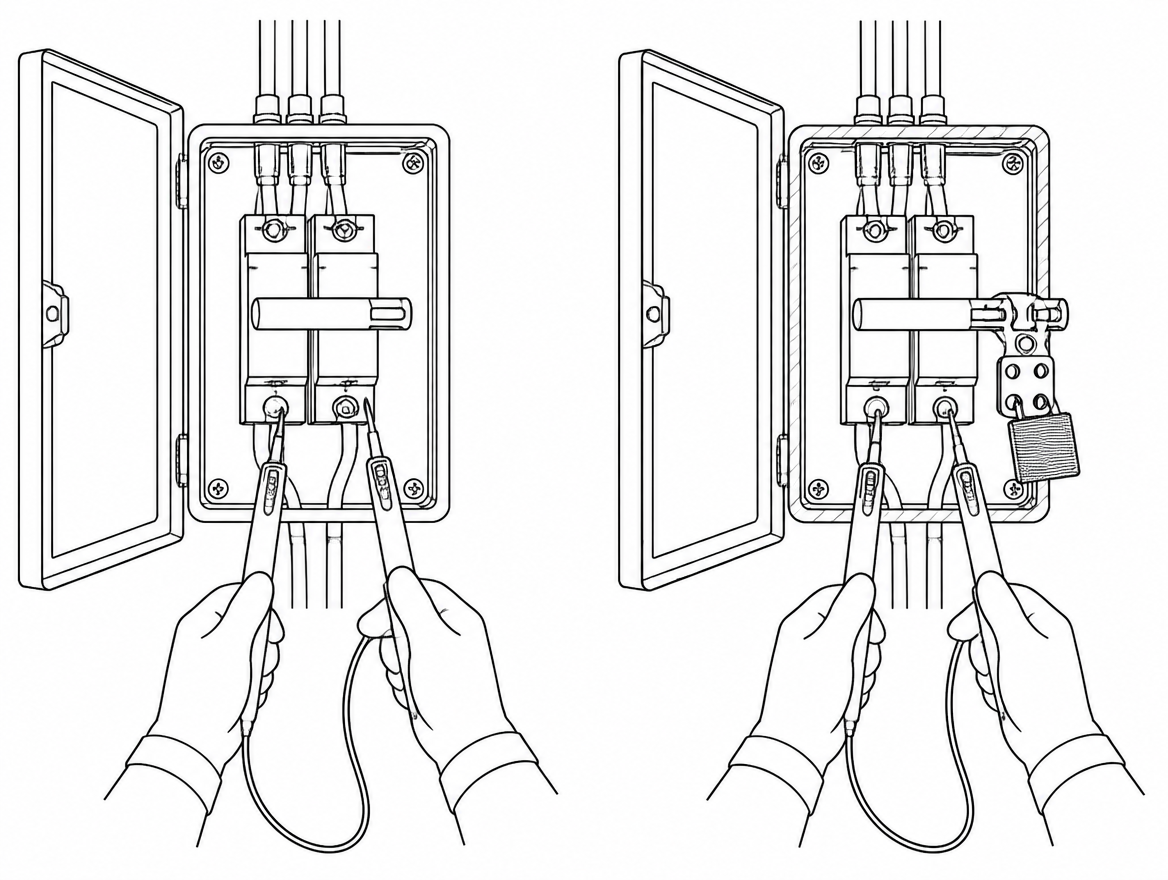
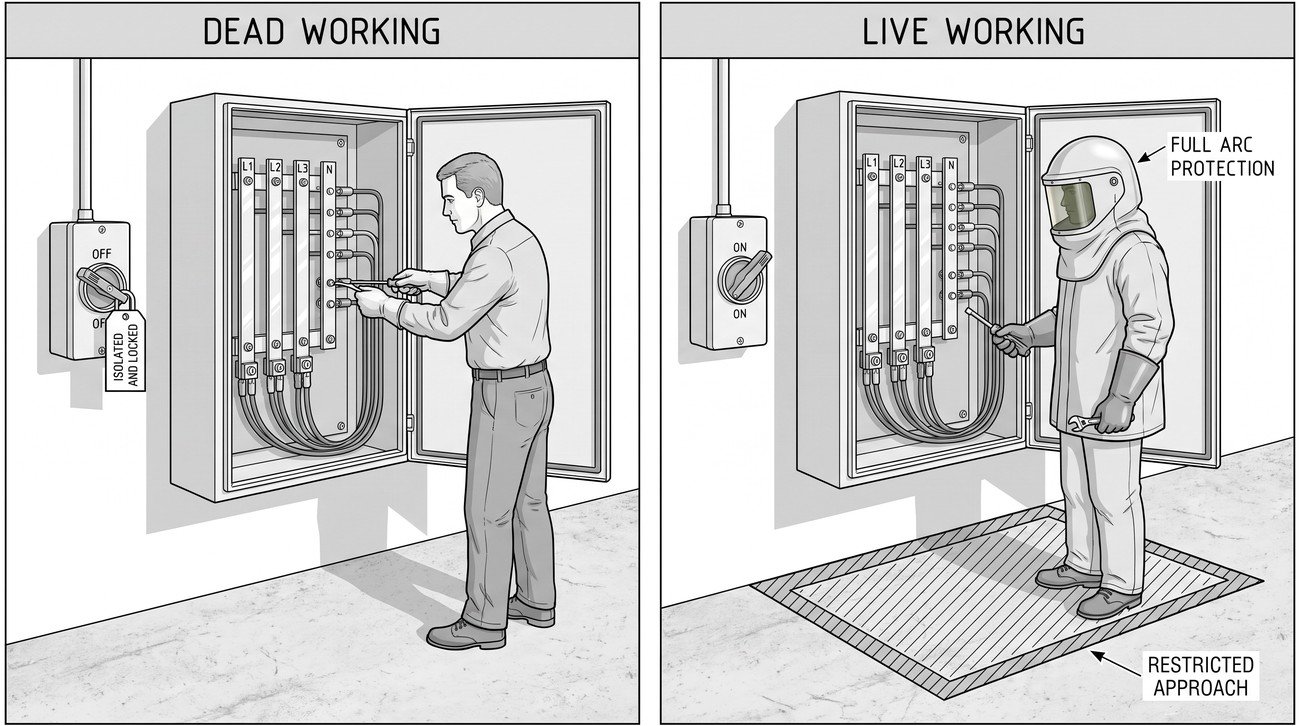
The starting position for any electrical task is that it should be carried out dead: isolated, locked, tagged and proven de-energised before work begins. This removes the electrical hazard entirely rather than managing it, and it is the control that should be used unless a specific, documented reason rules it out.
What actually justifies live working
Live working is justified only where it is unreasonable in all the circumstances for the equipment to be dead, and where suitable precautions are taken to prevent injury. Common genuine justifications include testing and diagnostic work that is only meaningful with the circuit energised, or situations where de-energising would itself create a greater risk, such as certain continuous industrial processes or life-safety systems. “It would take too long to isolate” or “the job is quick” are not on their own valid justifications — the bar is whether dead working is genuinely unreasonable, not merely inconvenient.
What live working actually requires
Where live working is genuinely justified, it needs its own written authorisation separate from routine work, PPE selected against the specific incident energy the live task presents, insulated tools rated for the voltage, a documented safe system of work for that specific task, and often a second person present specifically for rescue and to raise the alarm. None of this is optional simply because the justification for working live was itself valid — a justified decision to work live still carries a full set of its own precautions.
Reviewing the decision, not just making it once
The justification for live working should be reviewed for each occurrence, not treated as a standing decision once made for a type of task. Equipment changes, protective device settings change, and a task that was genuinely unreasonable to de-energise on one occasion may not carry the same justification on a later occasion if circumstances have shifted.
For the isolation process dead working depends on, see lockout-tagout for electrical isolation, and for the PPE live working requires, see arc flash risk assessment.
Common errors
1Choosing live working for convenience or speed rather than because dead working was genuinely unreasonable.
2Treating a past justification for live working as a standing approval without reviewing it for the current task.
3Under-specifying PPE or precautions for live work because the task is expected to be quick.
4Proceeding with live work without a second person present for rescue and alarm.
Frequently asked questions
What is the default approach for electrical work?
Dead working – isolating, locking, tagging and proving the circuit de-energised before work begins – which removes the electrical hazard entirely rather than managing it while present.
What actually justifies working on live equipment?
That it is genuinely unreasonable in the circumstances for the equipment to be dead, such as diagnostic work only meaningful when energised, or a situation where de-energising would itself create a greater risk – not simply that isolation would take time.
Does a valid justification for live working remove the need for extra precautions?
No, live working still requires its own written authorisation, PPE matched to the specific incident energy, rated insulated tools, a documented safe system of work, and often a second person present for rescue.
Why does the justification for live working need reviewing each time, not just once?
Equipment and protective device settings can change, so a task that was genuinely unreasonable to de-energise on one occasion may not carry the same justification later if circumstances have shifted.
What is not considered a valid reason to work live?
Time pressure or the job being expected to be quick – the standard is whether dead working is genuinely unreasonable in the circumstances, not merely inconvenient.
Need this as a document you can issue? The template library gives you the risk assessments, permits and inspection logs in editable form — and employer plans cover a whole team with completion records.