Safety / Tips and Tricks / Energy and networks
Activity 03 · Energy
Arc Flash Risk Assessment: Estimating Incident Energy and PPE Category
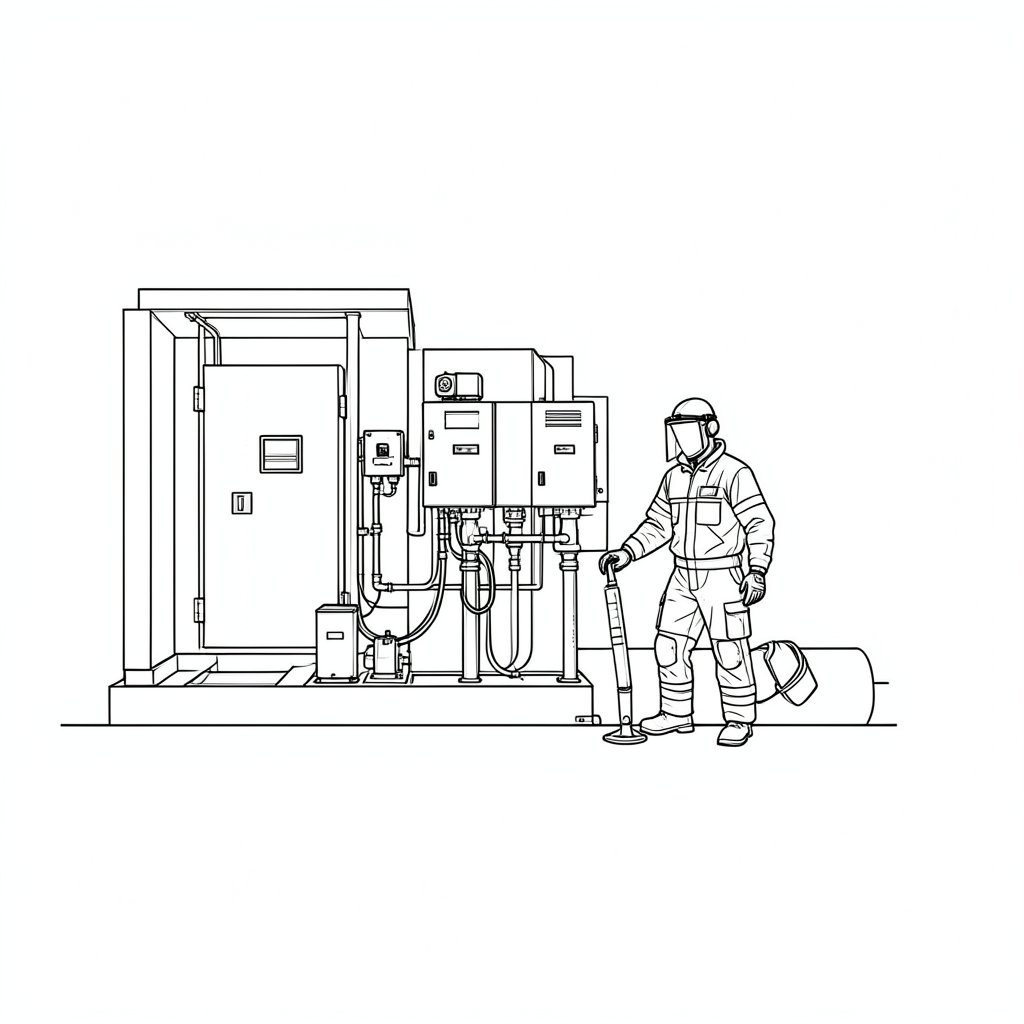
An arc flash risk assessment answers a specific question before anyone opens a panel or racks a breaker: how much thermal energy could reach a person standing at the working distance if an arc occurs, and what does that require them to be wearing? Skipping this step and reaching for a generic arc-rated jacket "to be safe" often means either dangerous under-protection or needlessly restrictive over-protection for the actual task.
What incident energy actually measures
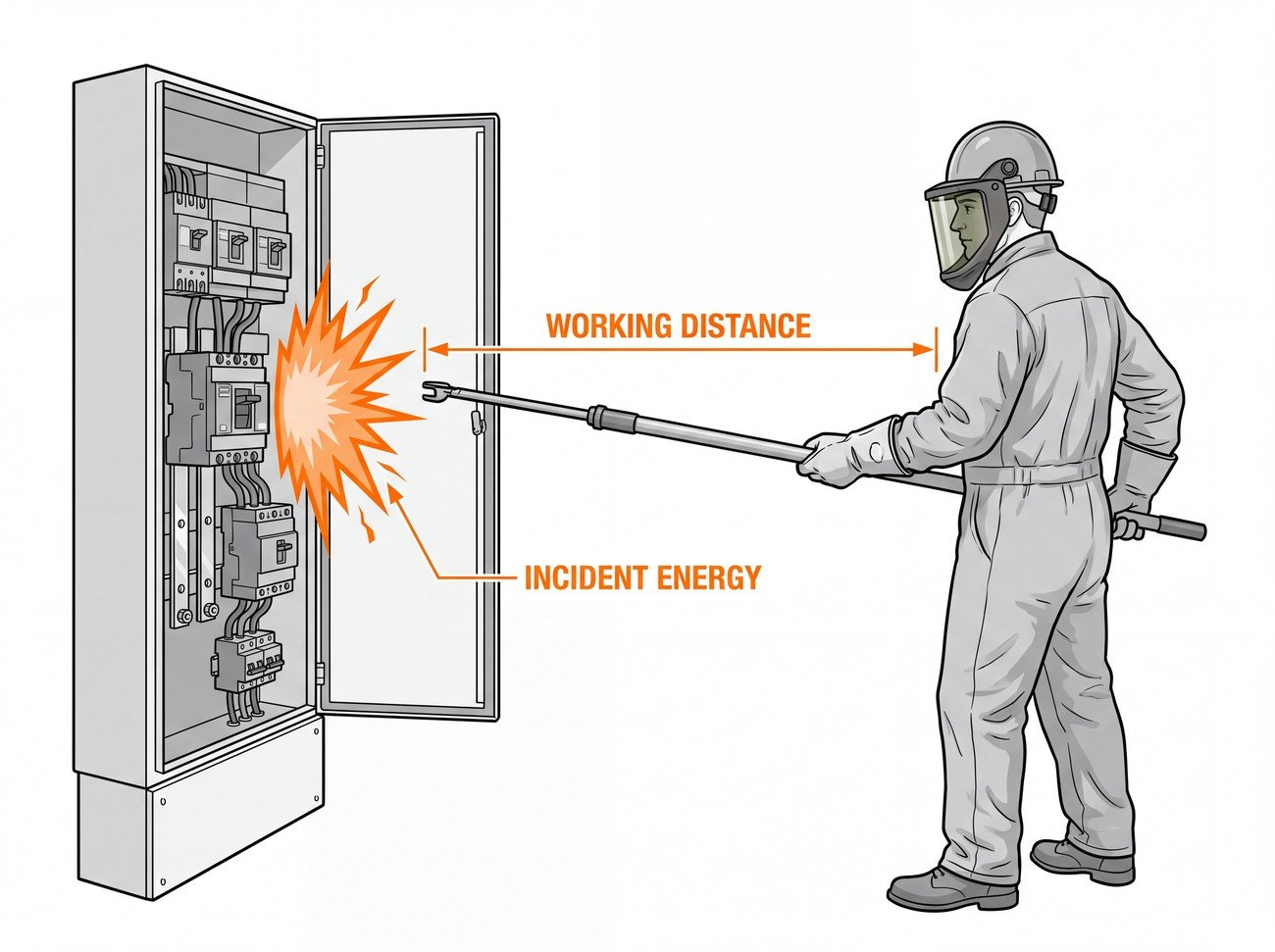
Incident energy is the thermal energy a person would receive at a defined working distance if an arc flash occurred during the specific task, expressed in units such as calories per square centimetre. It depends on the available fault current, the clearing time of the upstream protective device, the equipment configuration, and the distance between the worker and the potential arc source. The same panel can present very different incident energy figures depending on which specific task is being performed and which protective device would actually clear the fault.
This is why incident energy is calculated per task, not assigned once to a whole panel or building. Two tasks at the same switchboard can carry different PPE requirements if one exposes the worker to a different fault-clearing path than the other.
Where the calculation comes from
A proper arc flash study uses the facility’s actual short-circuit and protective device coordination data, not a generic assumption. Where that engineering study exists and is current, it should be the source for the incident energy figure and the resulting PPE category. Where it does not exist, or is outdated because the electrical system has changed since it was done, treating the panel as unstudied and applying a conservative default category is safer than assuming an old study still applies.
From incident energy to PPE category
Once the incident energy figure is known, it maps to a PPE category specifying the minimum arc rating the worker’s clothing and equipment must provide, covering garments meeting EN 61482 for arc-rated protective clothing, and where required, an arc-rated face shield or hood, insulating gloves to EN 60903, and a helmet to EN 397. Choosing a higher category than the task requires is not automatically the safer choice: heavier arc-rated clothing reduces dexterity and increases heat stress, both of which can introduce their own risks on a long task.
Keeping the assessment current
An arc flash study reflects the electrical system as it existed when the study was done. Changes to protective device settings, upstream utility fault levels, or equipment modifications can all shift the incident energy figure without anyone updating the label on the panel. Re-assessment on a defined interval, and immediately after any change to the protective device coordination, keeps the labelled PPE category matched to the system as it actually is.
For the clothing this assessment specifies, see selecting arc-rated clothing, and for the boundary distances it defines, see arc flash boundaries.
Common errors
1Applying one PPE category to an entire panel or building rather than assessing it per task.
2Relying on an arc flash study that predates a since-changed protective device setting or system modification.
3Defaulting to the highest available PPE category regardless of the actual calculated requirement.
4Treating an unstudied panel as low risk by default rather than applying a conservative category until it is studied.
Frequently asked questions
What does incident energy actually measure?
The thermal energy a person would receive at a defined working distance if an arc flash occurred during a specific task, depending on available fault current, protective device clearing time, equipment configuration and distance from the arc source.
Why is incident energy calculated per task rather than per panel?
The same panel can present different incident energy figures depending on the specific task and which protective device would clear the resulting fault, so a single figure for the whole panel can misrepresent the risk of a specific job.
What should happen if no current arc flash study exists for a panel?
It should be treated as unstudied and a conservative default PPE category applied, rather than assuming a similar panel's rating applies or that the risk is automatically low.
Is choosing a higher PPE category than required always the safer option?
Not necessarily – heavier arc-rated clothing reduces dexterity and increases heat stress, both of which introduce their own risks, so matching the category to the actual calculated requirement is the goal, not maximising it.
Why does an arc flash study need to be revisited periodically?
Changes to protective device settings, upstream fault levels, or equipment modifications can shift the incident energy figure without the panel label being updated, so re-assessment on a set interval and after any system change keeps the rating accurate.
Need this as a document you can issue? The template library gives you the risk assessments, permits and inspection logs in editable form — and employer plans cover a whole team with completion records.