Safety / Tips and Tricks / Energy and networks
Activity 03 · Energy
Insulated Tools for Electrical Work: What the Rating Actually Means
An insulated tool looks similar to an ordinary one with a coloured handle, but the insulation on a genuinely rated tool is tested to a specific voltage and construction standard, and treating any tool with an insulated-looking grip as equivalent to a properly rated one is a real and dangerous mistake.
What makes a tool actually insulated
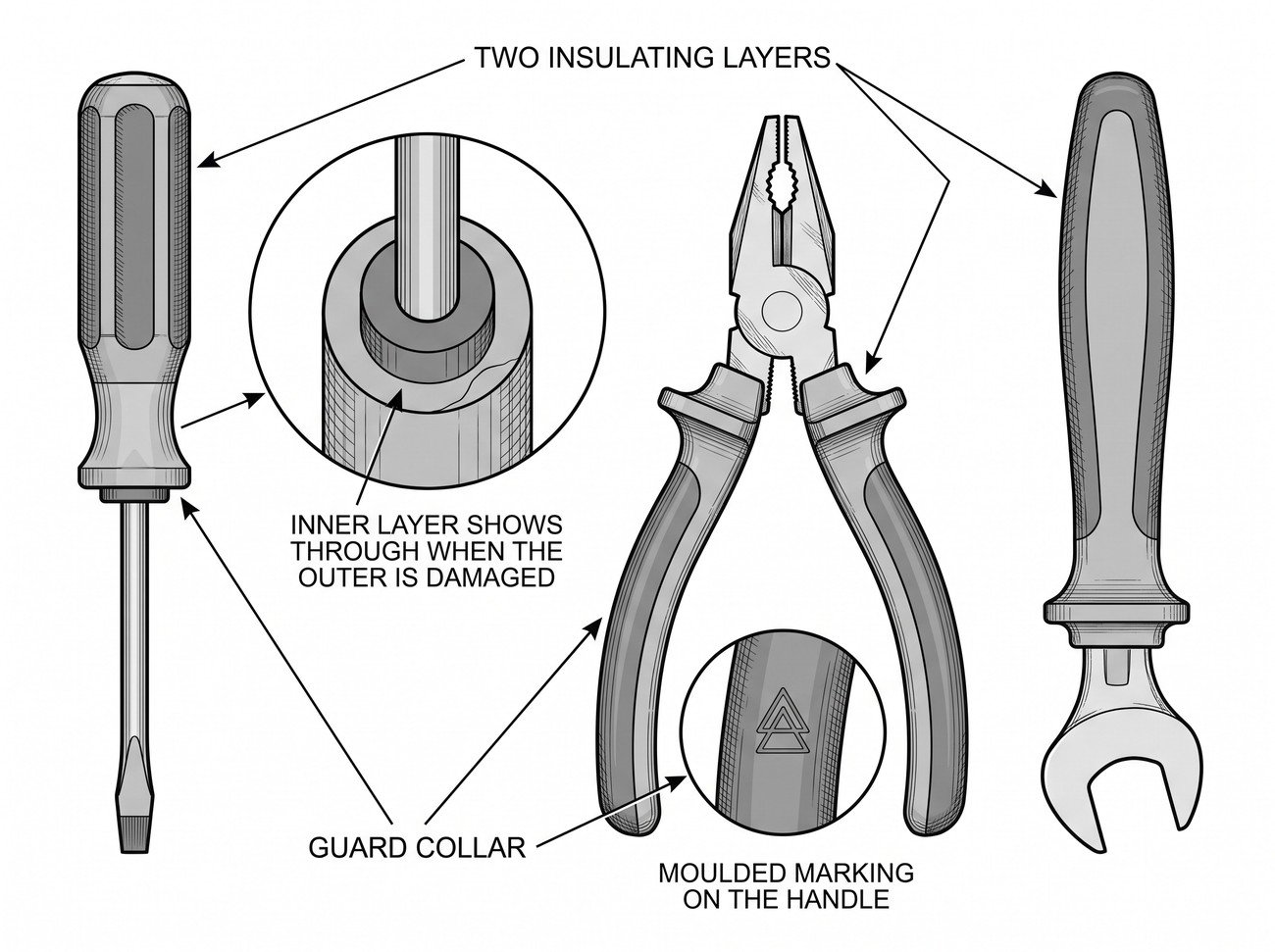
A properly rated insulated tool has insulation covering the full length of the tool except a small working tip, bonded and tested as part of the tool’s construction rather than a separate dip-coating or sleeve added afterward. Genuine insulated hand tools are manufactured and tested to a specific voltage rating, with markings identifying the standard and rating, distinct from tools that simply have an insulated-feeling plastic handle for grip comfort with no tested electrical rating at all.
Why a plastic handle is not the same thing
Many general-purpose tools have plastic or rubberised handles for comfort and grip, and these are not designed, tested or rated for electrical insulation at any voltage. Visually distinguishing a genuinely rated insulated tool from a merely comfortable-handled one is not always reliable by appearance alone; checking for the specific voltage rating marking is the only dependable way to confirm a tool is actually rated for the work.
Inspection and condition
Insulated tools need inspection before use for cuts, cracks, or exposed metal at the insulation boundary, since damage to the insulating layer can create an exposed conductive path that defeats the tool’s purpose entirely. Contamination with conductive material, or insulation that has become brittle with age or UV exposure, also compromises the rating even where no obvious crack is visible.
Matching the tool rating to the task voltage
As with insulating gloves, the tool’s voltage rating needs to be selected for the actual voltage present, with an appropriate margin, and re-confirmed whenever the task moves to a different voltage system. A single insulated tool kit rated for one voltage level should not be assumed adequate for a higher-voltage task without checking the specific rating against the system involved.
For the gloves that typically accompany insulated tools, see insulating gloves for electrical work.
Common errors
1Treating any tool with a plastic or rubberised handle as electrically insulated.
2Using an insulated tool with visible damage to the insulating layer.
3Assuming one insulated tool kit's rating covers every voltage level a site works with.
4Storing insulated tools in conditions that expose them to UV or conductive contamination without inspecting before the next use.
Frequently asked questions
What makes a tool a genuinely rated insulated tool, not just one with a comfortable handle?
Insulation covering the full length except a small working tip, bonded and tested as part of the tool's construction to a specific voltage rating, with markings identifying the standard and rating – not a dip-coating or comfort-grip handle added for feel alone.
Can a tool's insulation rating be reliably judged by how it looks?
Not always – checking the specific voltage rating marking is the only dependable way to confirm a tool is actually rated, since an ordinary comfort-grip handle can visually resemble genuine insulation.
What should be checked on an insulated tool before use?
Cuts, cracks or exposed metal at the insulation boundary, and signs of contamination or brittleness from age or UV exposure, any of which can compromise the rating even without an obvious crack.
Does one insulated tool kit cover every voltage level on a site?
Not necessarily – the tool's rating needs to be selected for the actual voltage present with an appropriate margin, and re-confirmed whenever the task involves a different voltage system.
Why is damaged insulation on a tool particularly dangerous?
It can create an exposed conductive path at exactly the point the tool contacts a live component, defeating the insulation's purpose at the moment it matters most.
Need this as a document you can issue? The template library gives you the risk assessments, permits and inspection logs in editable form — and employer plans cover a whole team with completion records.